
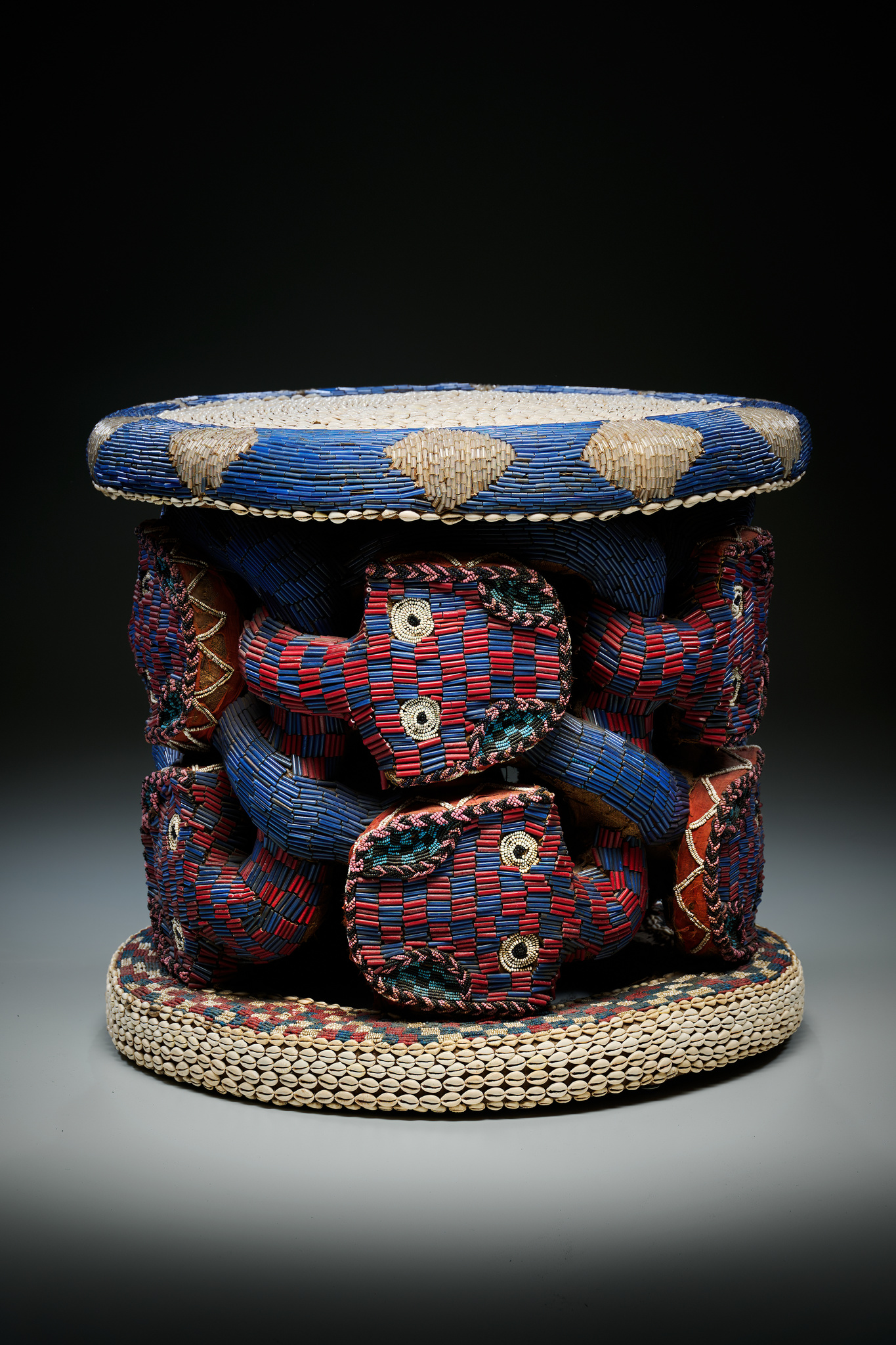
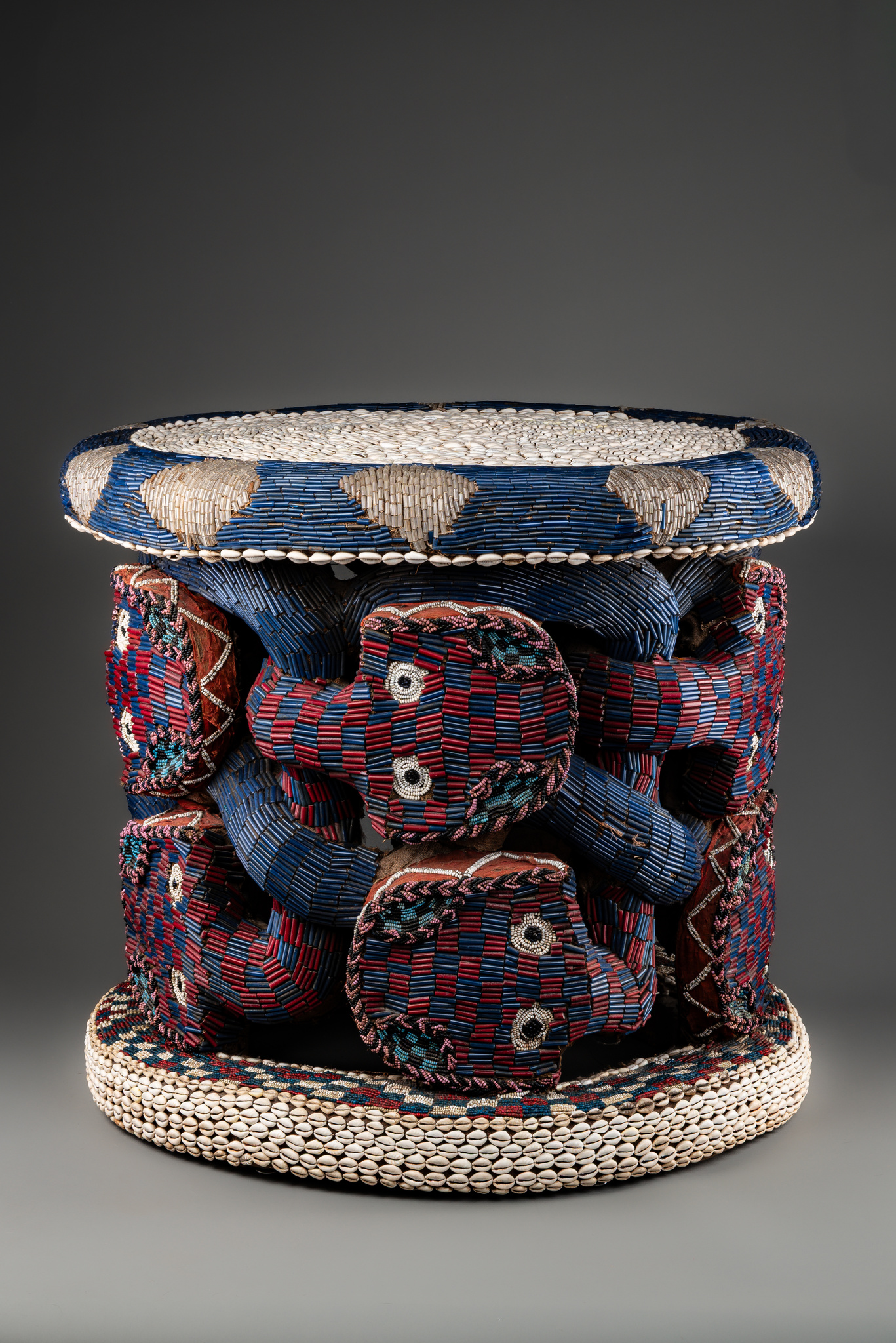
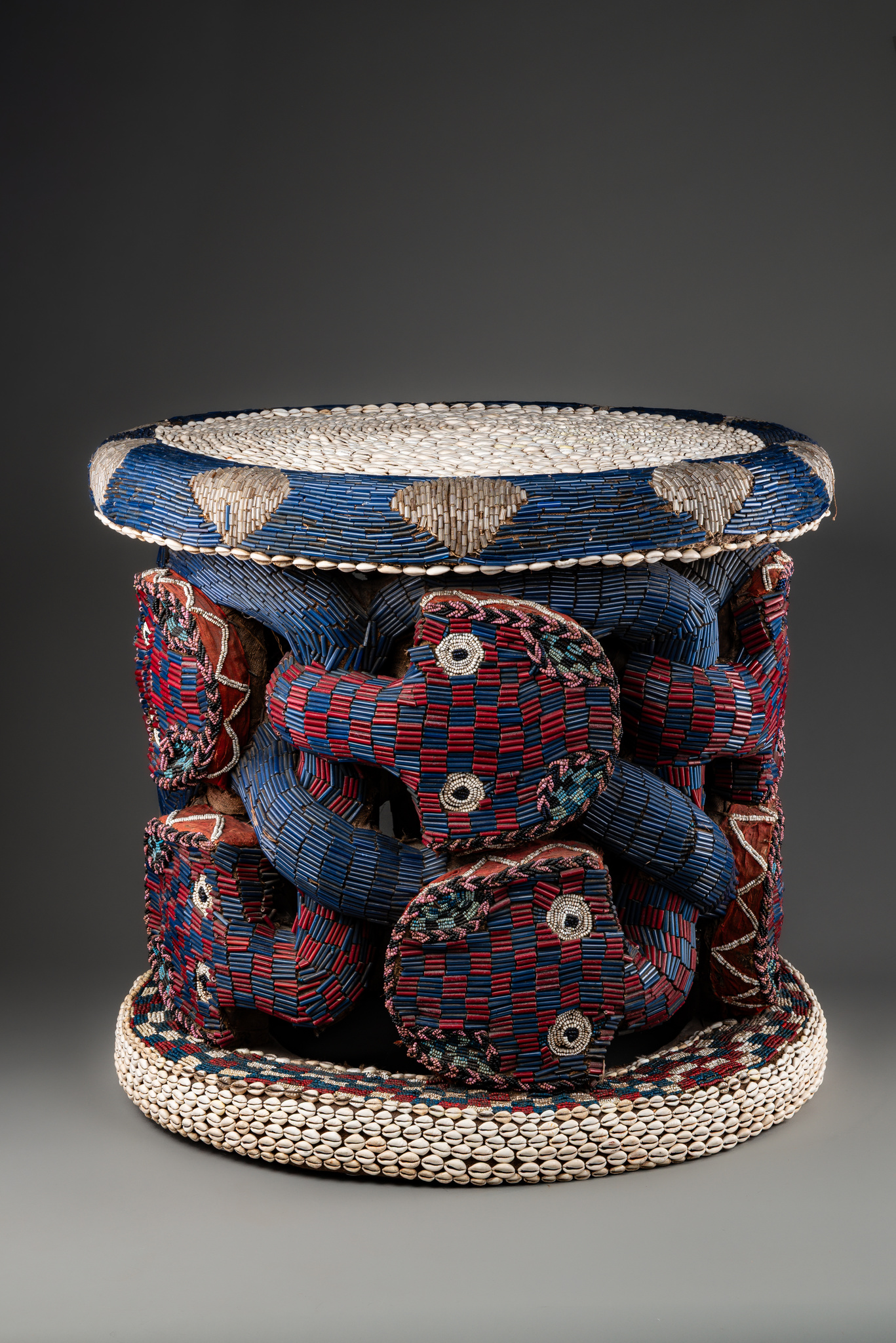
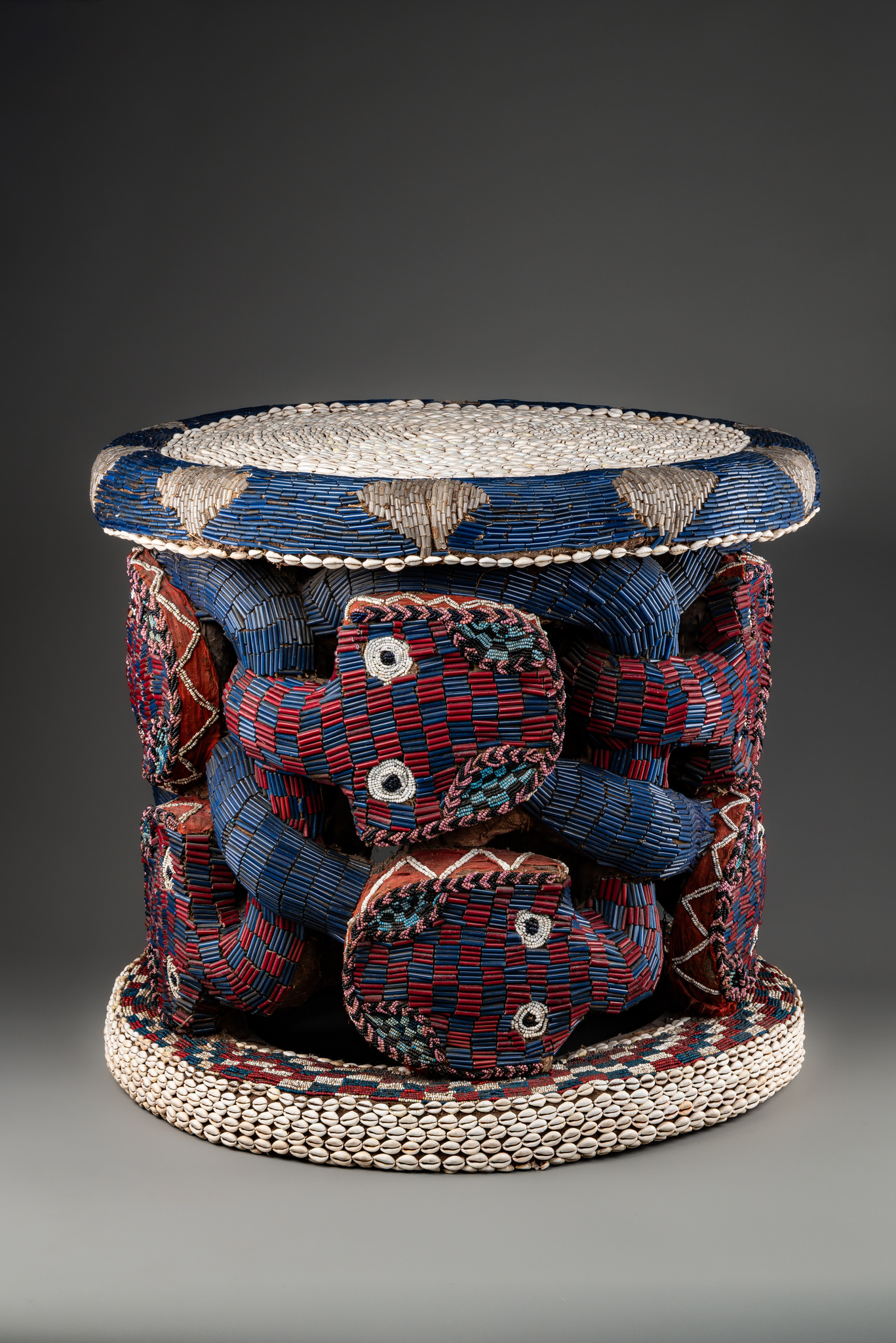
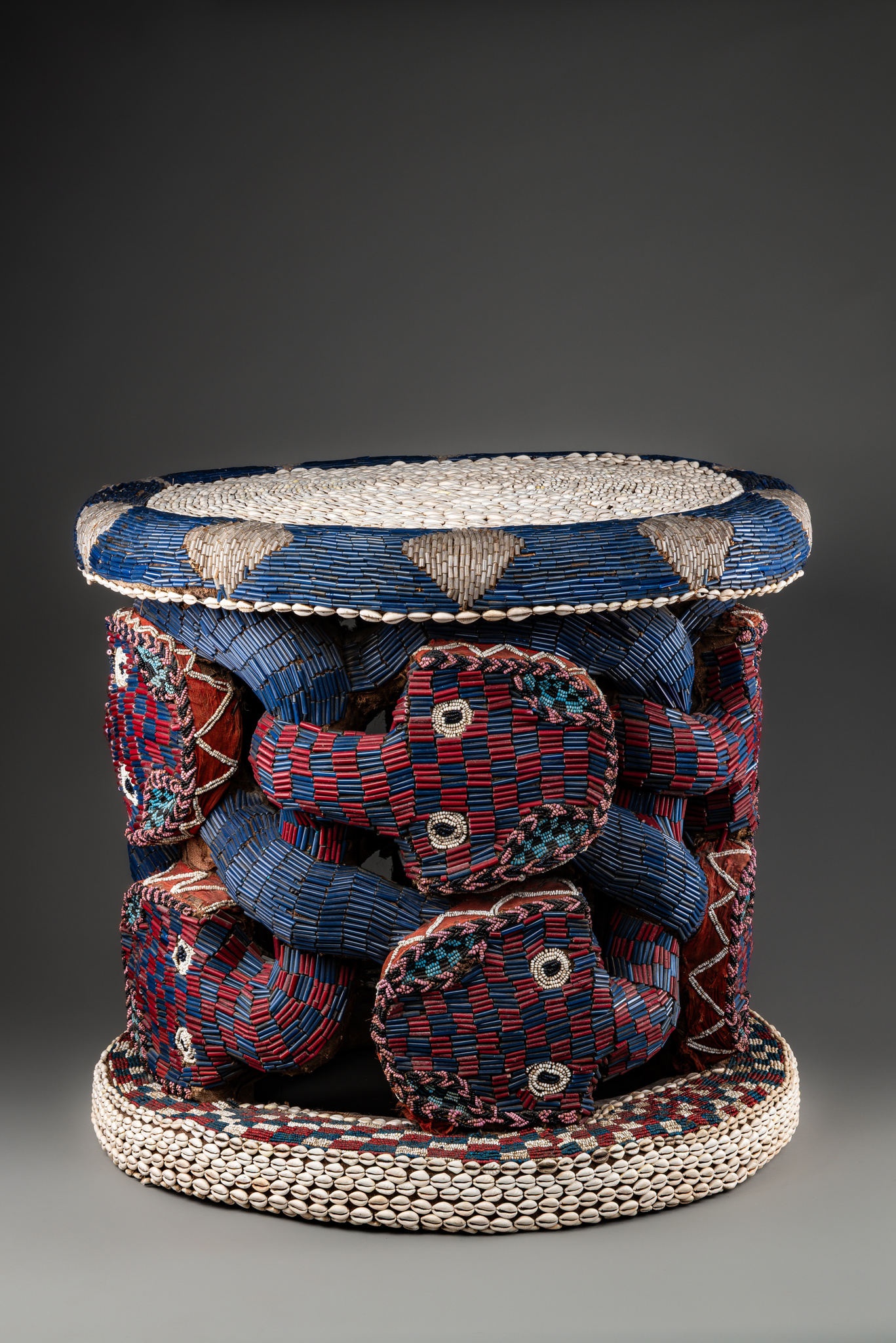
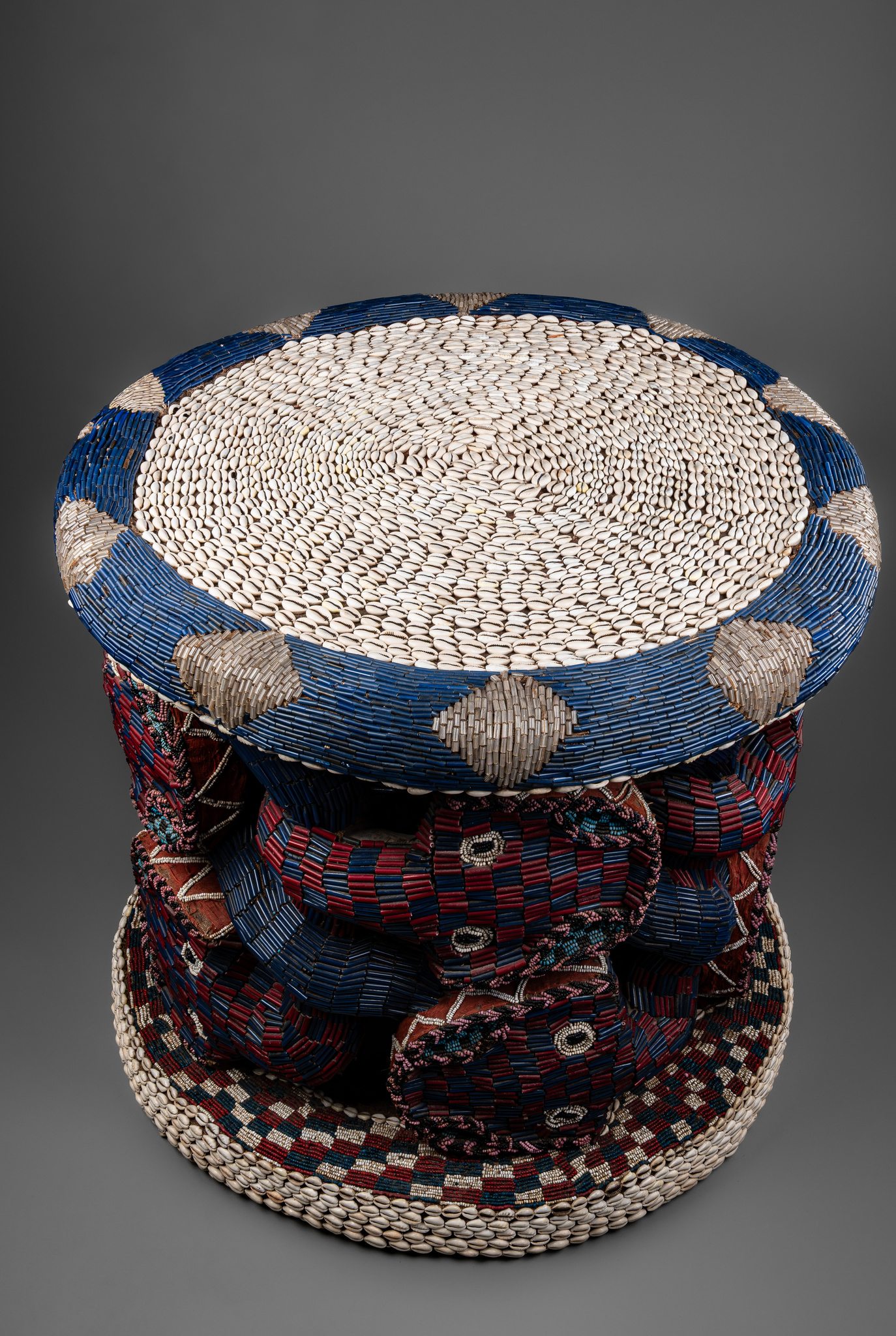
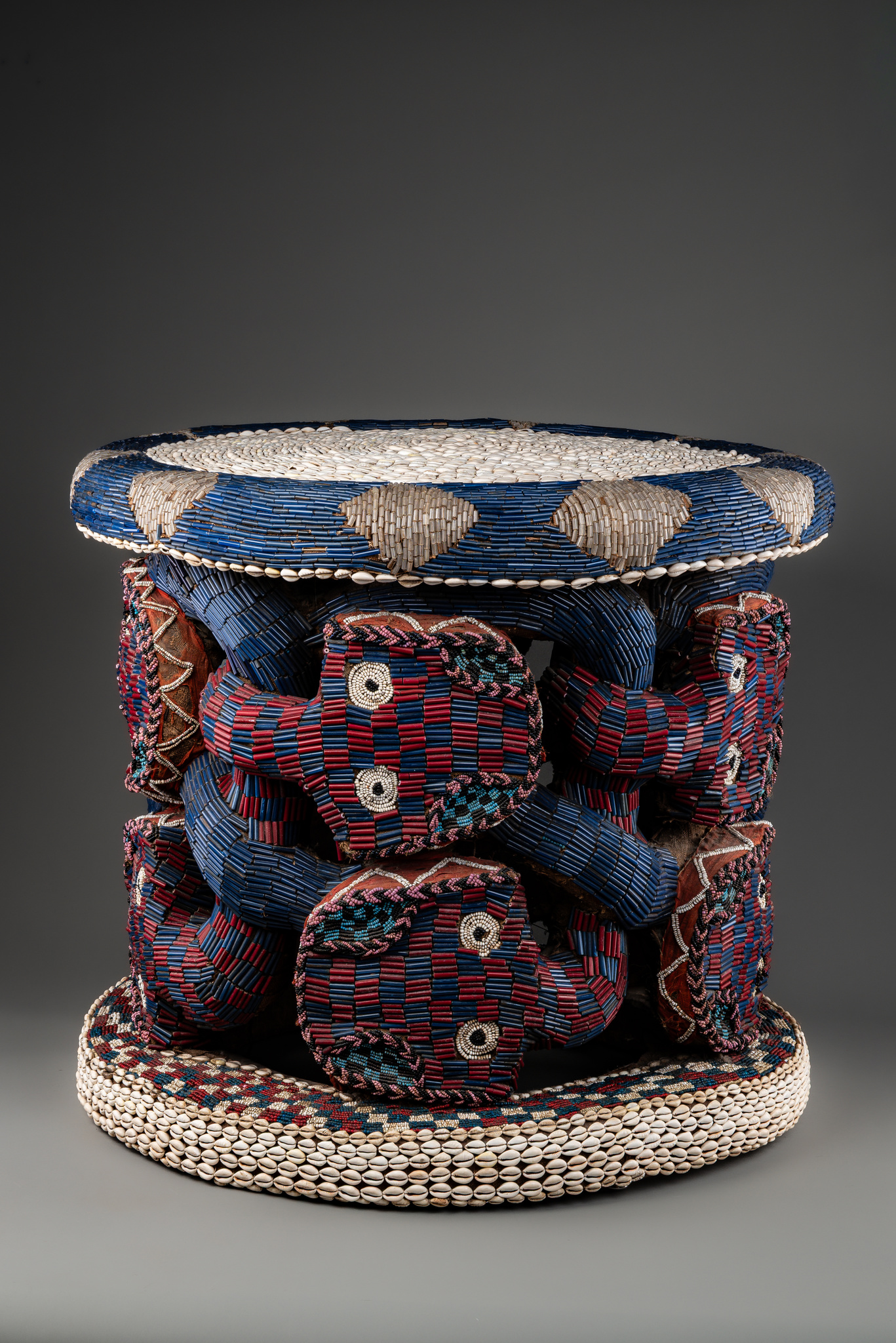
Siège-trône "rü mfo" · Grassfields du Cameroun, Bamum, Nji Nkome ou son atelier · ID: 3053600
Personal gift of Sultan Ibrahim Njoya to the missionary Martin Göhring of the Basel Mission (ca. 1906)
Martin Göhring (1871 - 1959)
Göhring Family Collection
According to Göhring’s daughter Theodora the throne belonged to the Queen Mother Njapundunke.
Arno Henseler, Munich, Germany
Description
wood, cloth, glass beads, cowrie shells, rest.
King Njoya’s treasuries housed numerous thrones and stools set with beads and crafted from precious materials, whose iconographic motifs were reserved for the royal household. This stool rests on fully three-dimensionally carved snakes, the central symbol of the Bamum kings’ authority. The round seat is entirely covered with cowrie shells, which are regarded as symbols of wealth, prestige and royal power.
Its extraordinary impact is further enhanced by the elaborate covering of thousands of colored glass beads, executed by Menyam specialists. According to the bead expert Michael Oehrl, the glass beads used are characteristic of the period between around 1860 and 1900 and were probably manufactured predominantly in Venice. The round seed beads in pink, white, copper blue, red-white-heart, light blue and black, as well as the red and cobalt-blue cylindrical beads, correspond to typical shapes and colour variations of the period.
Particularly noteworthy are the rare, white-striped beads of the so-called “gooseberry” type in the diamond-shaped motifs along the outer edge of the seat. Whilst this type had already been prized in Africa since the late 18th century, it appears here in the form of broken glass rods, serving, as it were, as raw material. According to Oehrl, the period-typical arrangement of the beads and their colour palette suggest that the stool was made around 1880.
The high material and symbolic value of the beads, imported via extensive trade networks, underlines the exclusive status of such courtly insignia. With its high-quality craftsmanship and multi-layered symbolism, the stool ranks among the outstanding examples of Bamum court art and impressively illustrates the close connection between artistic mastery, political authority and representational function.