
Sculpture "Malagan" · Papouasie-Nouvelle-Guinée - Archipel Bismarck - Nouvelle Irlande · ID: 3052904
Christie’, Amsterdam, 12 May 1998, lot 101
Seymore & Alice Lazar, Palm Springs, USA
Lempertz, Brussels, 1 February 2023, lot 107
Jo de Buck, Brussels, Belgium (2023)
Kellim Brown, Brussels, Belgium
Description
wood, pigments, base, label on base “CE 034”
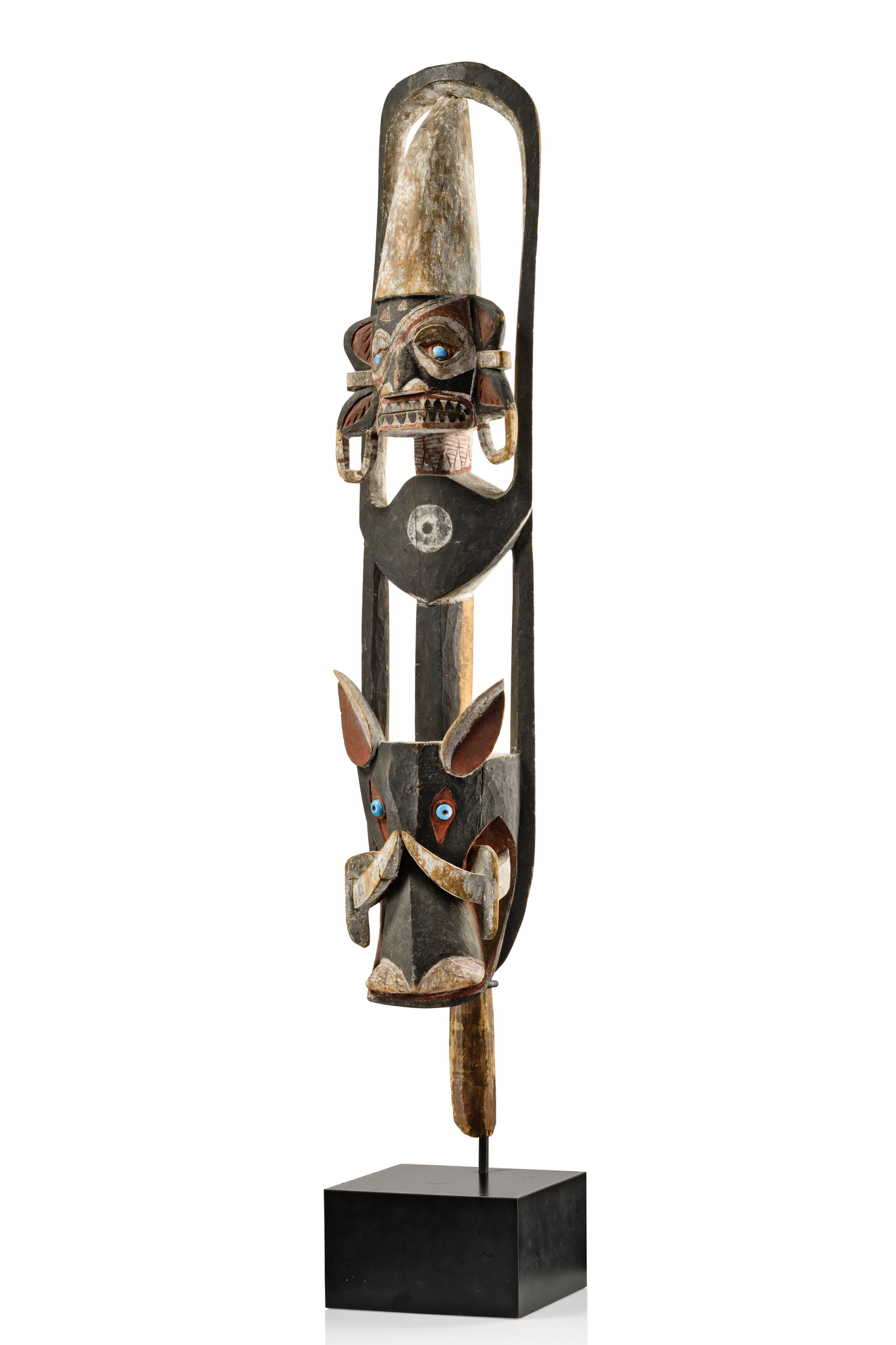
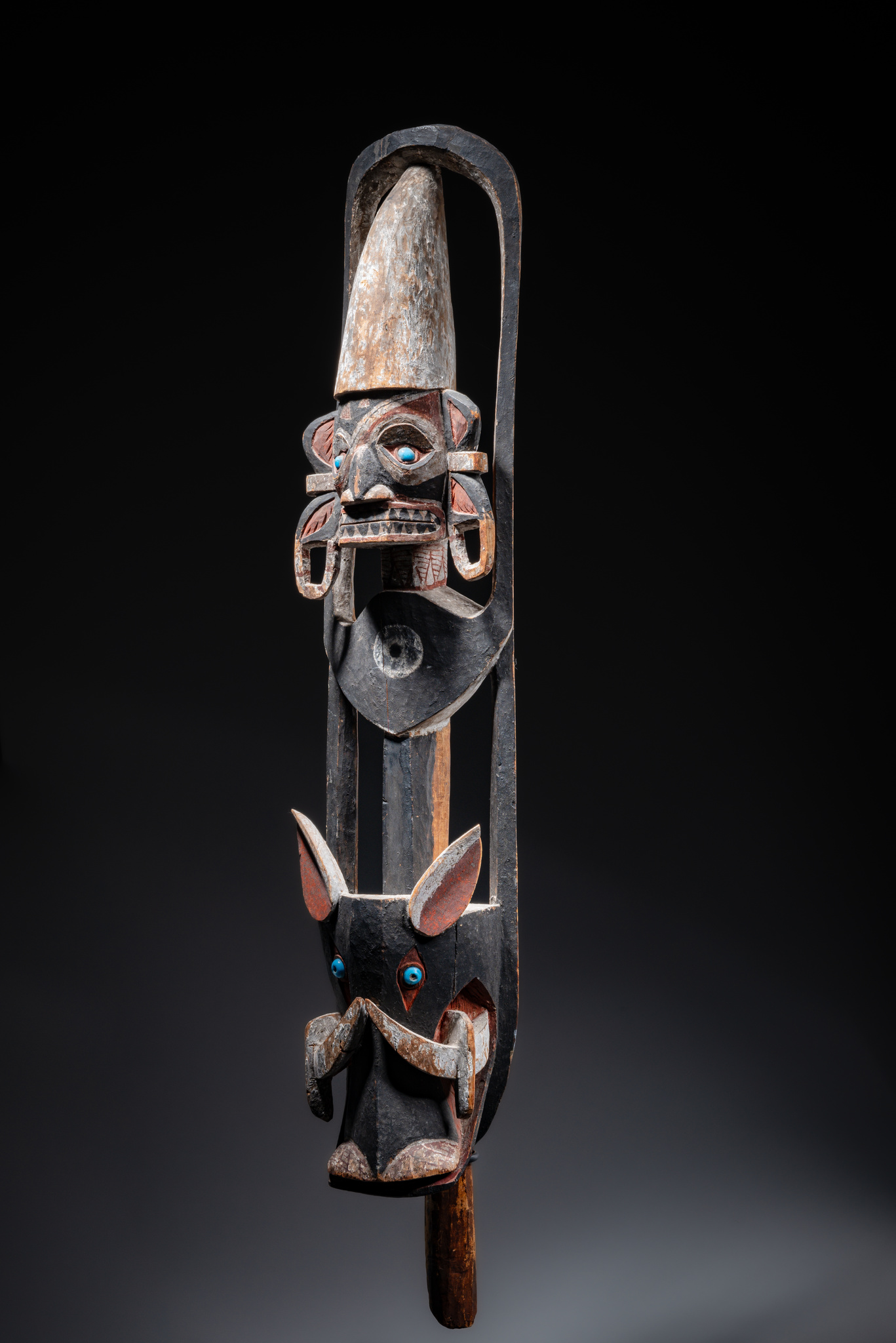
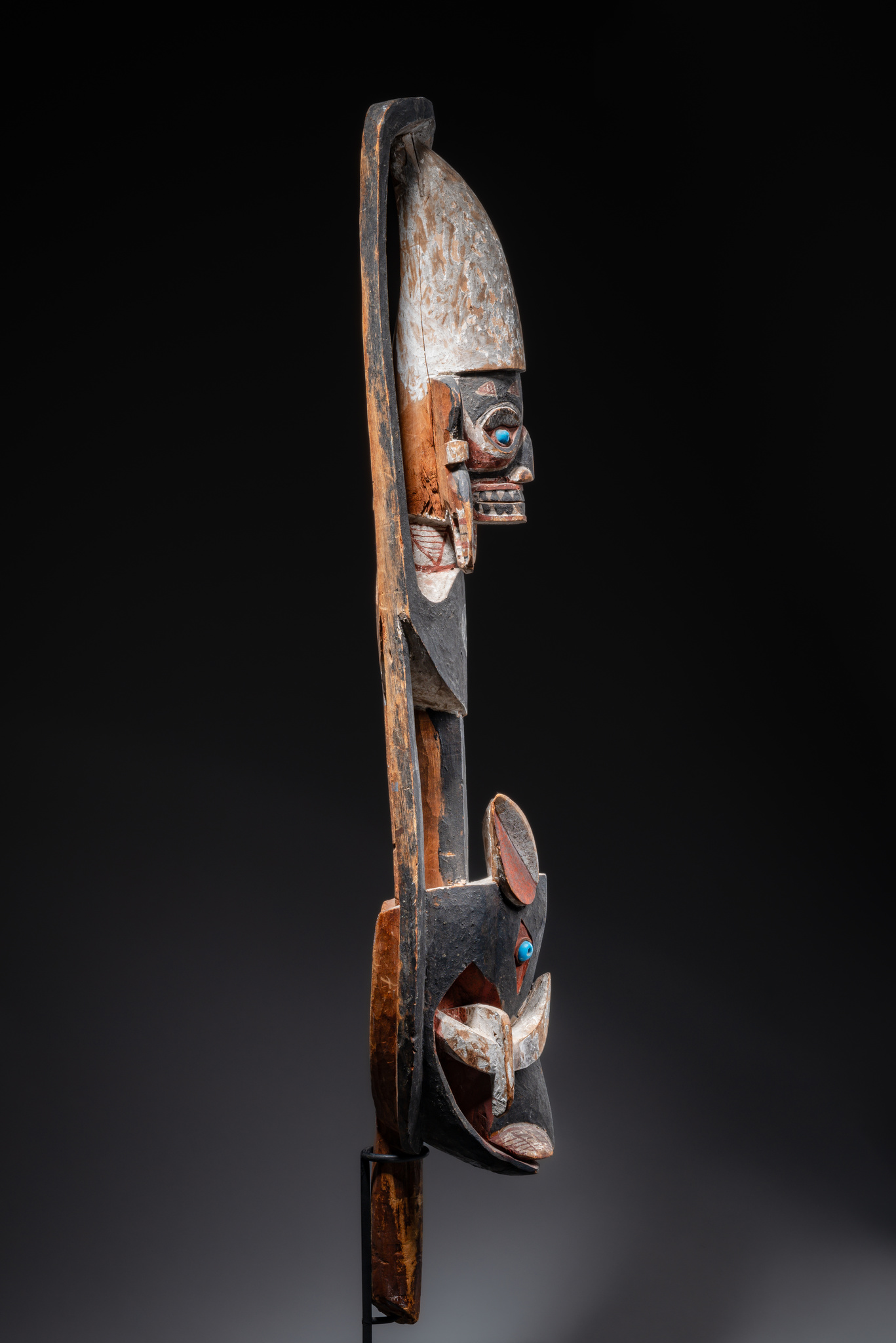
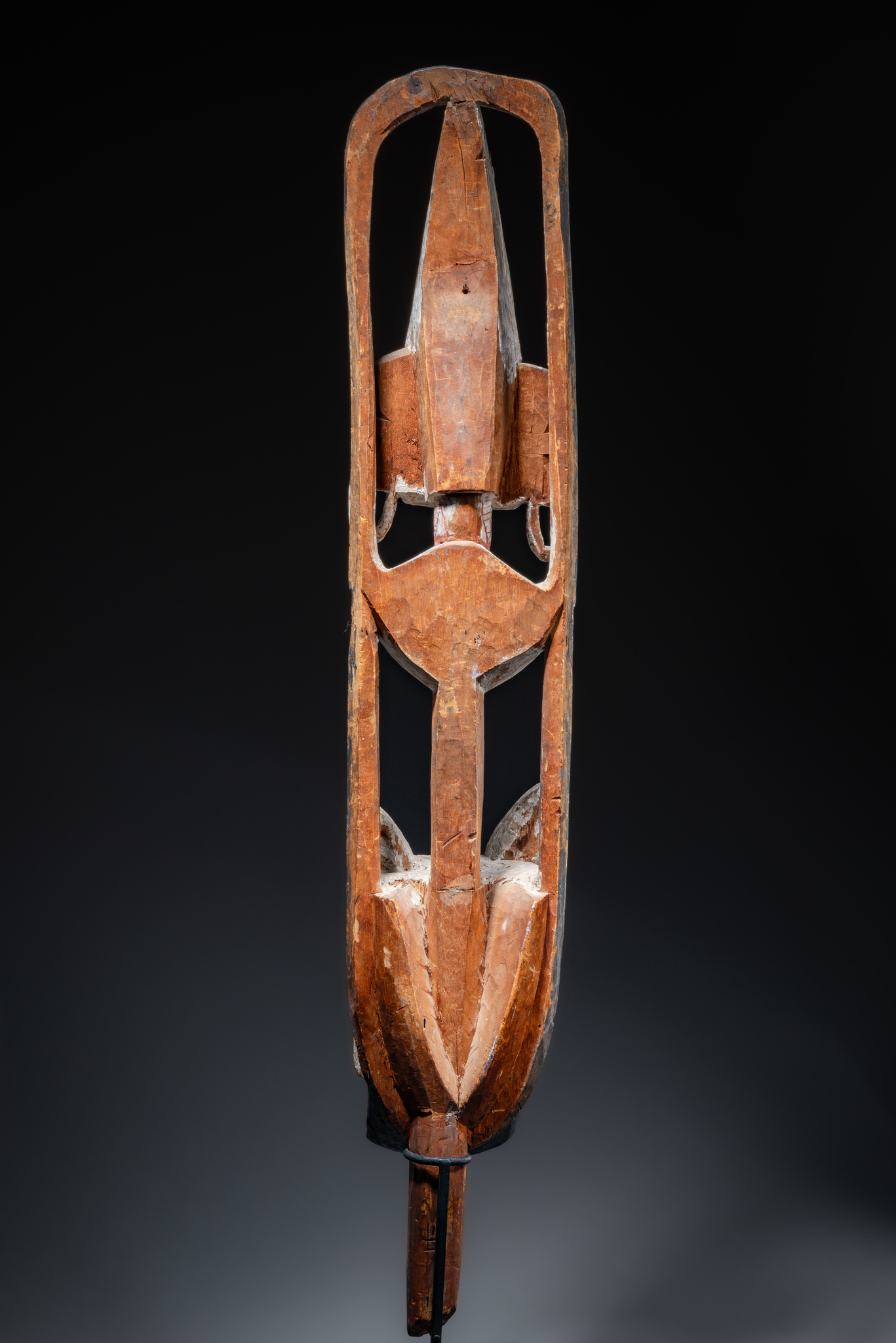
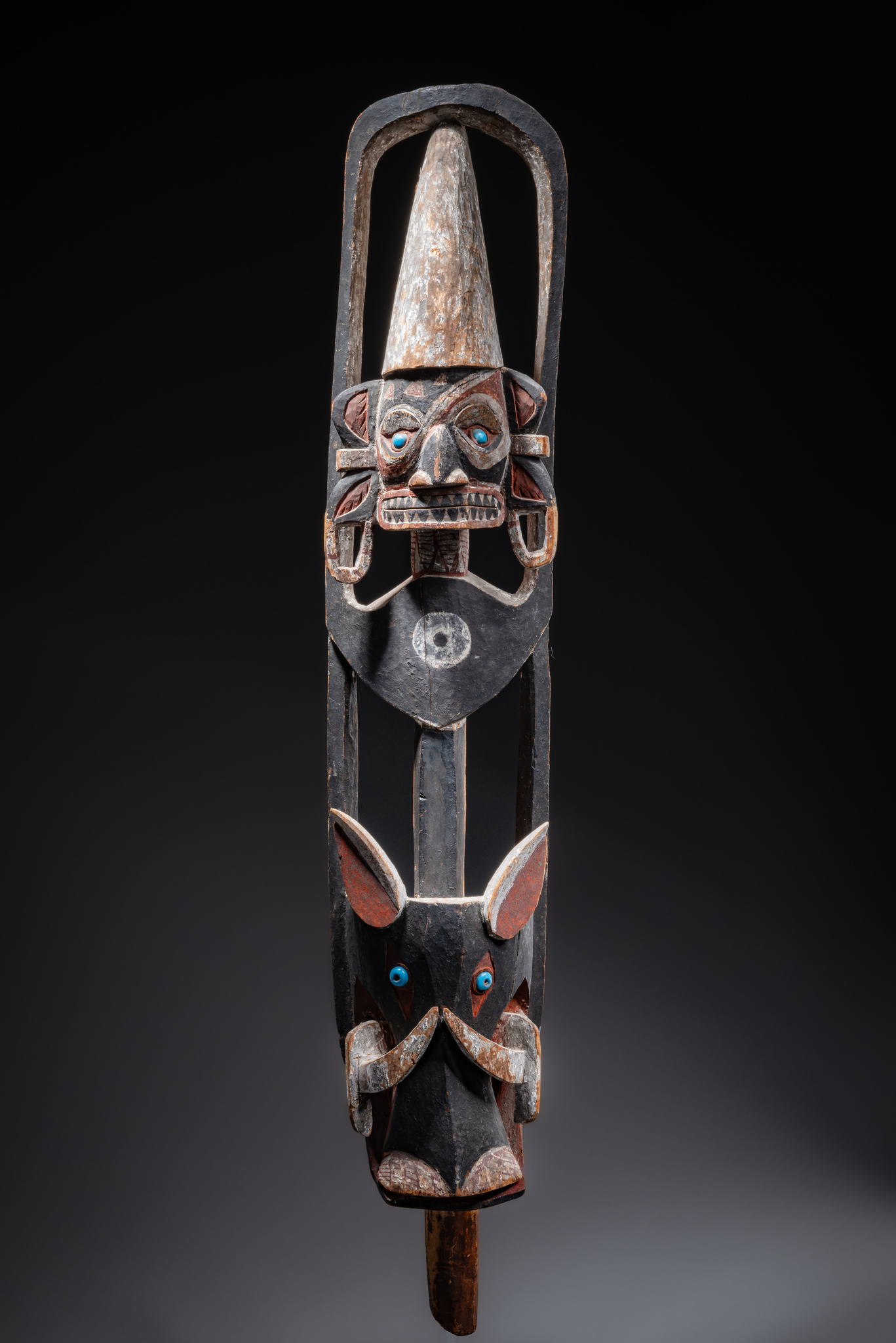
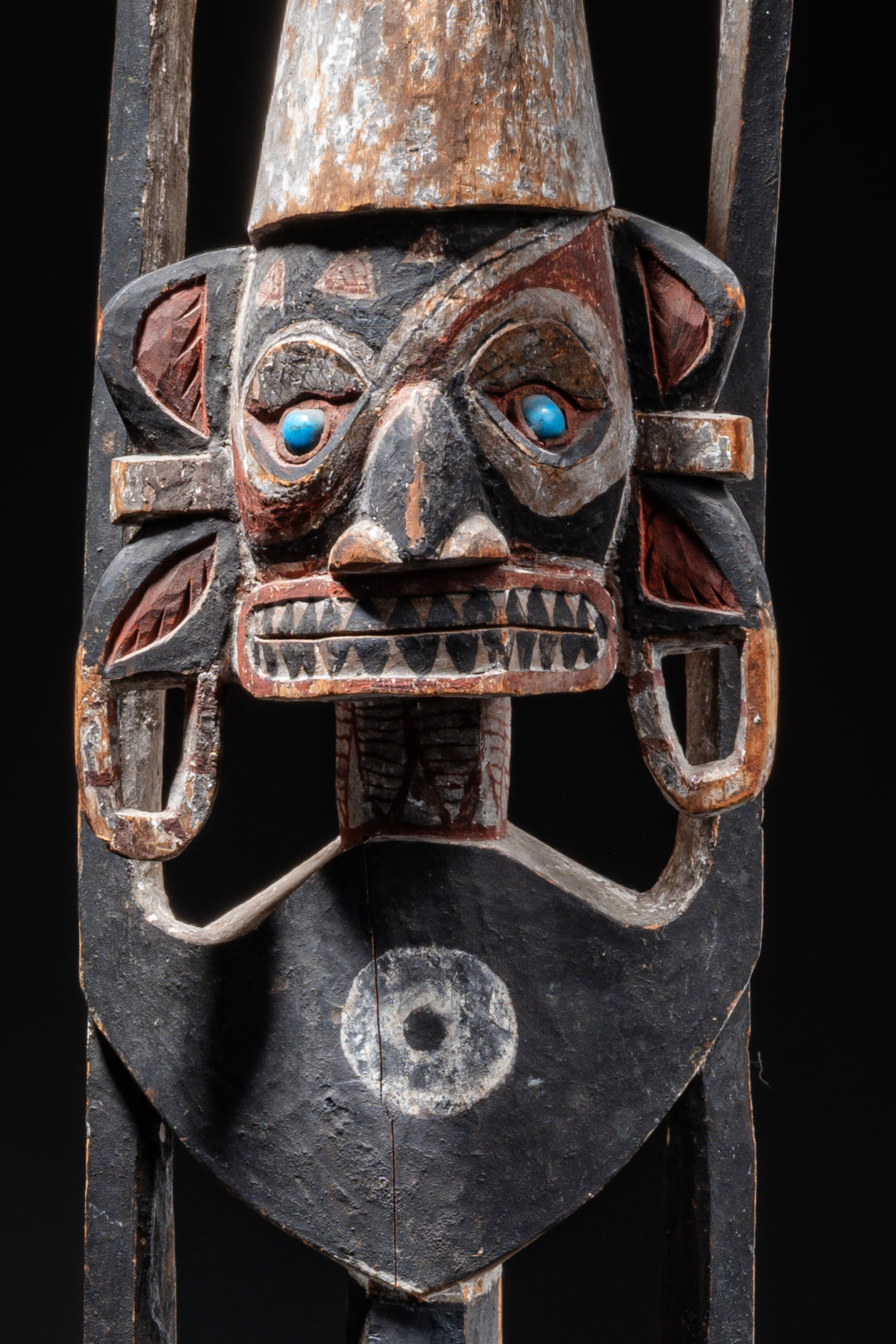
“Malagan” carving in a framing construction with two stacked zones. Above, a mask-like anthropomorphic face with pronounced eye relief (with inlays), a strongly modelled mouth, and a tall conical headdress. Below, a zoomorphic pig head with prominent ears, blue inlaid eyes, and widely sweeping tusks.
“Malagan” on New Ireland refers both to a system of ceremonies and to the visual artworks associated with them. Over the course of their lives, individuals - especially men in a pronounced competition for status - acquire rights to specific “malagan” motifs and to the performance of the rites; such rights confer prestige.
The most elaborate carvings are produced for the final commemorative ceremony for a deceased person, which - due to cost and extensive preparations - often takes place only months or even years after death. The aim is to “complete death”: the deceased is remembered and honoured once more, while inheritance matters, land transfers, and succession within clan and community are settled. On a ritual level, the ceremony is also understood as a process of reclaiming and transferring life force, which is believed to become effective through the objects.
The festivities include the construction of a “malagan” house as a display setting, masked dances, exchanges of shell money, a lavish meal (including taro, pork, and bananas), and the slaughter of numerous pigs. Once their purpose has been fulfilled, “malagan” carvings are destroyed, left to decay, or sold. The dead are sent to “biksolwara” - the depths of the sea.
Littérature comparée
Conru, Kevin (ed.), Bismarck Archipelago Art, Milan 2013, p. 260-295