
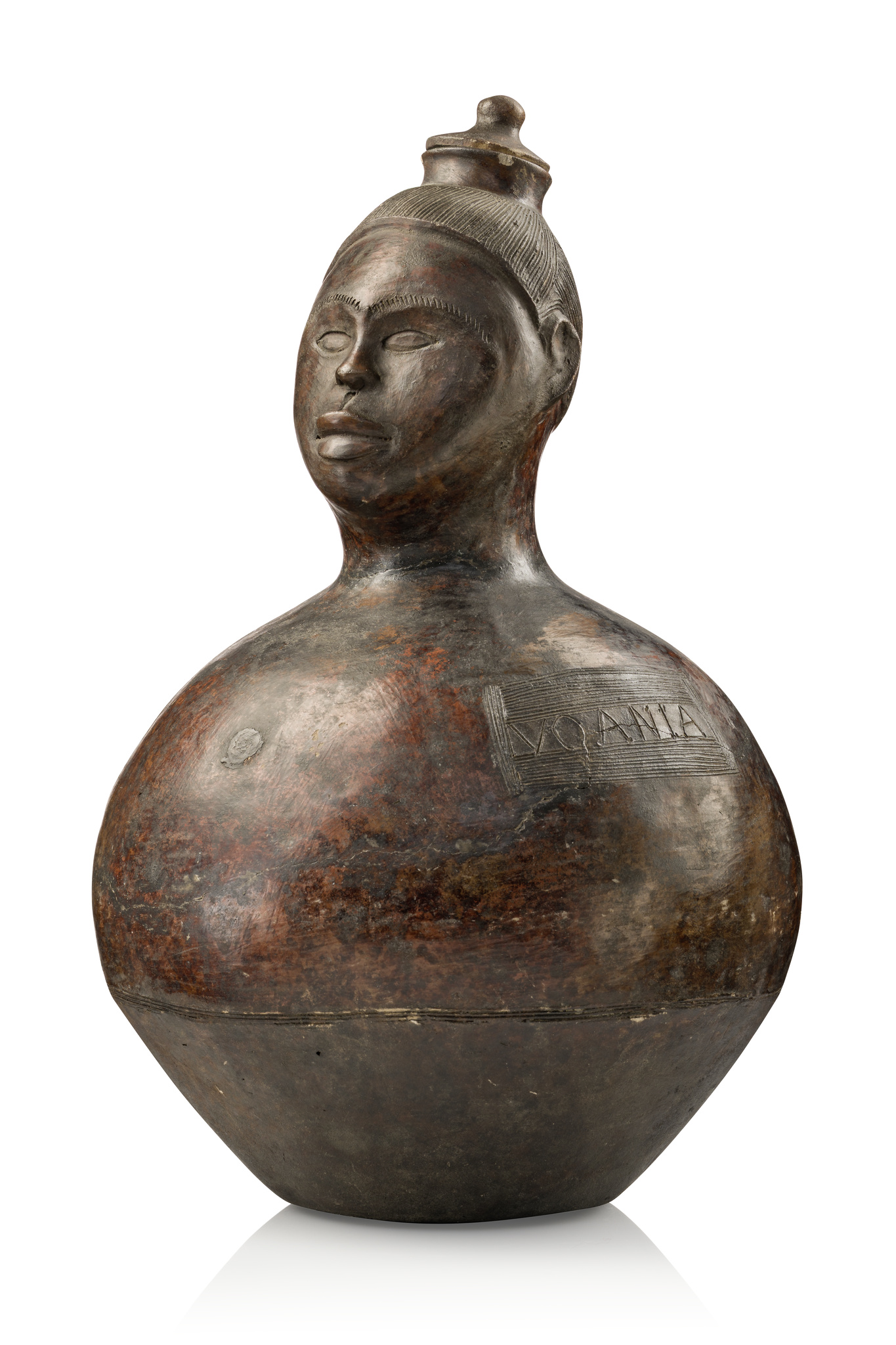
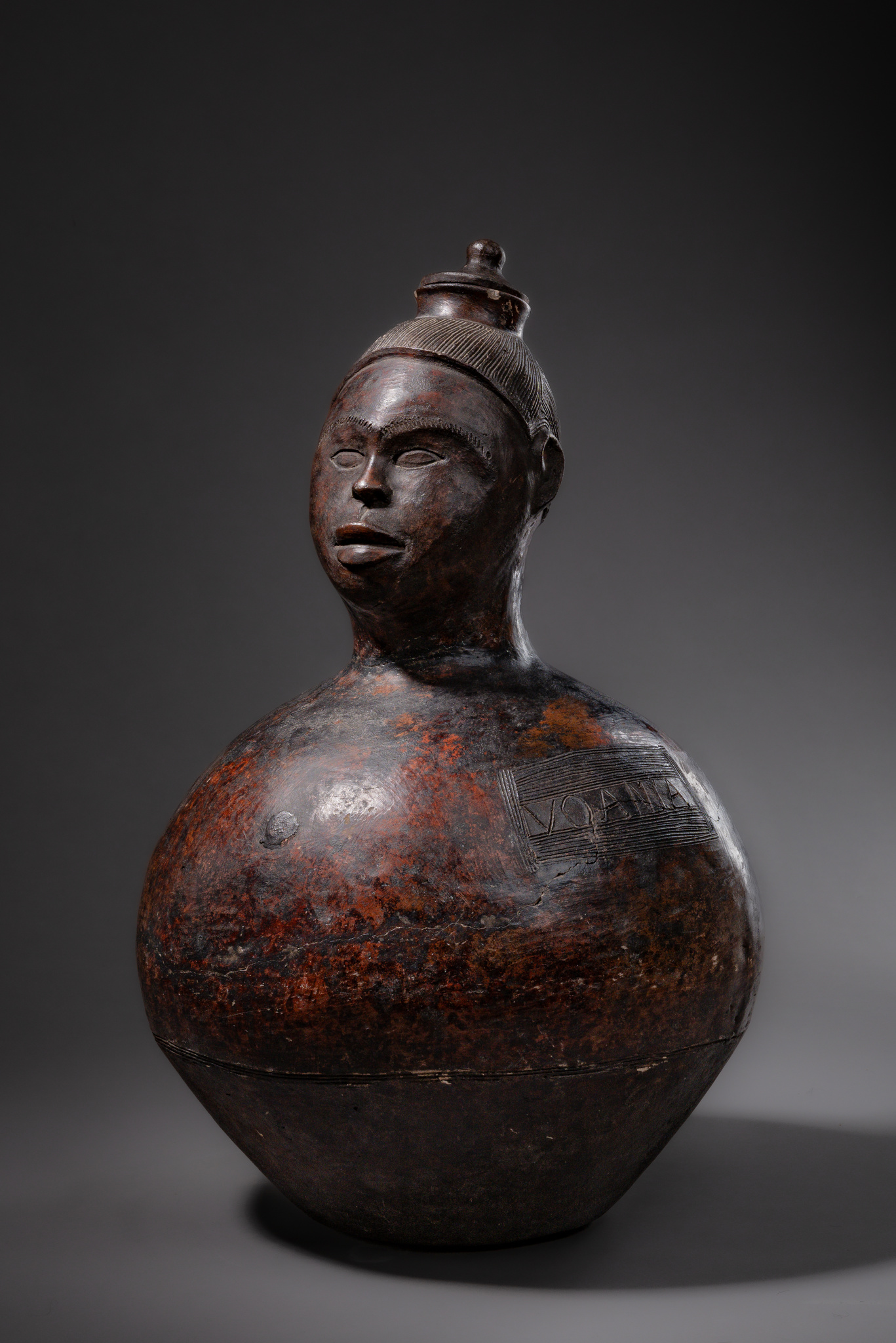
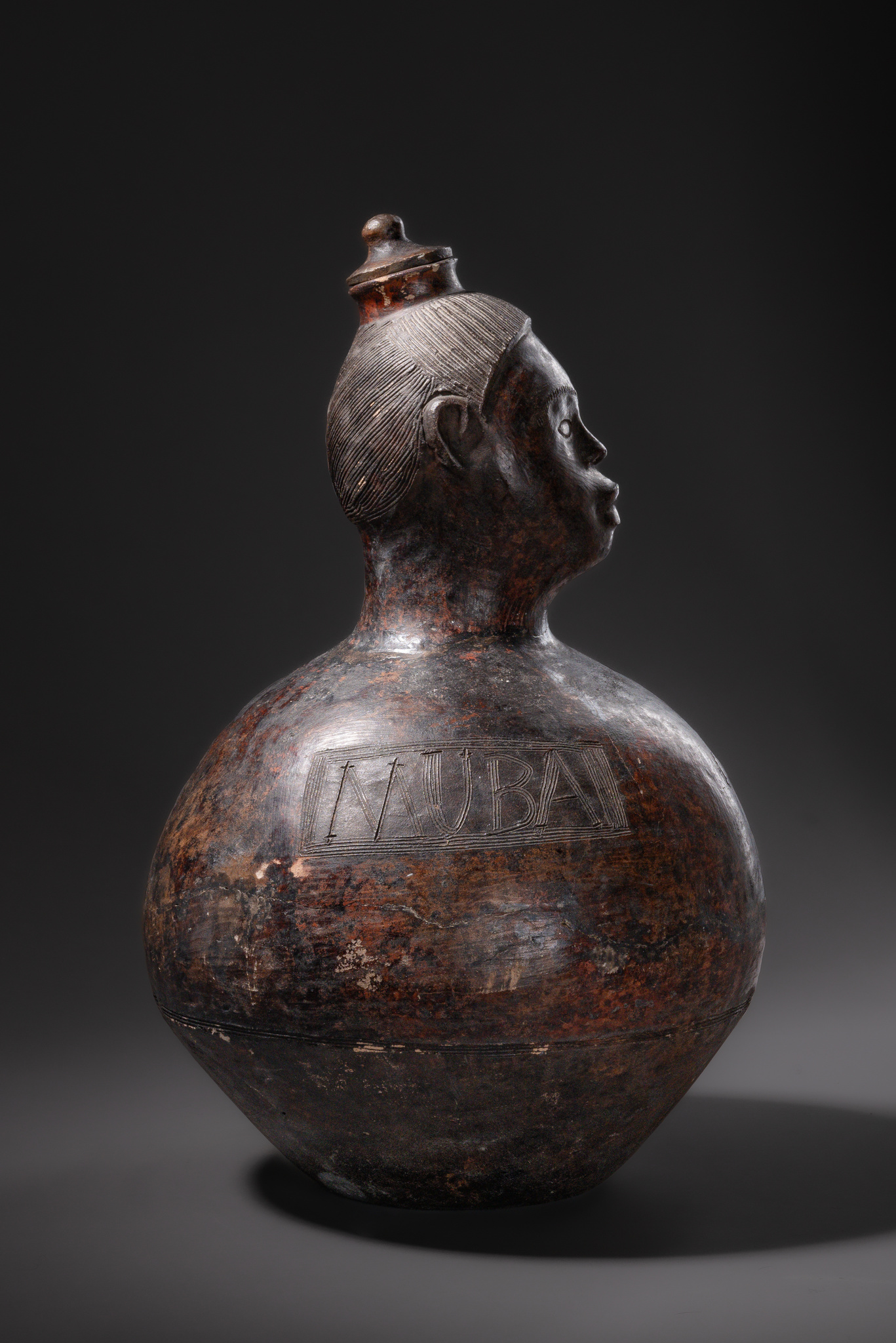
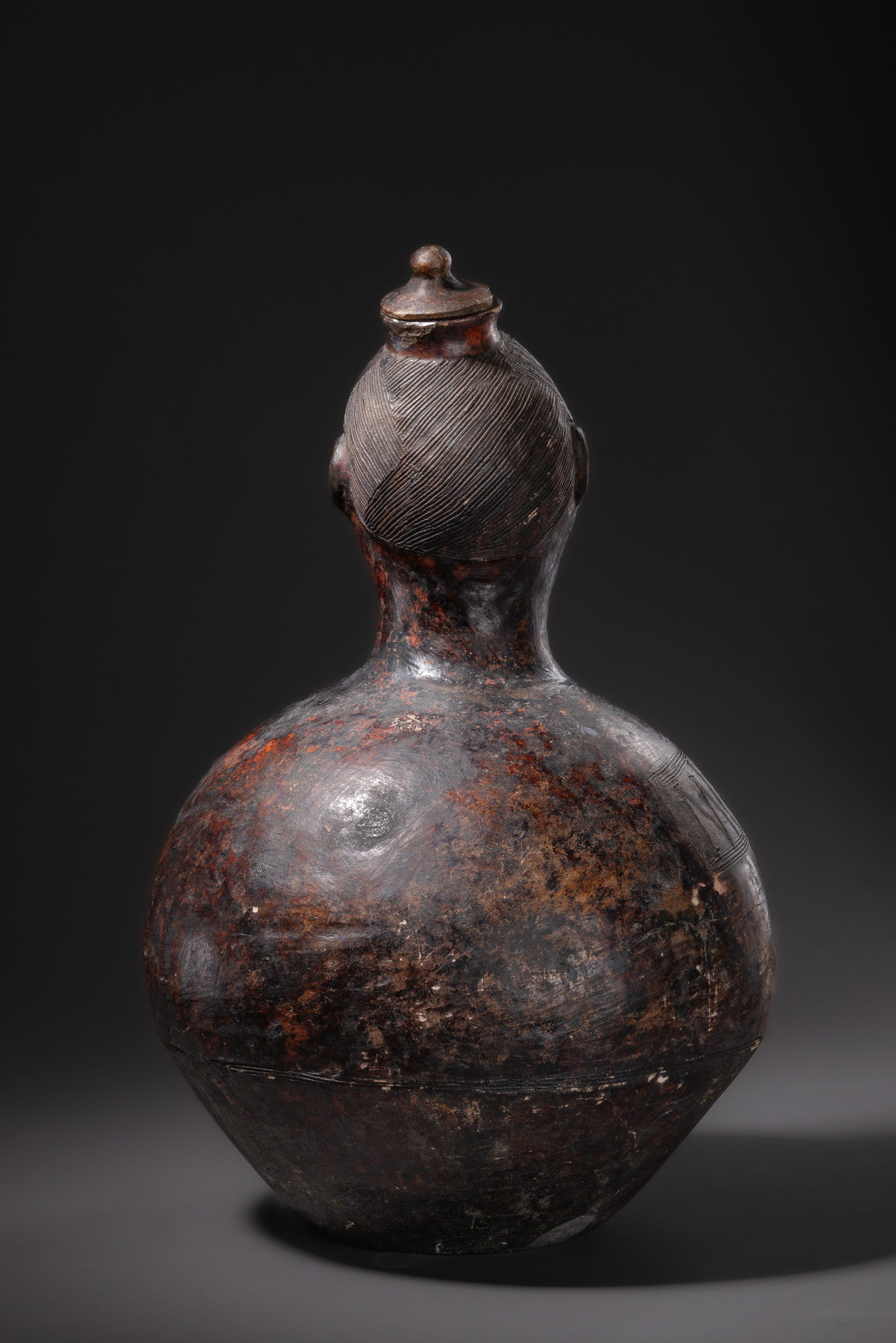
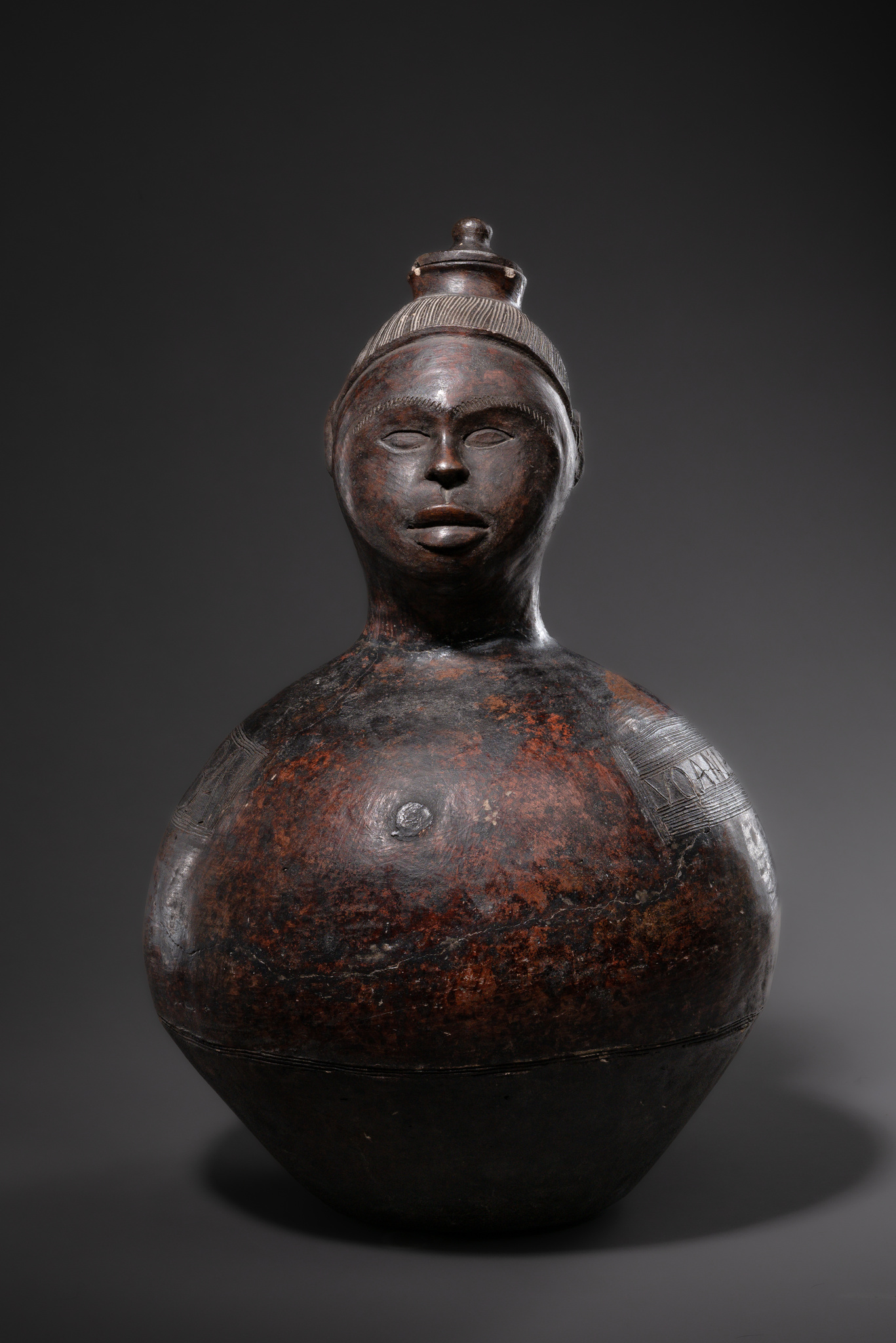
Récipient avec tête humaine · R. D. Congo, Bakongo / Woyo, Voania de Muba (†1928) · ID: 3052796
Description
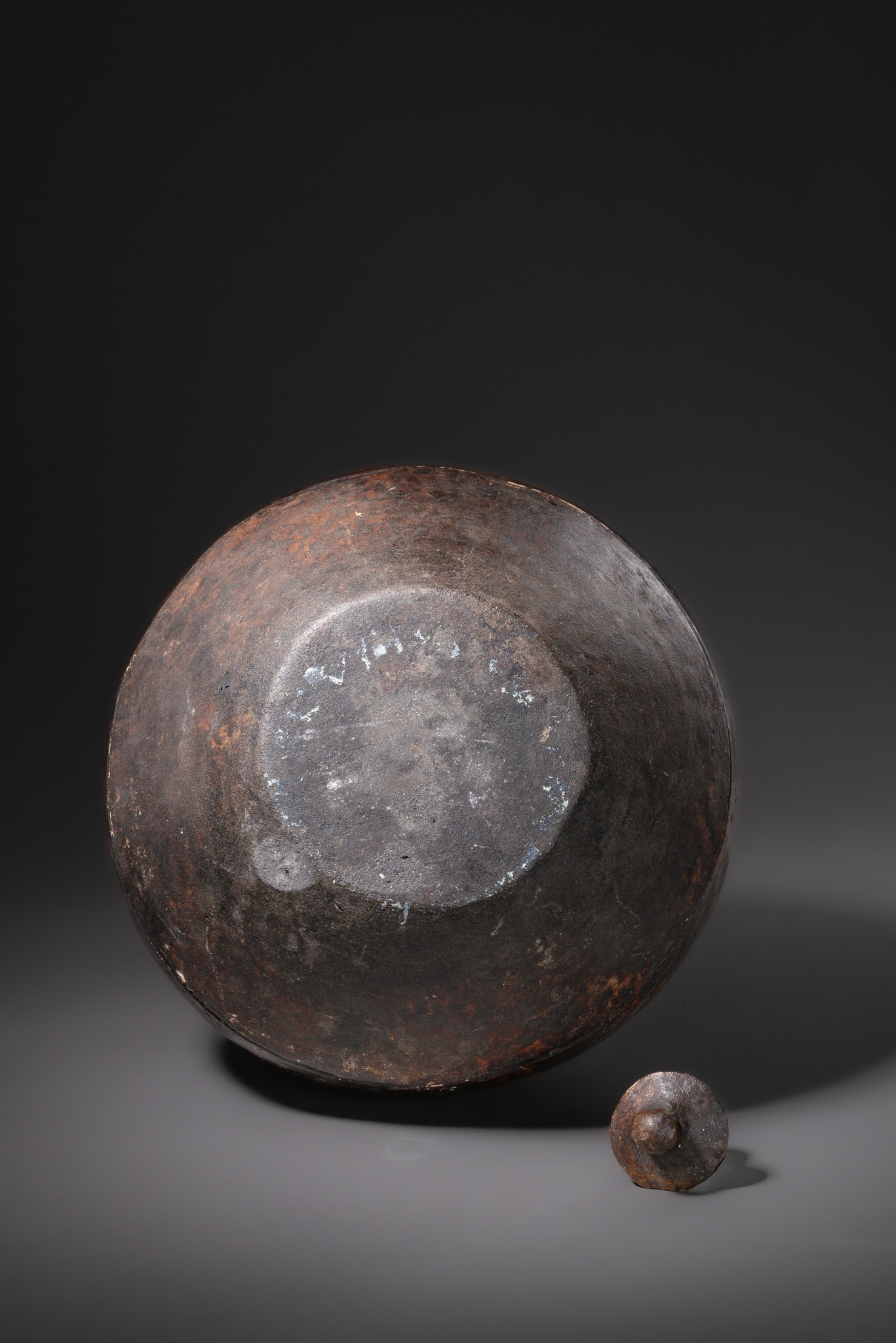
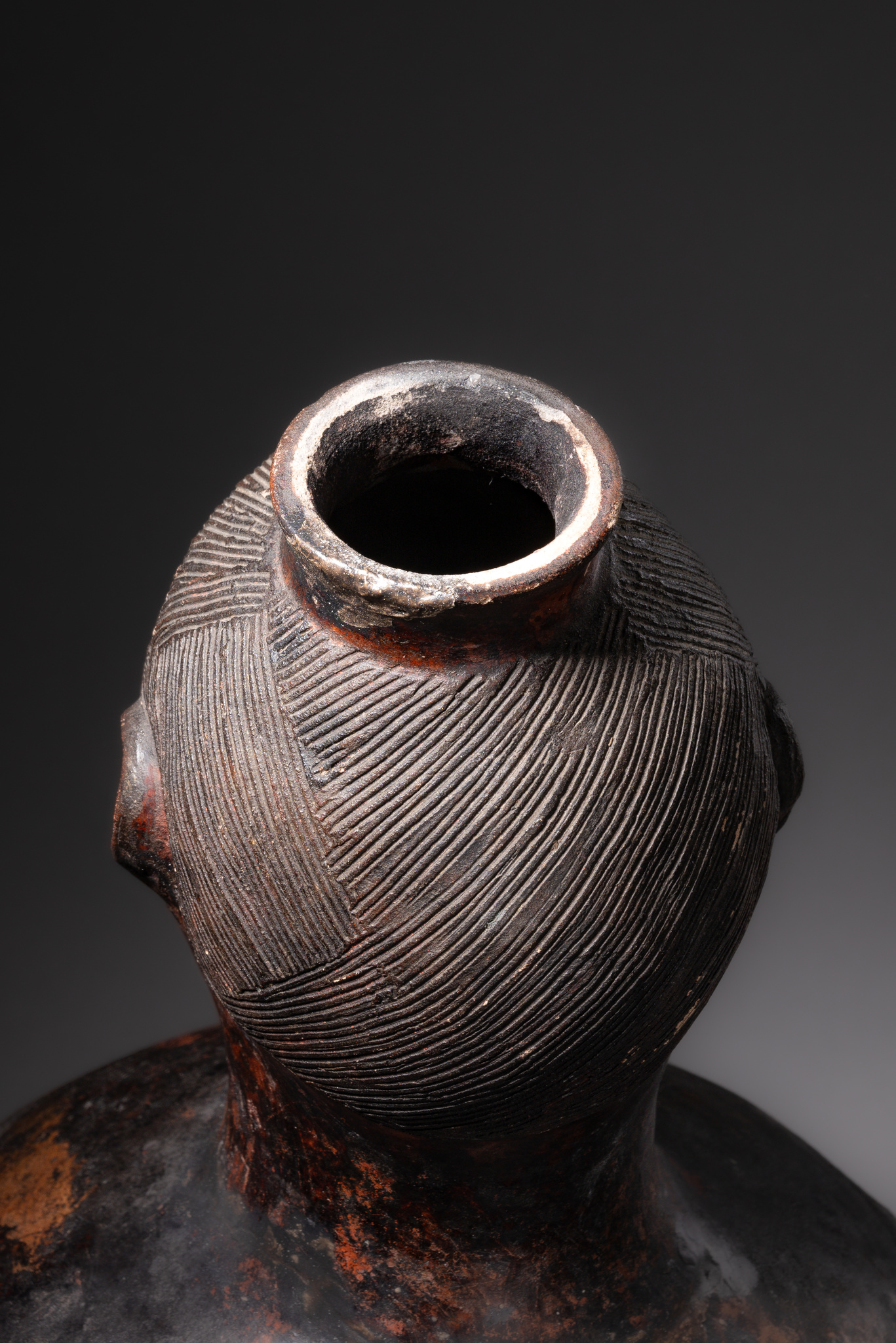
ceramic, separately crafted plug, incised signature “Voania Muba”
The work of Voania (Chief of) Muba is unusual in that his name is known through his signature on his works and also because in Africa pottery is generally the work of women rather than men. Voania’s work first appeared in Europe around 1910 and he is thought to have died around 1928.
The Belgian physician Dr. Élie-Joseph Étienne had a significant influence on Voania’s artistic development. At his encouragement, Voania began signing his ceramics, making them easily identifiable and aligning them more closely with the European market. Étienne documented Voania’s works in detail and brought the first pieces to Europe, which greatly enhanced the artist’s visibility and reputation.
The temporal overlap between Étienne’s collecting activities and stylistic changes in Voania’s work - such as the more prominent signatures and new decorative elements - suggests that Voania consciously adapted his production to European expectations. In this sense, Étienne acted as a key mediator in a cultural exchange that shaped Voania’s artistic trajectory (cf. Forbes 2019).
Littérature comparée
Forbes, Carlee S., Creative Mediations: The Figurative Ceramics of Voania (from) Muba. African Arts 2019, 52 (4), pp. 34-51 Volavka, Zdenka, Voania Muba: Contributions to the History of Central African Pottery, African Arts, vol. 10 (2), 1977, pp. 59-92
Publications
AHDRC: 0209394