
Rare masque anthropo-zoomorphe · Gabon, Kwele · ID: 3052833
Description
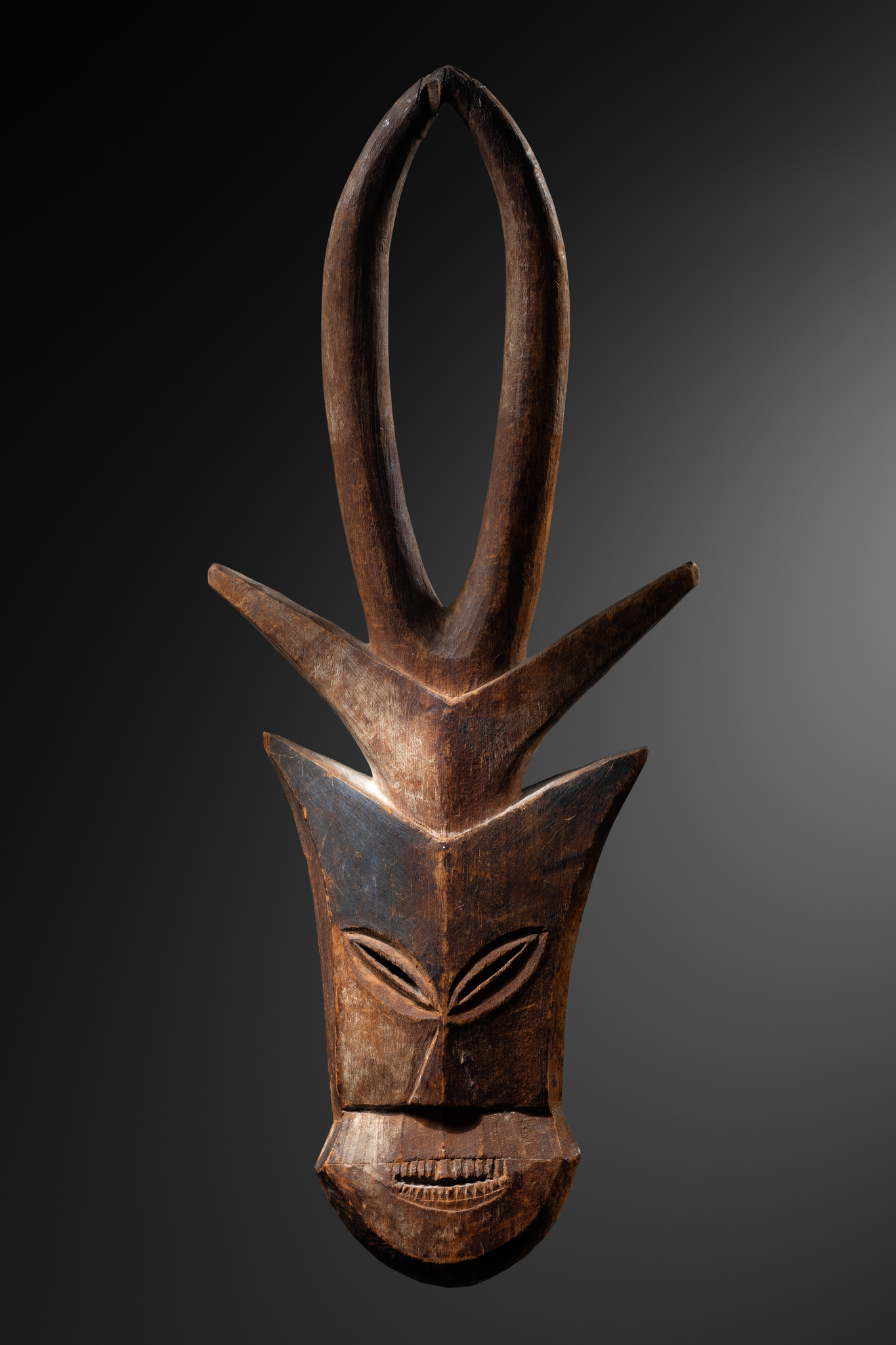
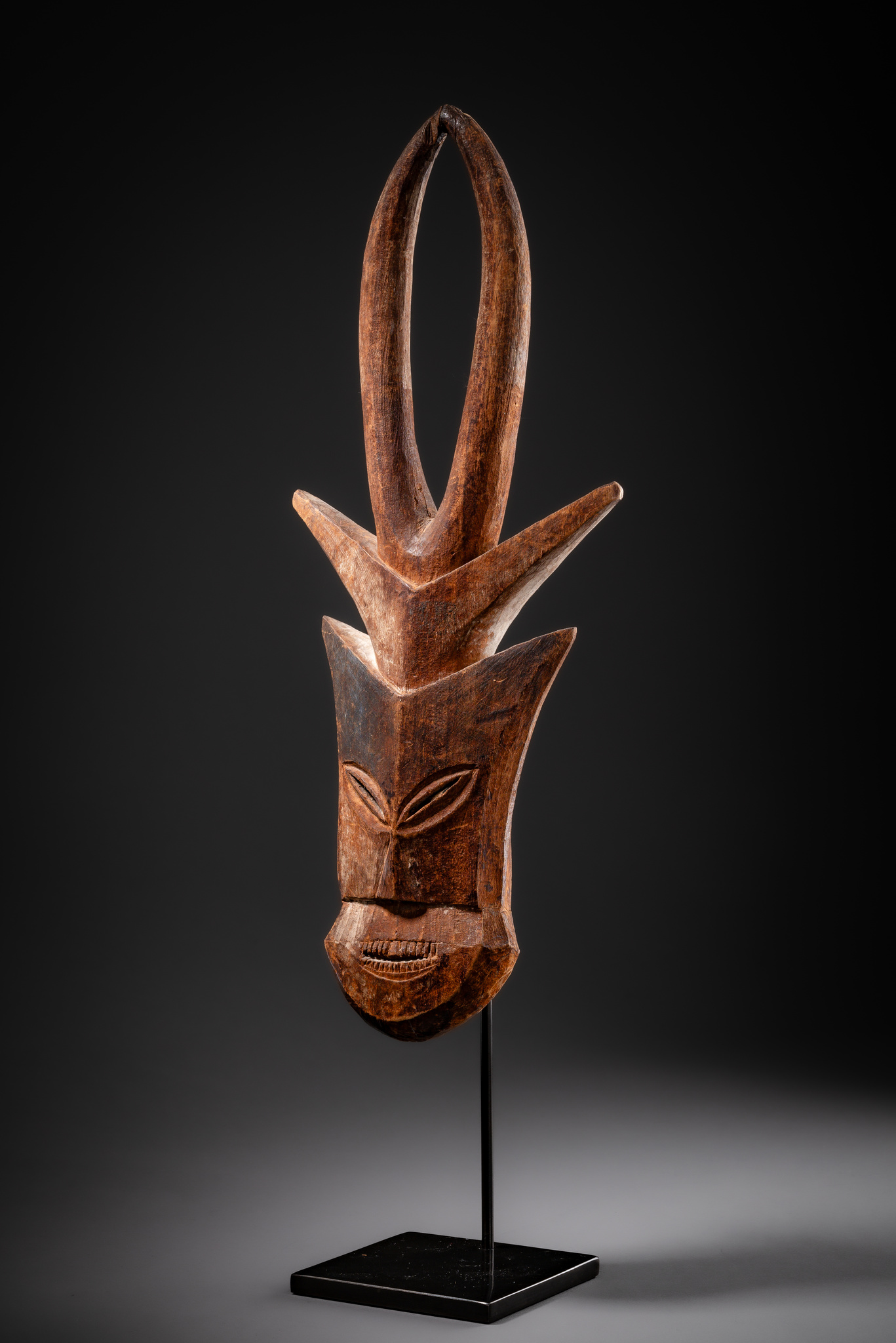
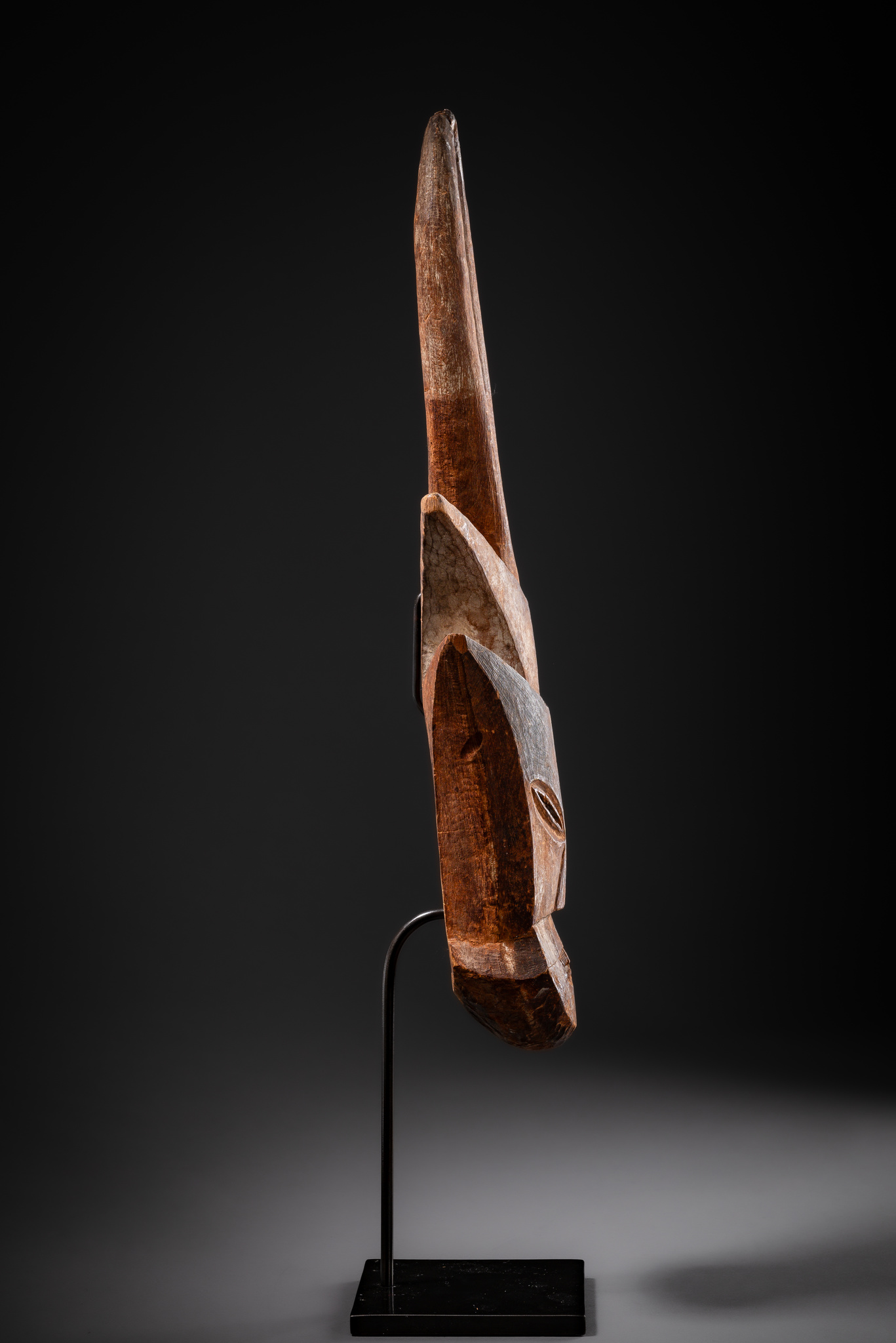
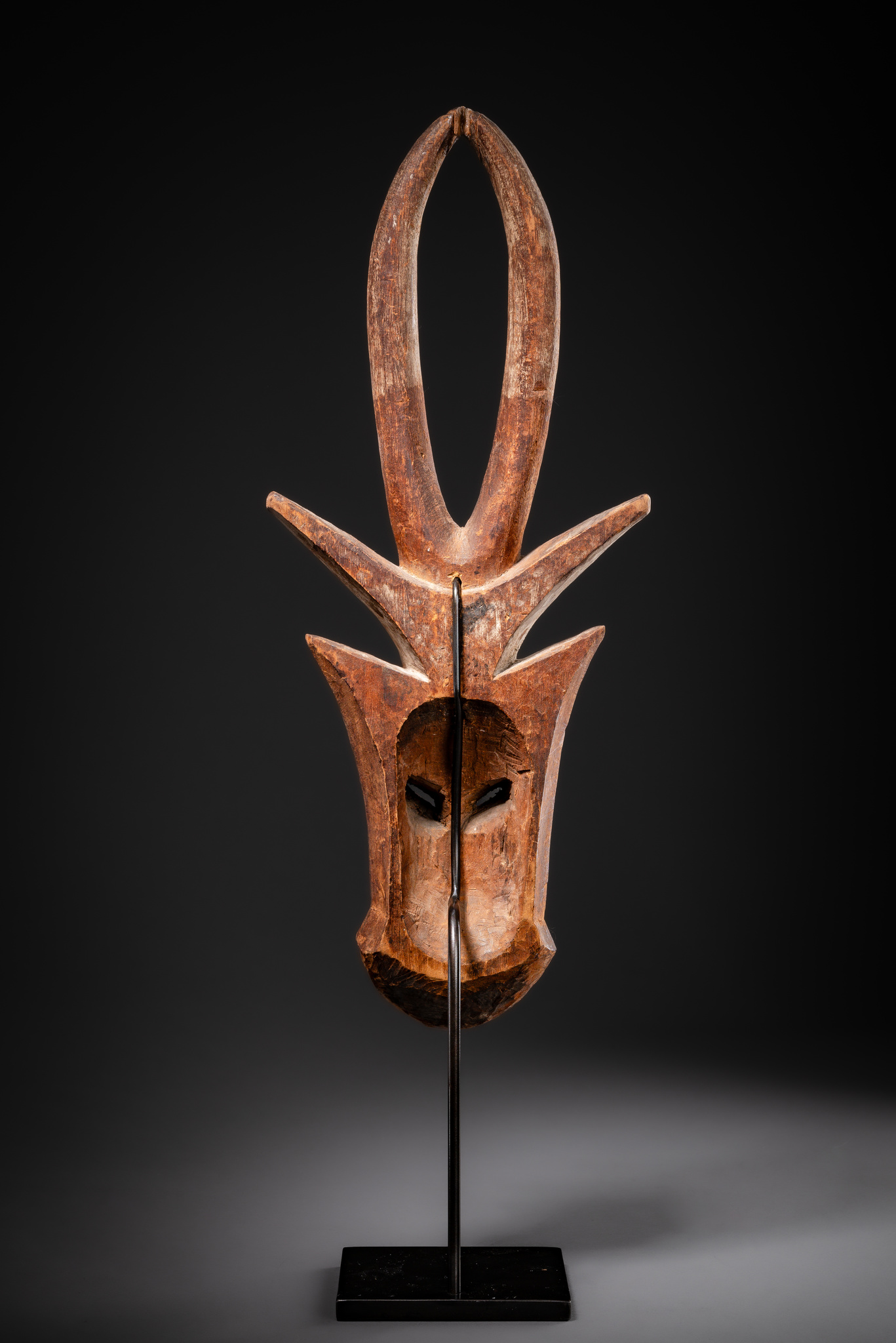
wood, pigments, base
The Kwele are particularly known for their rare antelope masks with upward-pointing horns. A notable example is a widely published mask from the Barbier-Mueller Collection, Geneva, collected in 1930 (AHDRC 0048541). The use of anthropomorphic face masks is also documented, either crowned with vertical horns (AHDRC 0048554) or framed - or entirely encircled - by widely extending horns (LaGamma, 2007).
The present piece represents an especially finely crafted variant of an antelope mask. What makes it truly unique is its combination of both an antelope depiction and a human face. No other example of this composite form has been found. Compared with other Kwele antelope masks, the antelope representation in this example is even more stylized. The commonly accentuated snout tip is complemented here by a tooth-filled mouth, above which a human nose has been incorporated.
The rare Kwele masks are associated with the Bwete society, which is responsible for maintaining social order. They are also used in initiation rites and at the conclusion of mourning periods. As embodiments of benevolent forest spirits, or ekuk, the masks display zoomorphic or anthropomorphic features, or a combination of both. The faces are usually painted with white kaolin clay, a pigment the Kwele associate with light and clarity - two essential factors in the struggle against evil (after Hahner-Herzog, 1997).
Littérature comparée
LaGamma, Alisa (ed.), Eternal Ancestors, New York 2007, p. 289 ff. Hahner-Herzog, Iris, Das Zweite Gesicht, Genf, München, New York 1997, cat. 69