
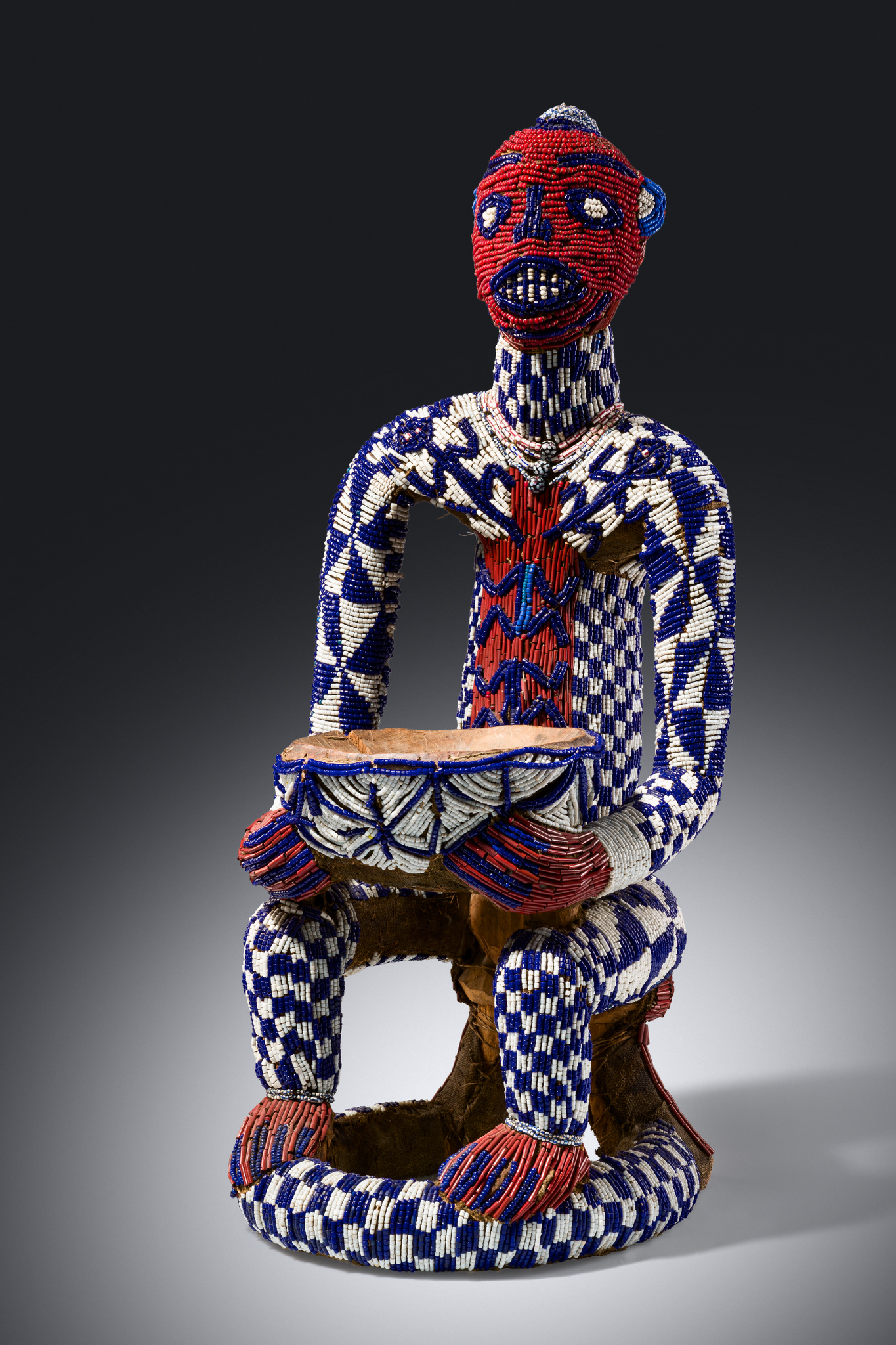
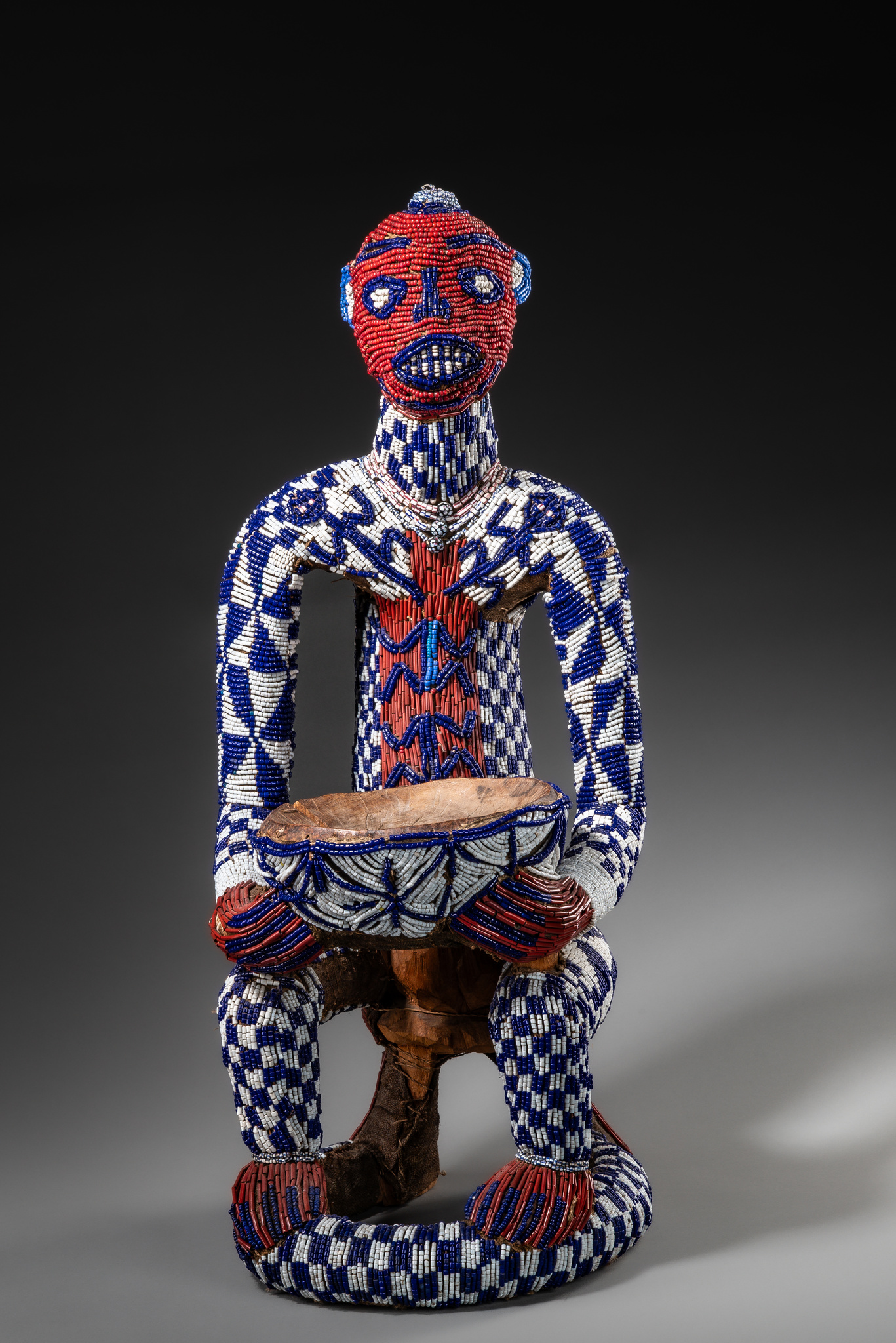
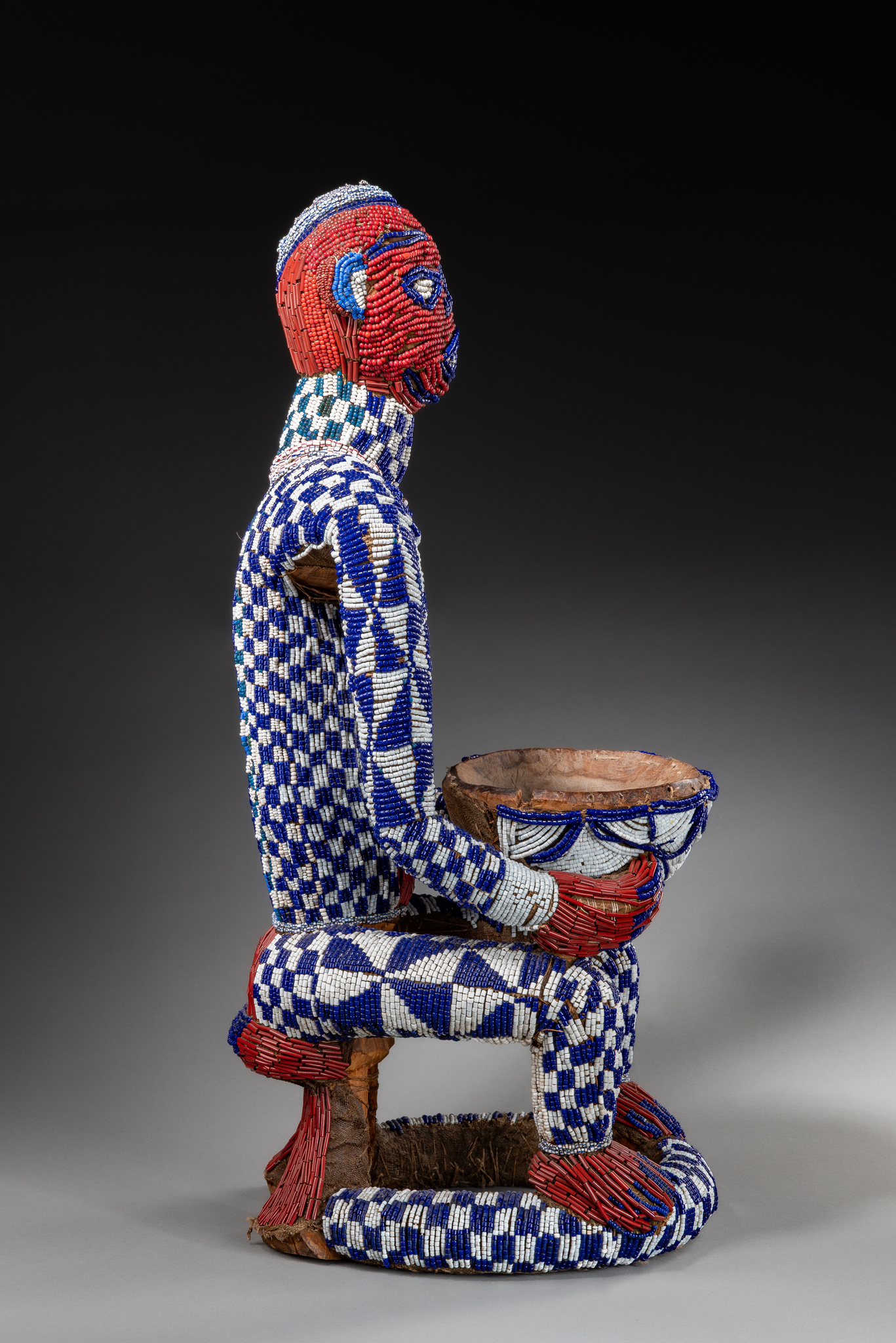
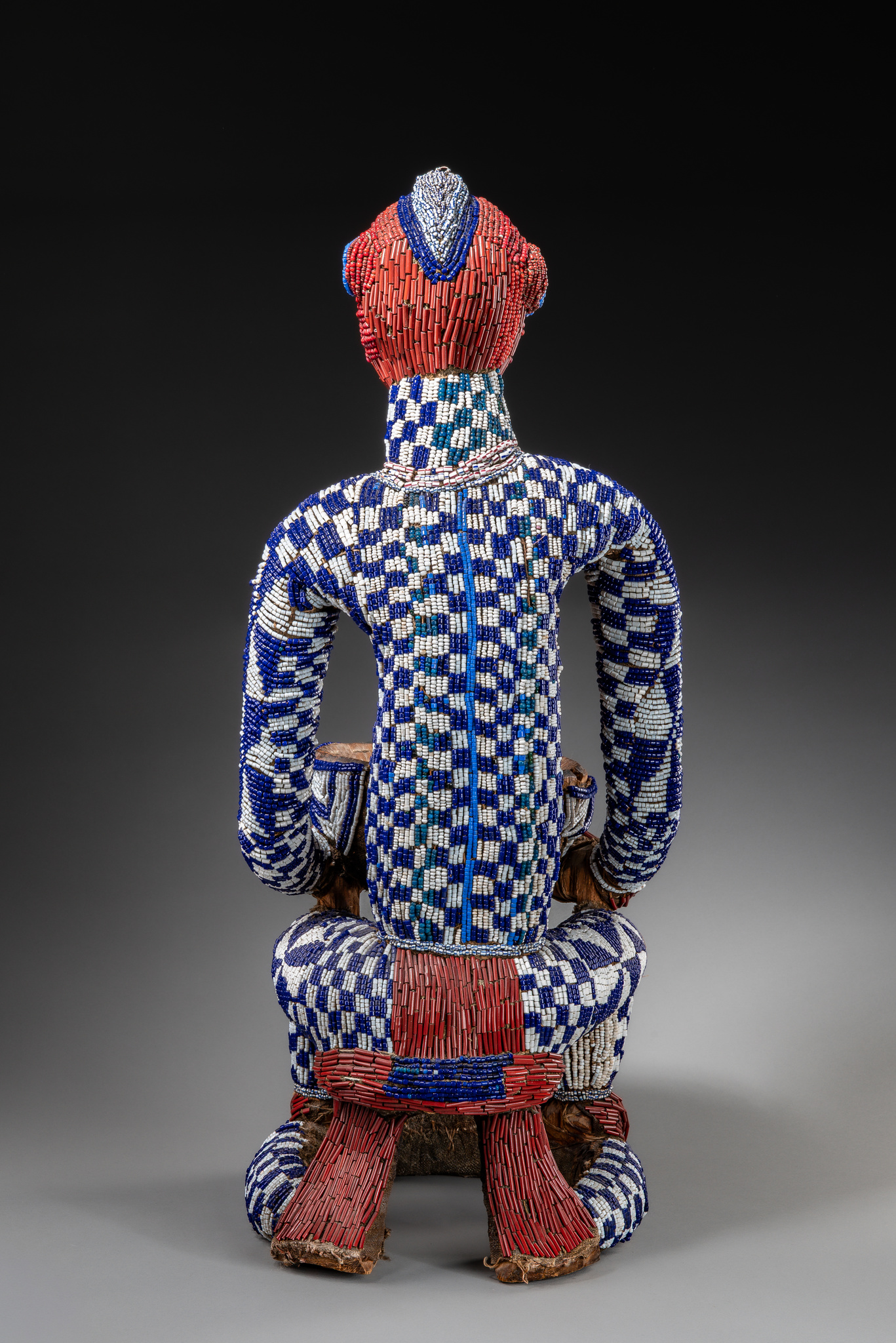
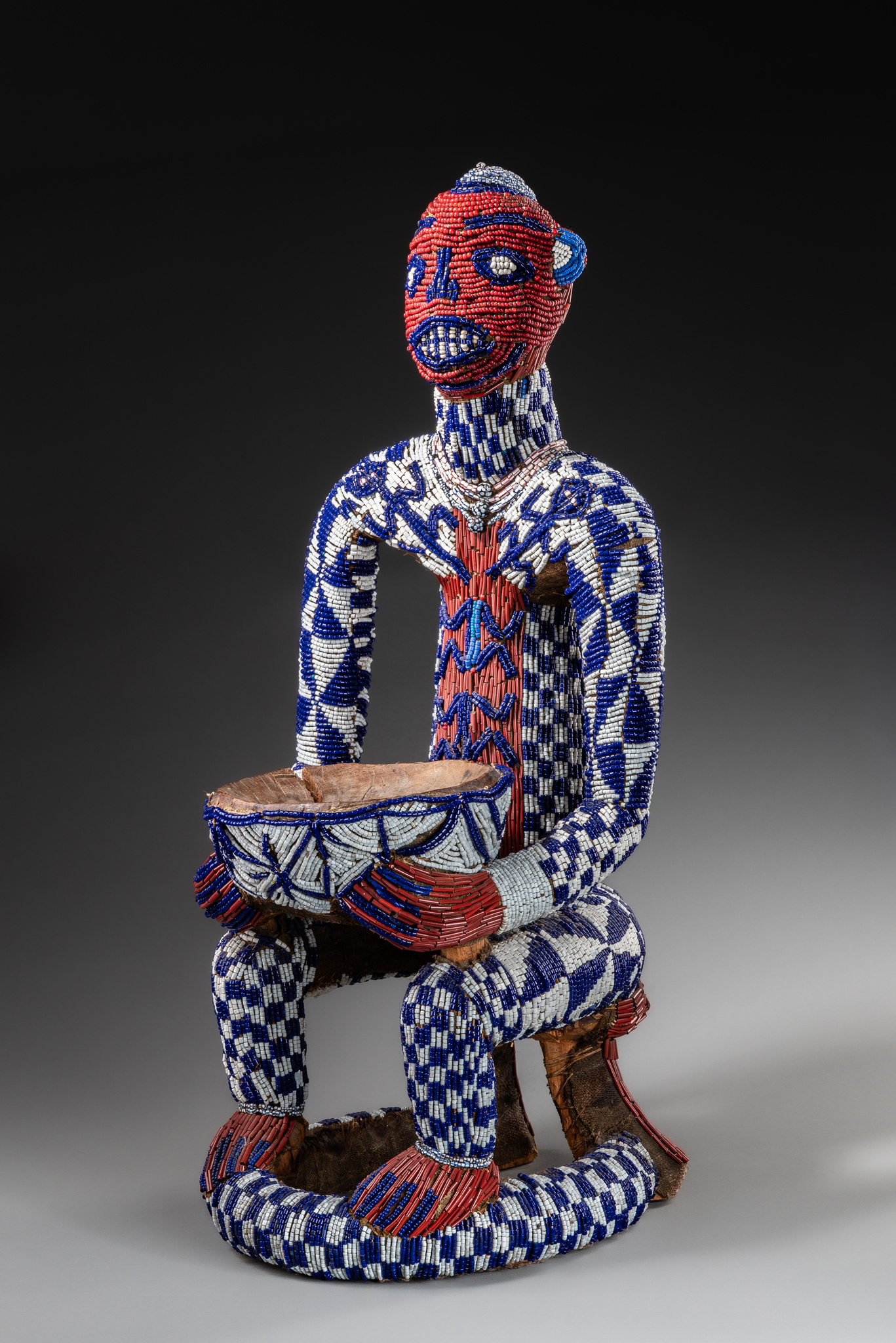
Porteur de coupe assis · Grassfields du Cameroun, Bamum · ID: 3053516
Description
wood, coloured beads,
Monumental bowl-bearing figures are known locally as “mfeuk-meunju”, “ntumbi” or “nduli-fu-keuh”. Such anthropomorphic figures, which bear a deep, hemispherical vessel, were among the most significant ceremonial objects of Cameroon’s grassland cultures.
Depending on the region, they fulfilled different functions in religious and social life: they were used in important funeral ceremonies, served as containers for kola nuts at court receptions, and played a role in the selection of successors as well as at gatherings of dignitaries. Furthermore, they were used in marriage ceremonies during which the symbolic kola nut was exchanged.
Chewing the bitter kola nut in old Cameroon can be compared to our modern habit of chewing gum. No man left home without a supply of nuts. The kola nut has a stimulating effect. Its reputed aphrodisiac properties further contributed to its popularity.
The rulers kept containers lined with fresh leaves and filled with kola nuts ready to offer to their guests at any time. Cracking open a kola nut together with the ruler was considered the highest expression of hospitality and trust.
Publications
Eisenhofer, Stefan & Karin Guggeis, Afrikanische Kunst, München, Berlin 2002, p. 70, ill. 50