
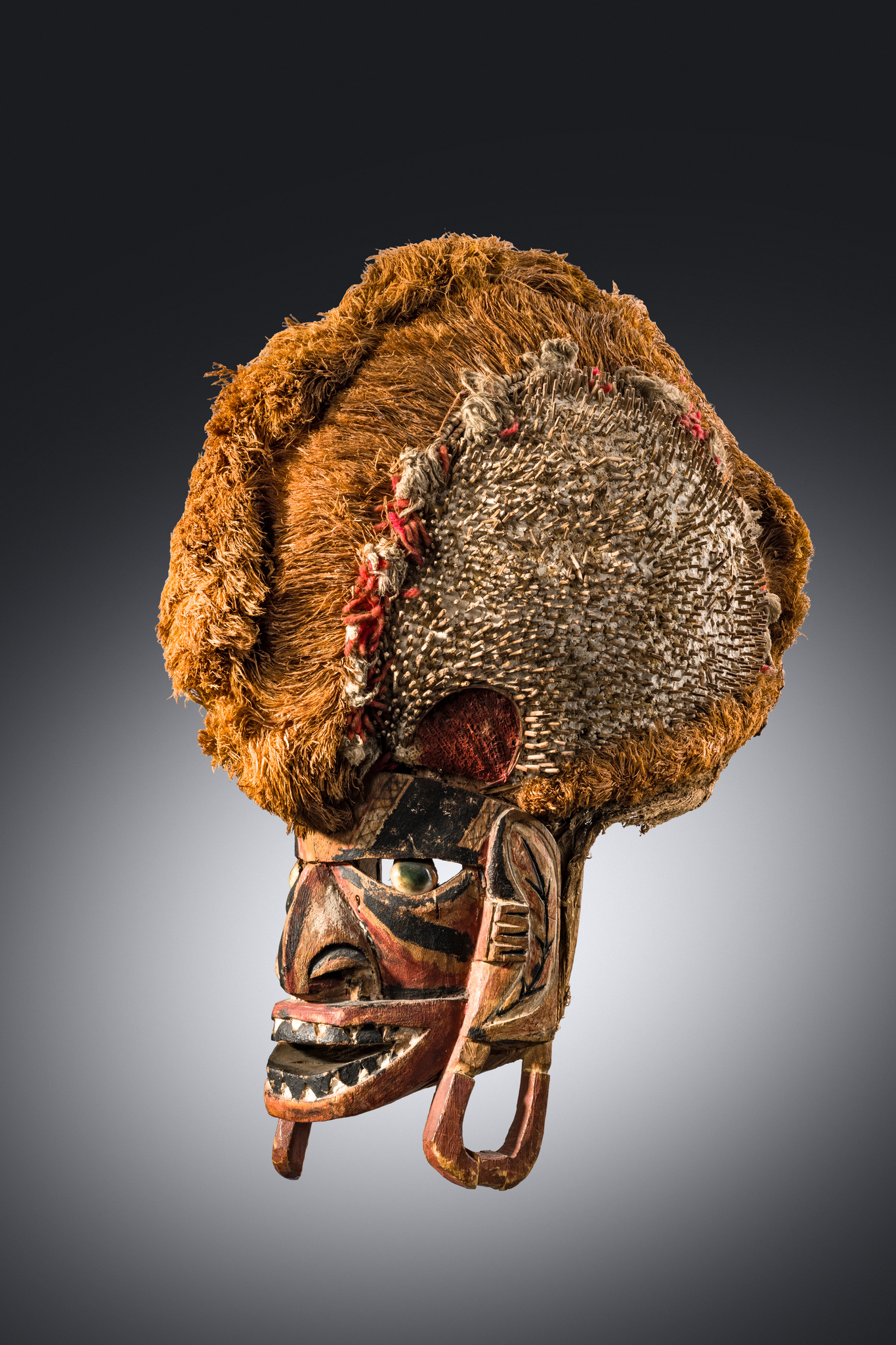
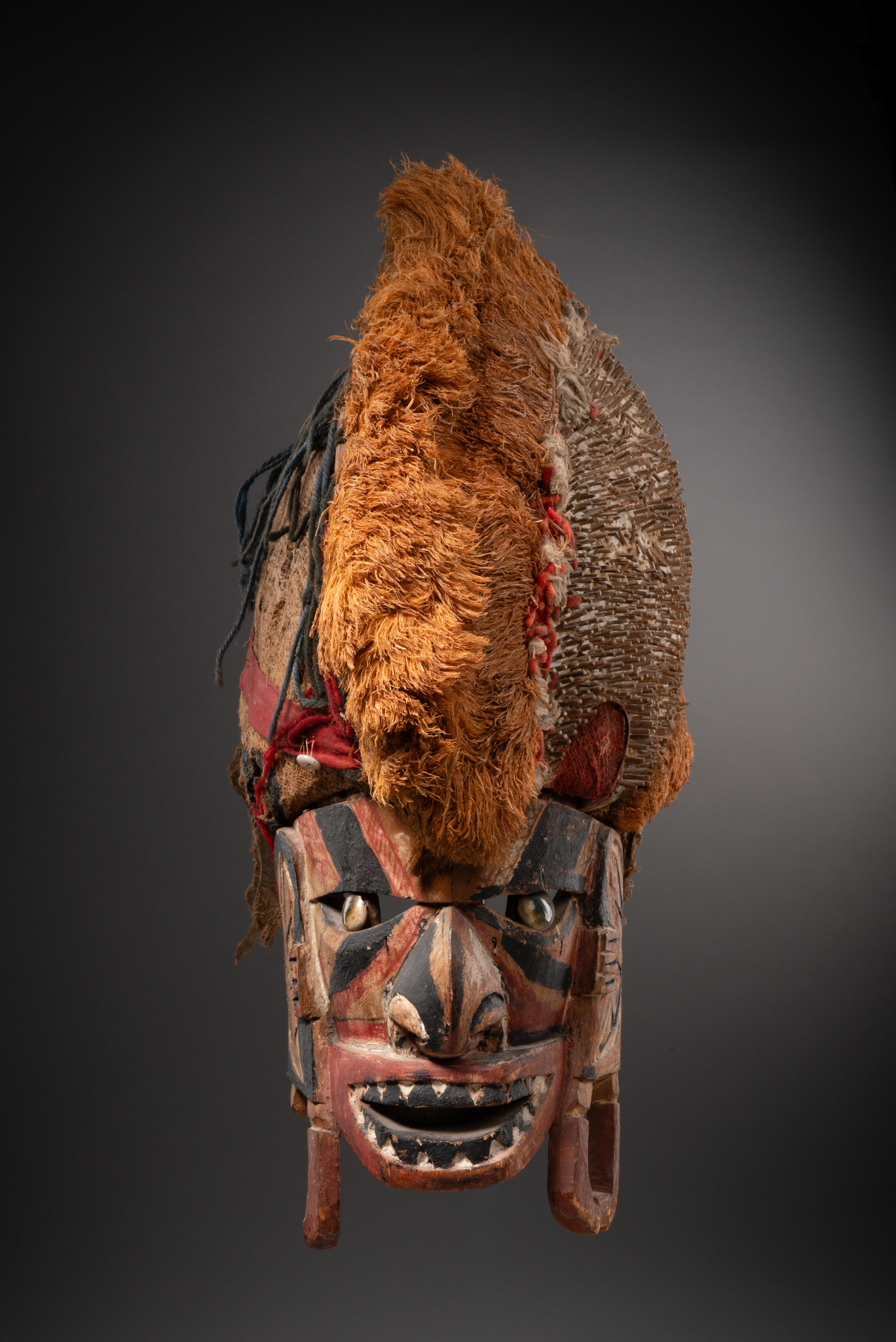
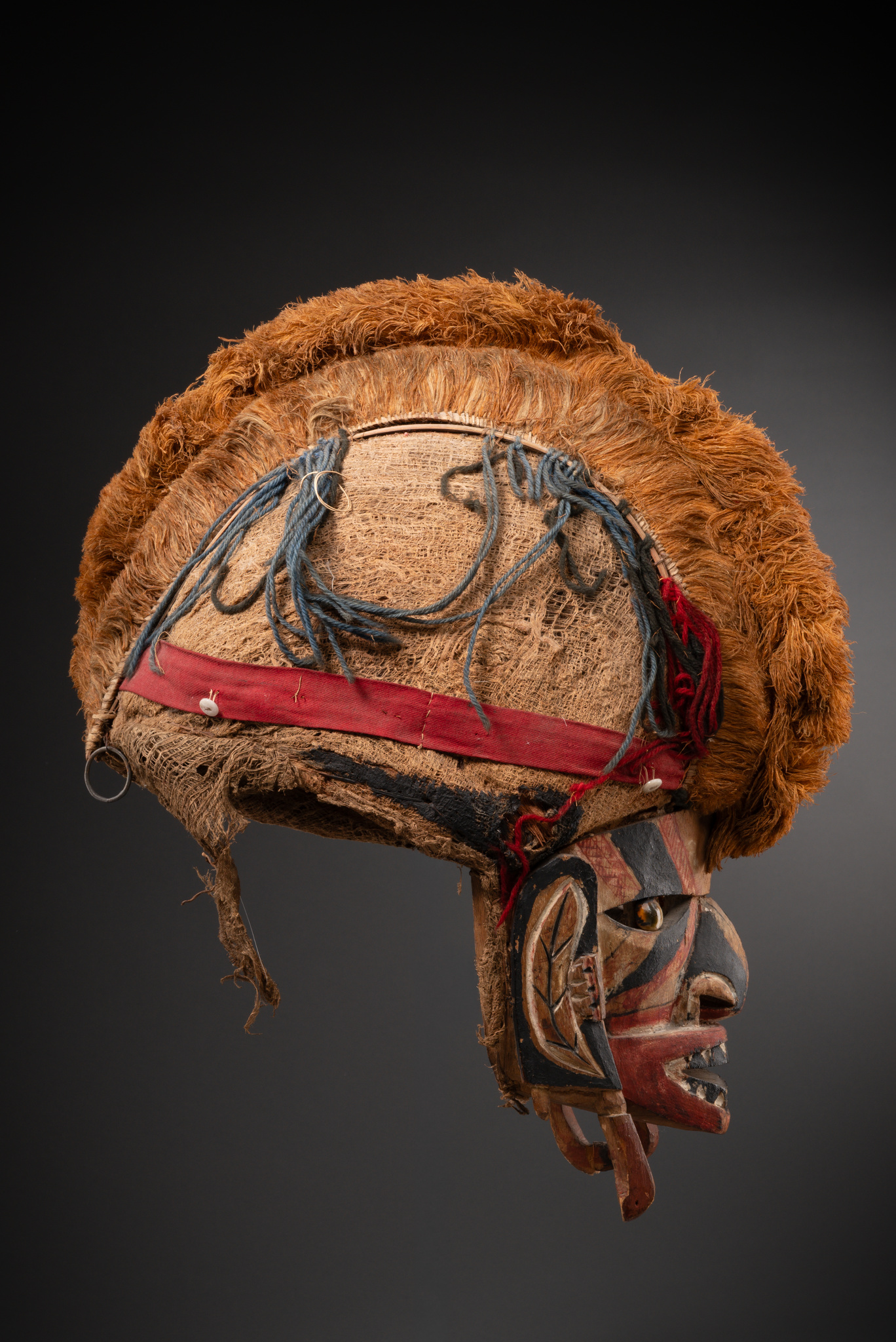
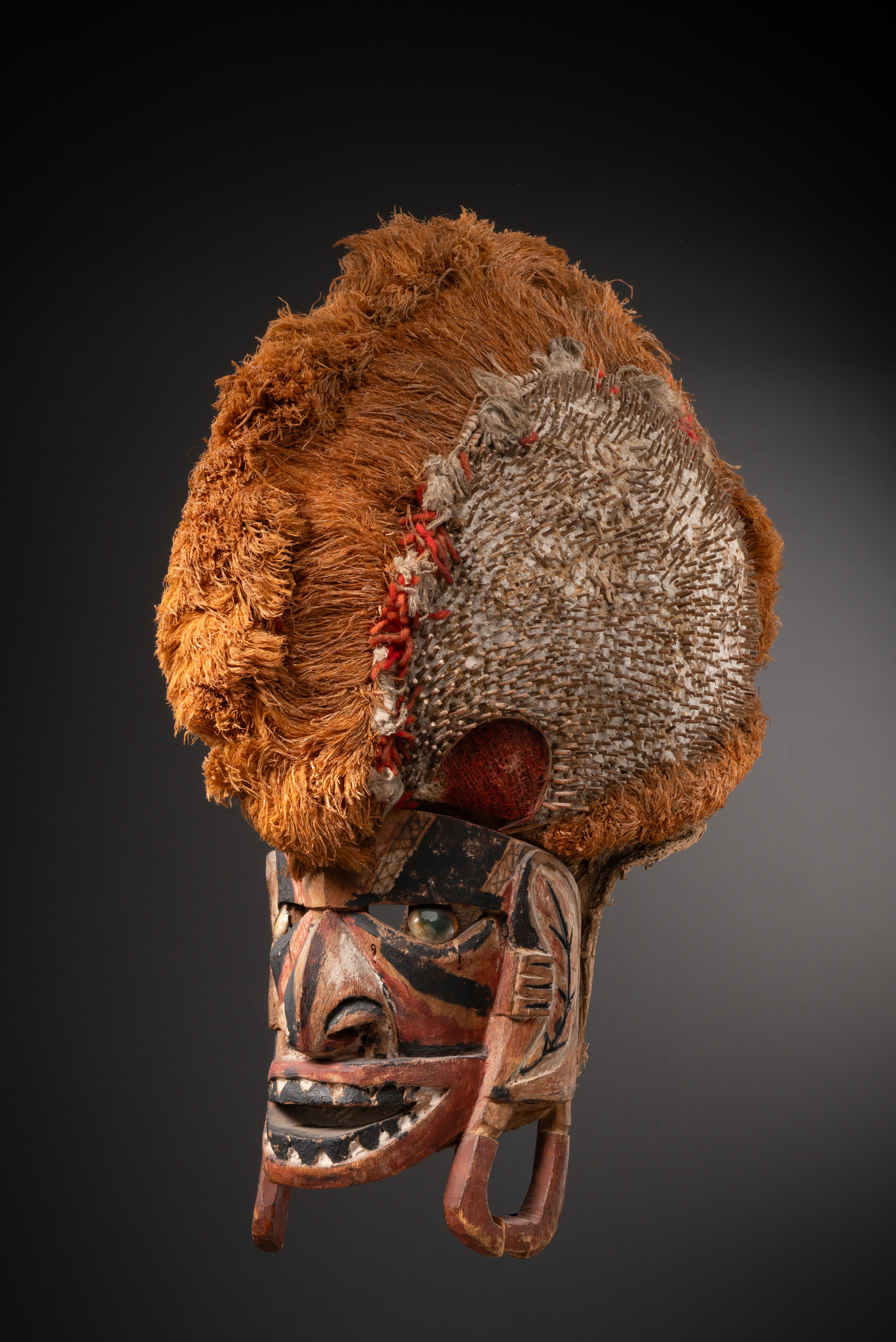
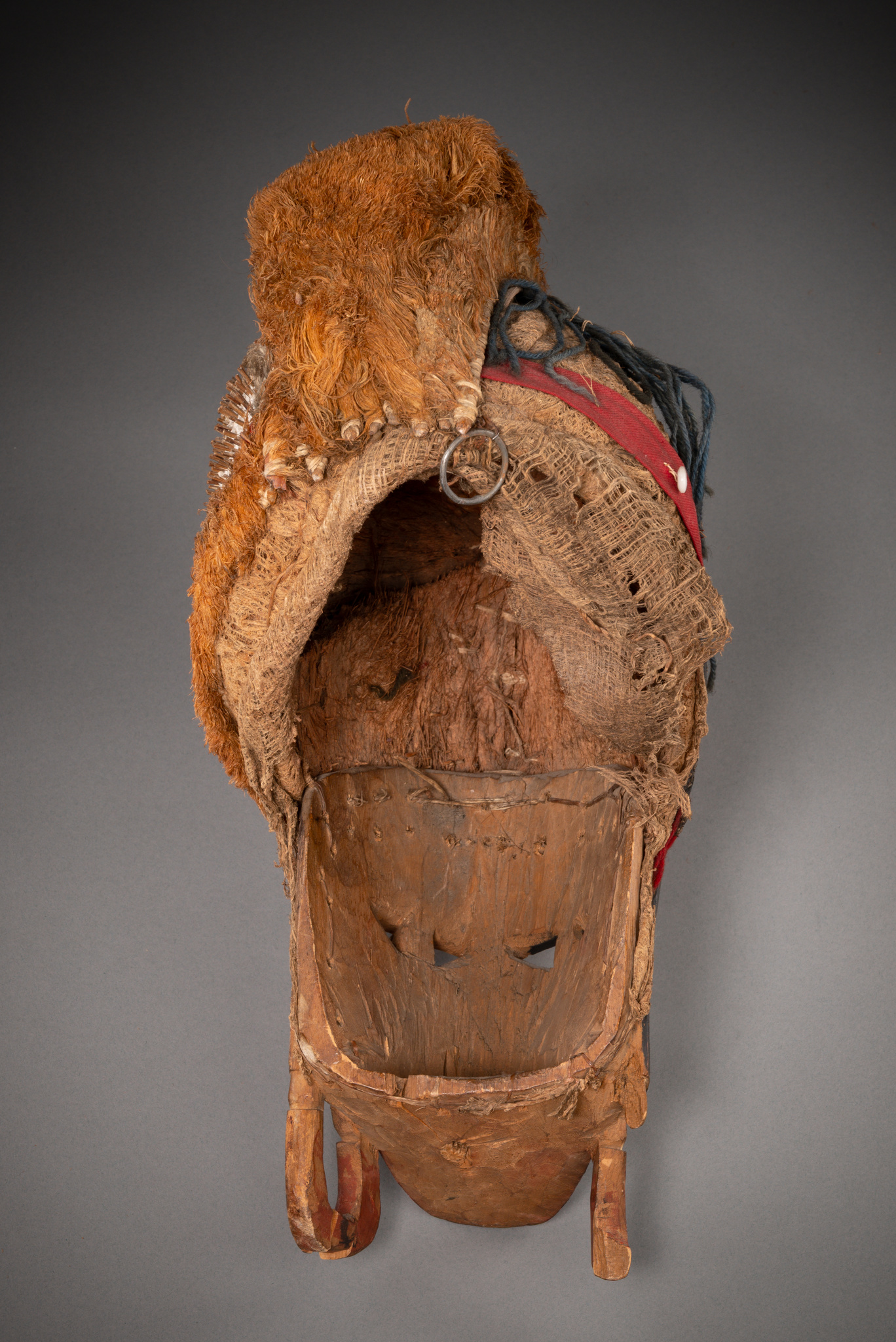
Masque malagan "tatanua", fin du XIXe siècle · Papouasie-Nouvelle-Guinée - Archipel Bismarck - Nouvelle Irlande · ID: 3053574
Arno Henseler, Munich, Germany
Description
wood, pigments, bark, plant fibres, dam.
The “tatanua” mask was a representation of the “tanua” spirit or soul of a deceased individual. “Tatanua” were danced in public, either in pairs or in groups or lines of men. In addition to these masks the dancers wore a skirt of fern leaves and other foliage round their bodies, reaching from the waist to the knee. They performed when a clan decides to sponsor a large-scale mortuary celebration, called “malagan”. Some six weeks before this event the dancers began sleeping and eating within the sponsor’s house. During this time they practiced a form of abstinence in order to develop male “strength” for the performance. Not only were physical contacts with women taboo, but the men could not eat peeled taro and fish. Should a dancer fail to develop this male capability through abstinence, the mask would constrict his head, causing blood to run from his temples and nostrils.