
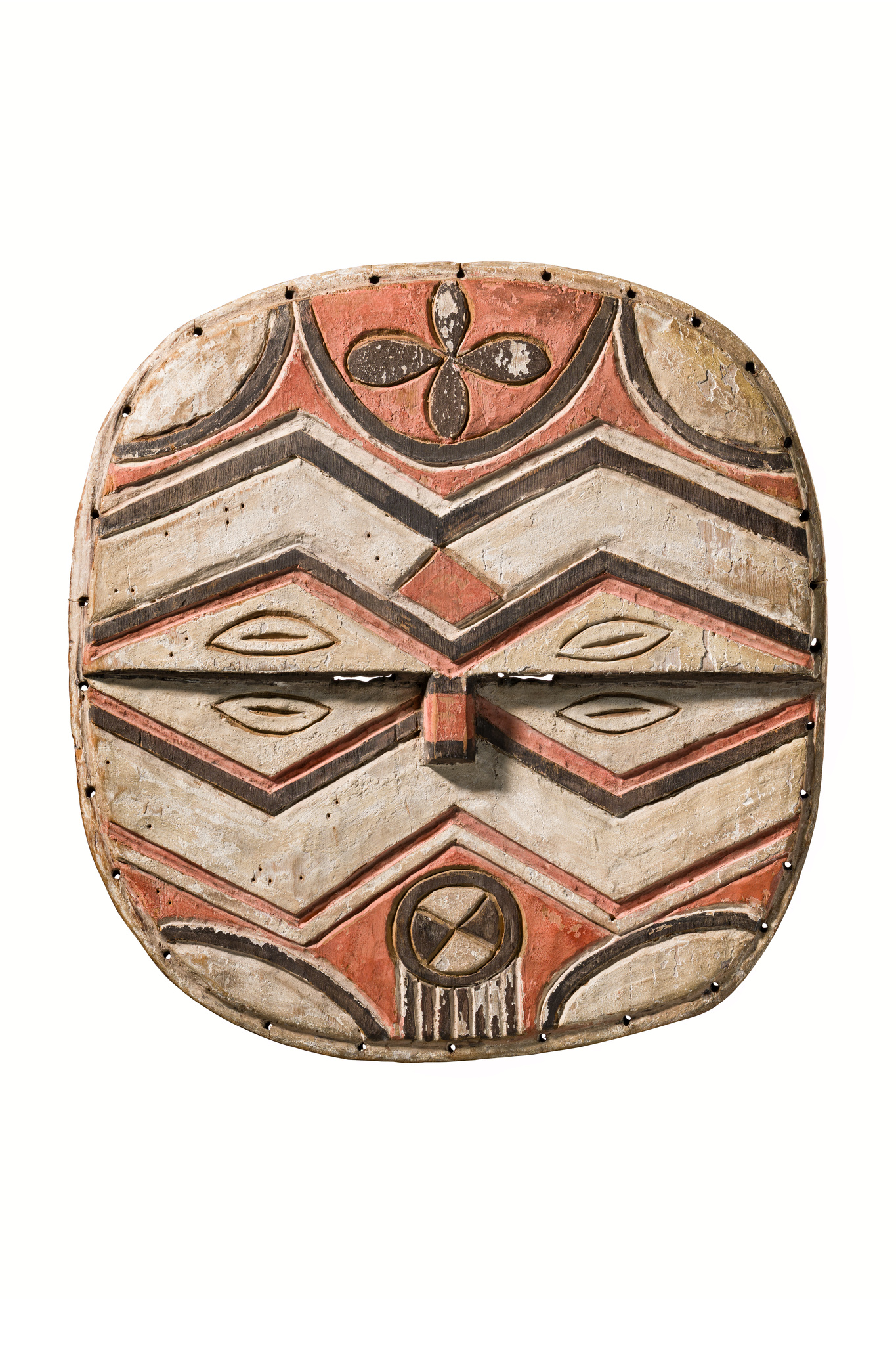
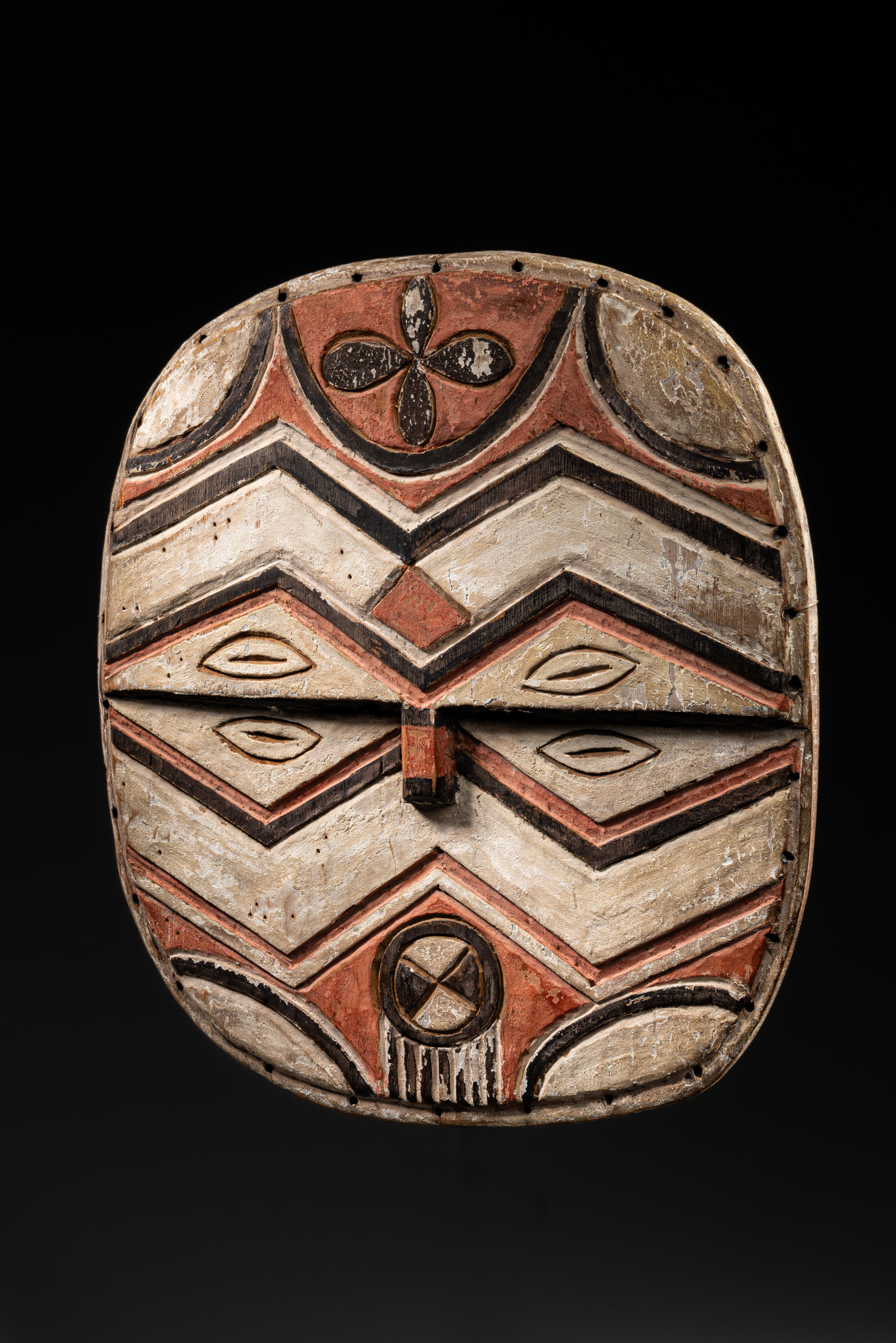
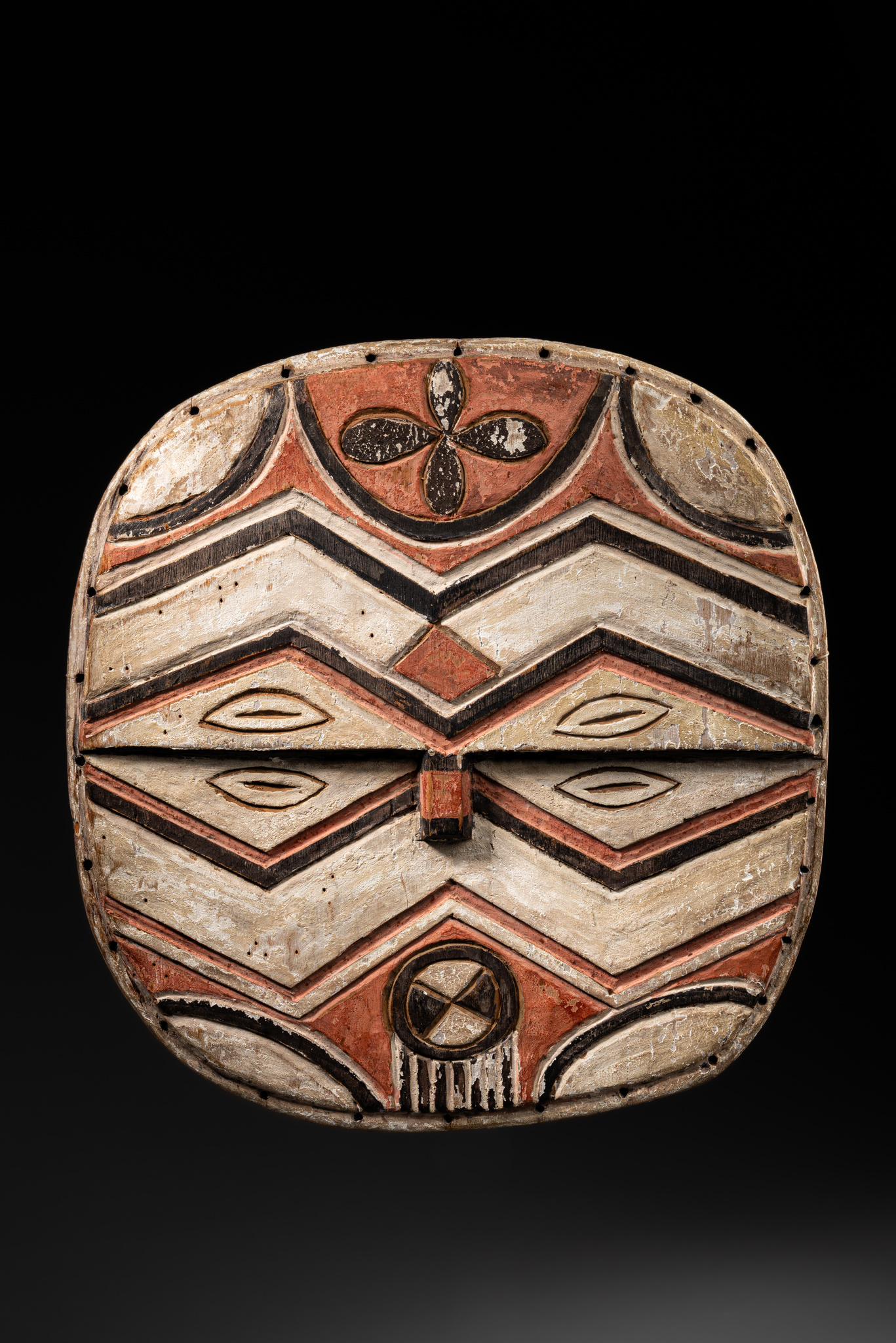
Masque facial "kidumu" · R. D. Congo, Teke, Mossendjo-Sibiti, rive droite du fleuve Congo · ID: 3053337
René Rasmussen, Paris, France
Furman Gallery, New York, USA (1961)
Christie’s, London, United Kingdom, 17 June 1980, lot 272
Description
wood, pigments,
This mask is associated with the “kidumu”, an important ritual dance and mask tradition of the Teke-Tsaye people in D.R. Congo. Since the 19th century, the “kidumu” movement developed into a central social and ceremonial institution, in which numerous masks appeared simultaneously in ritual performances. In an era of migration, social change and the legacy of the slave trade, the dances embodied community, authority and spiritual continuity.
With French colonisation from 1913 onwards and the subsequent famines, this tradition temporarily collapsed before being revived in the 1930s. Following independence, “kidumu” masks began to appear in greater numbers on the international art market. Works from this tradition are now regarded as significant examples of the ritual and performative art of Central Africa.
The mask was sold at Christie’s, London, on 17 June 1980 (lot 272), catalogued as an “extremely rare Teke wood mask” attributed to the Tsaye sub-group. In the catalogue entry, the present mask was discussed in relation to rare late nineteenth-century Tsaye examples, including the mask formerly in the collection of André Derain, and similarities in the distinctive quatrefoil motif were noted.
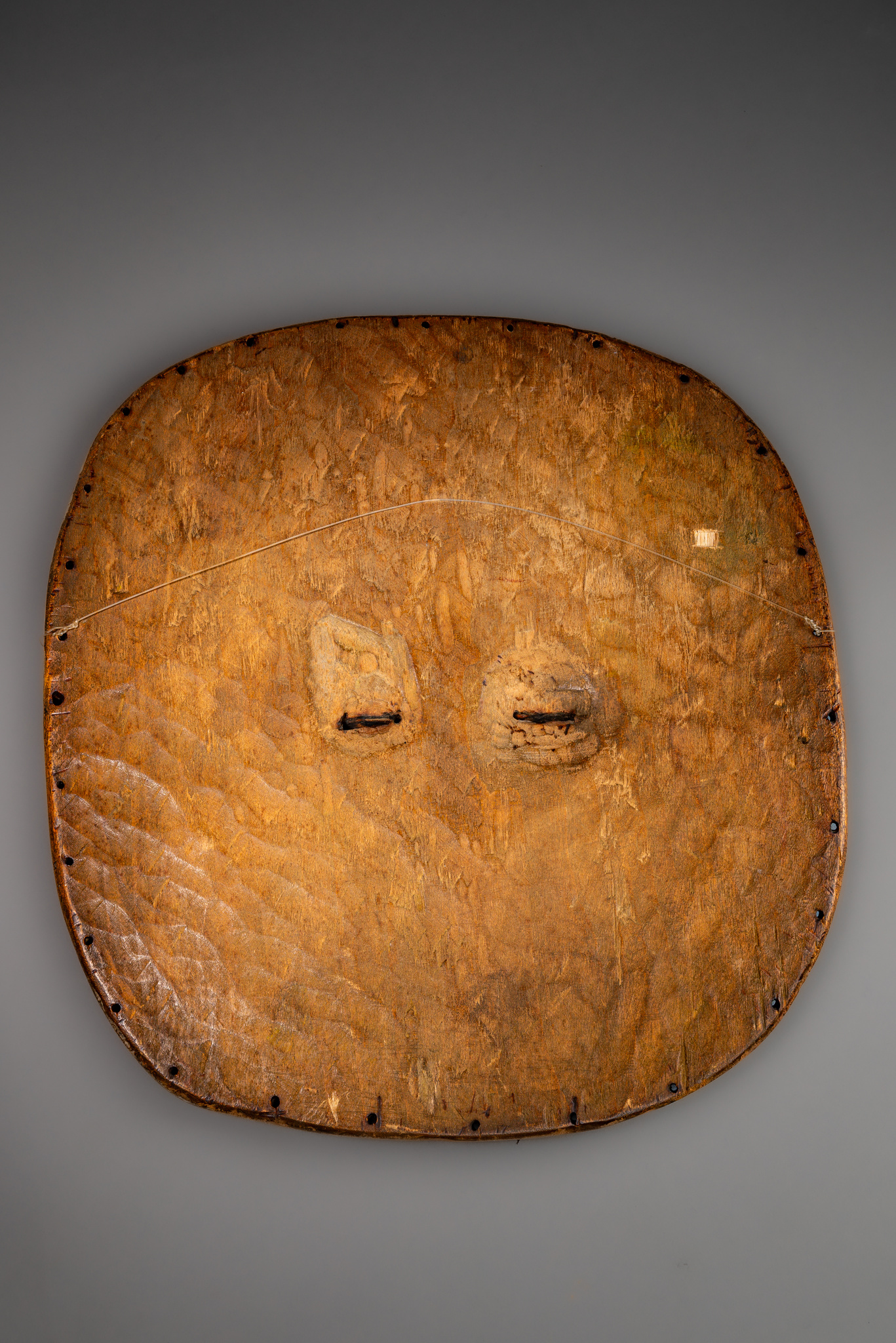
Following its purchase, the mask was submitted for examination to the Koninklijk Museum voor Midden-Afrika (Royal Museum for Central Africa), Tervuren. In a letter dated 18 December 1980, Huguette Van Geluwe, Acting Head of the Section of Ethnography, reported that wood analysis identified the material as European poplar and that pigment testing indicated mineral-based paint. She further commented on certain stylistic features she regarded as atypical.
In subsequent correspondence dated 20 March 1981, William Fagg, Consultant on Tribal Art at Christie’s, acknowledged the identification of poplar wood but expressed the view that the mask was “not a fake,” suggesting that it might represent an early European production, possibly connected to André Derain’s circle during the formative period of modernist engagement with African art. The distinctive quatrefoil motif was cited as linking the present work with the Derain example.
A request for refund was made to Christie’s in 1981 on the grounds of misdescription; this was declined under the Conditions of Sale. The mask has remained in the same private collection since that time.
In February 2026, an independent wood identification analysis (Alden Identification Service, Report No. 6567) identified the wood as Populus sp. (Aspen/Cottonwood/True Poplar Group). The report notes that approximately thirty-five species fall within this genus and that they are anatomically indistinguishable under microscopic examination; Populus species are widely distributed across Eurasia (including Europe and parts of North Africa) as well as North America. The analysis therefore confirms the wood as Populus but does not determine specific geographic origin.
The use of imported materials in African art is documented in certain historical contexts, particularly in regions engaged in sustained trade and colonial contact during the late nineteenth and early twentieth centuries, when European goods — including, in some instances, timber — circulated through coastal and mission networks. African artists are known to have incorporated available foreign materials alongside local resources, and the reuse of box or crate wood has been observed in some workshop contexts in the late nineteenth and early twentieth centuries. Poplar wood was commonly used for French shipping crates in this period, including many bound for French colonial and mission regions encompassing the Republic of the Congo, where the Tsaye group lived. While Populus is not a commonly recorded carving wood for masks of the Teke region, where denser indigenous hardwoods are more typical, carvers crafting flat figures and plank masks in particular may have been drawn to European scrap wood or boards.
Publications
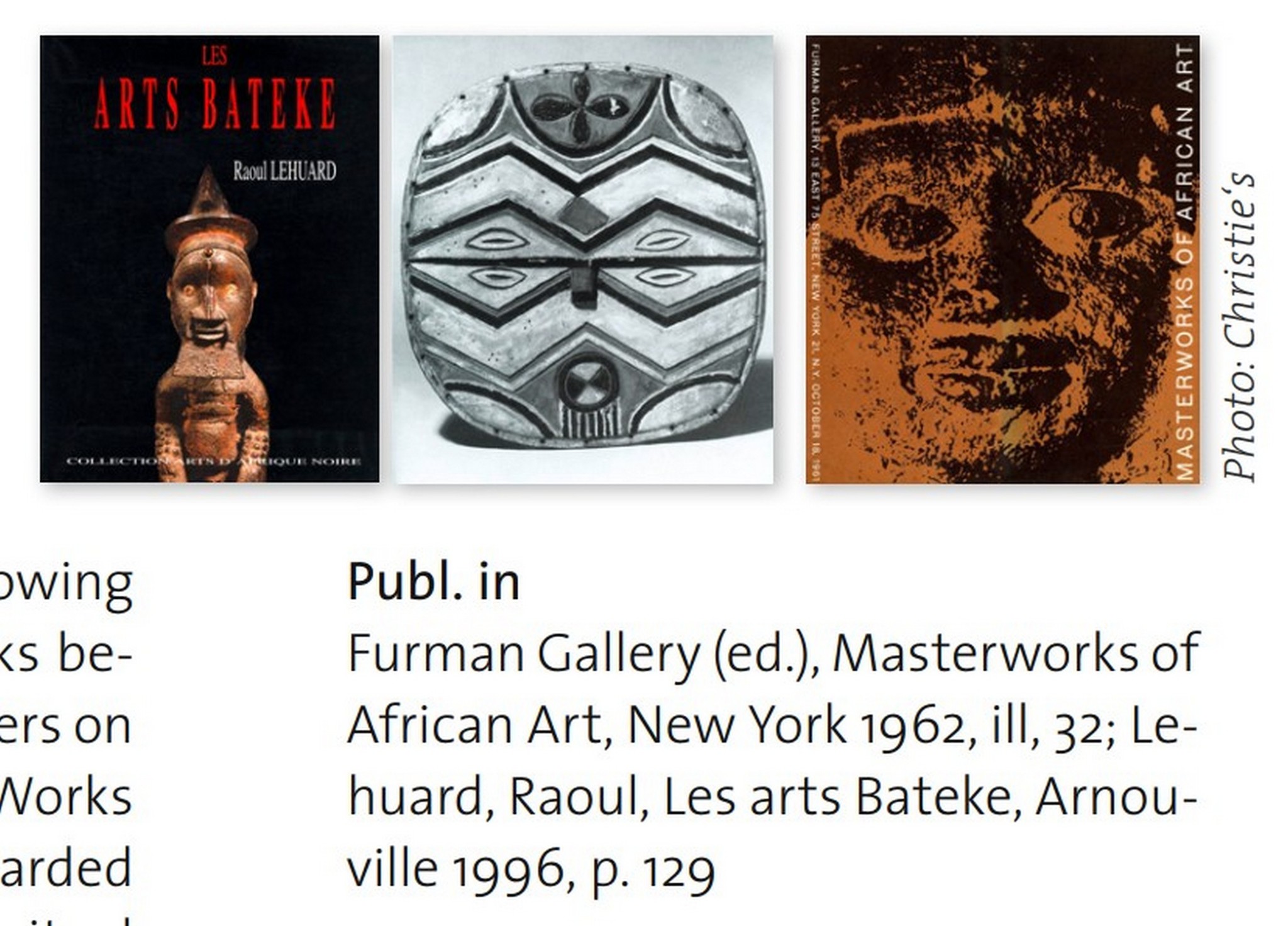
Furman Gallery (ed.), Masterworks of African Art, New York 1962, ill. 32; Lehuard, Raoul, Les arts Bateke, Arnouville 1996, p. 129
AHDRC: 0014298
Littérature comparée
Schädler, Karl-Ferdinand, Encyclopedia of African Art and Culture, Munich 2009, p. 326
Exposition
New York, USA, Masterworks of African Art. Furman Gallery, 18 October 1961