
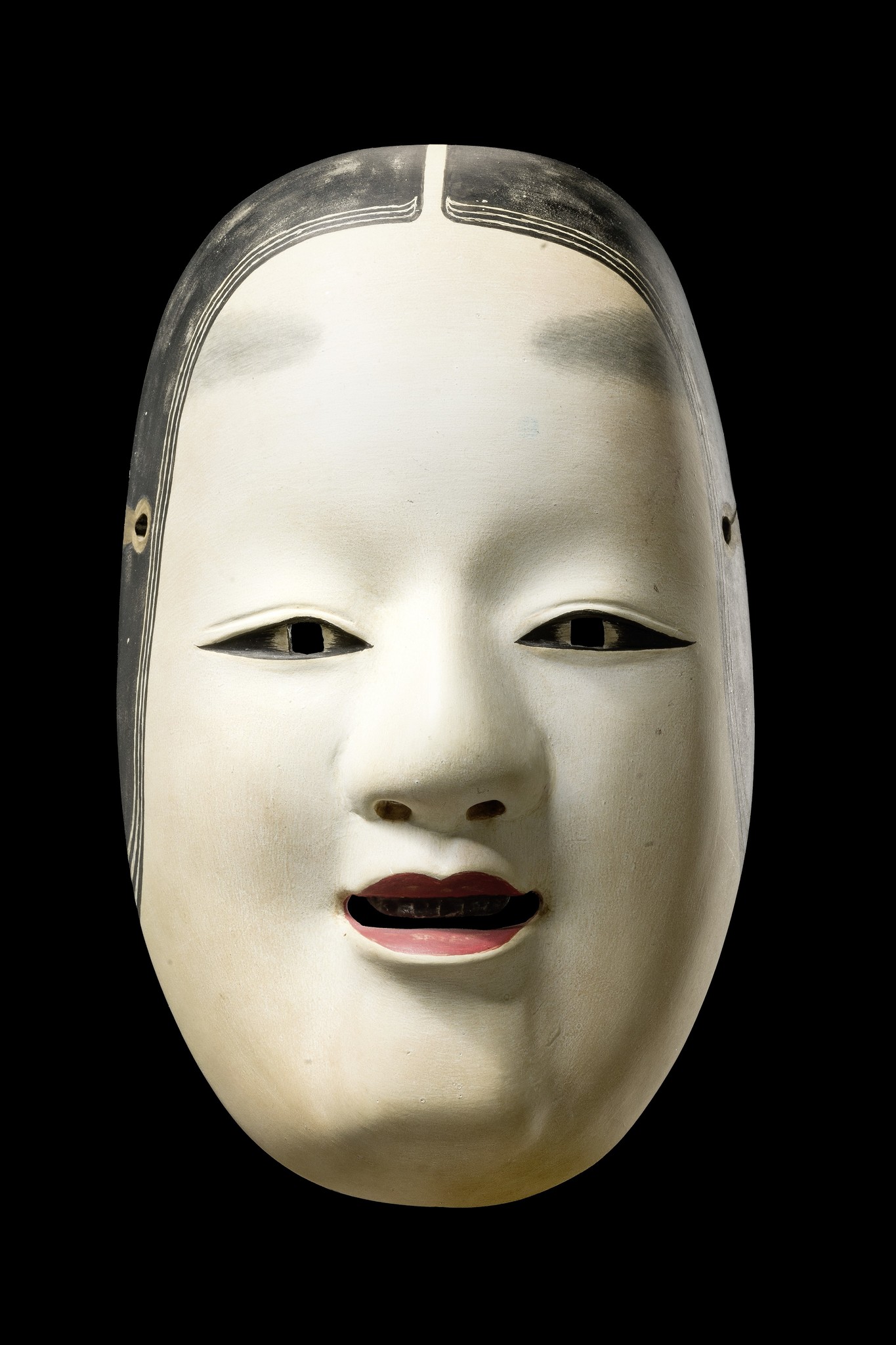
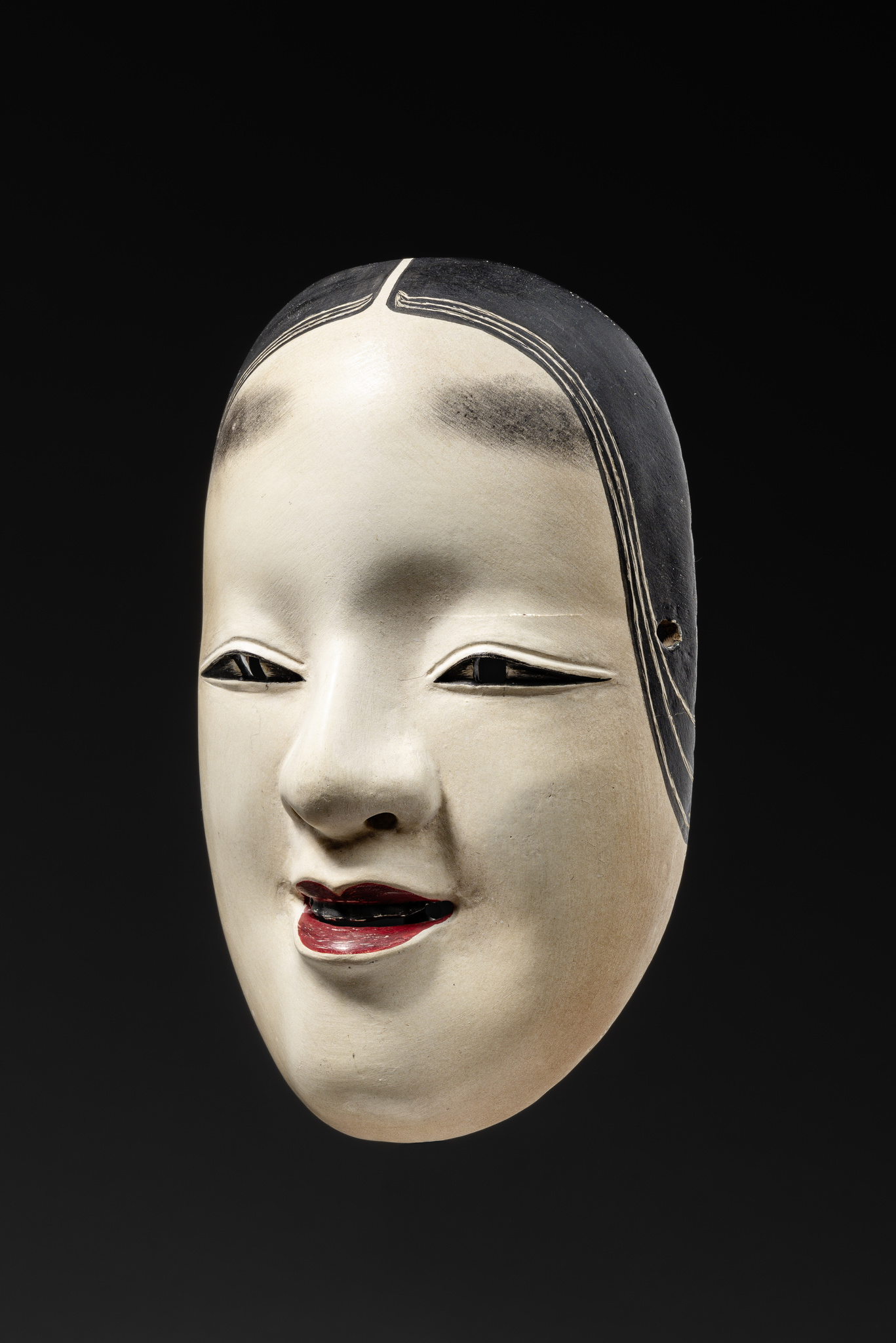
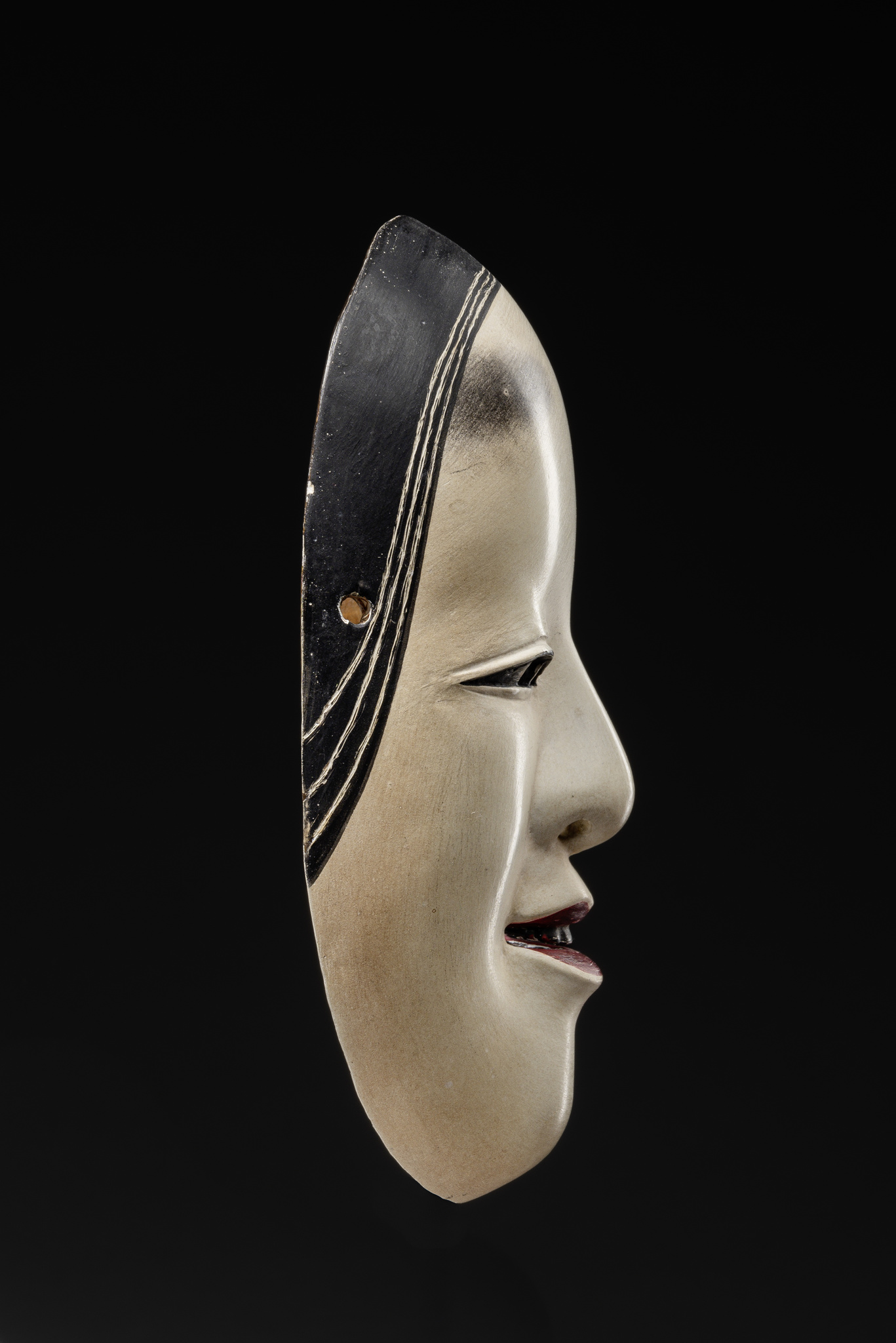
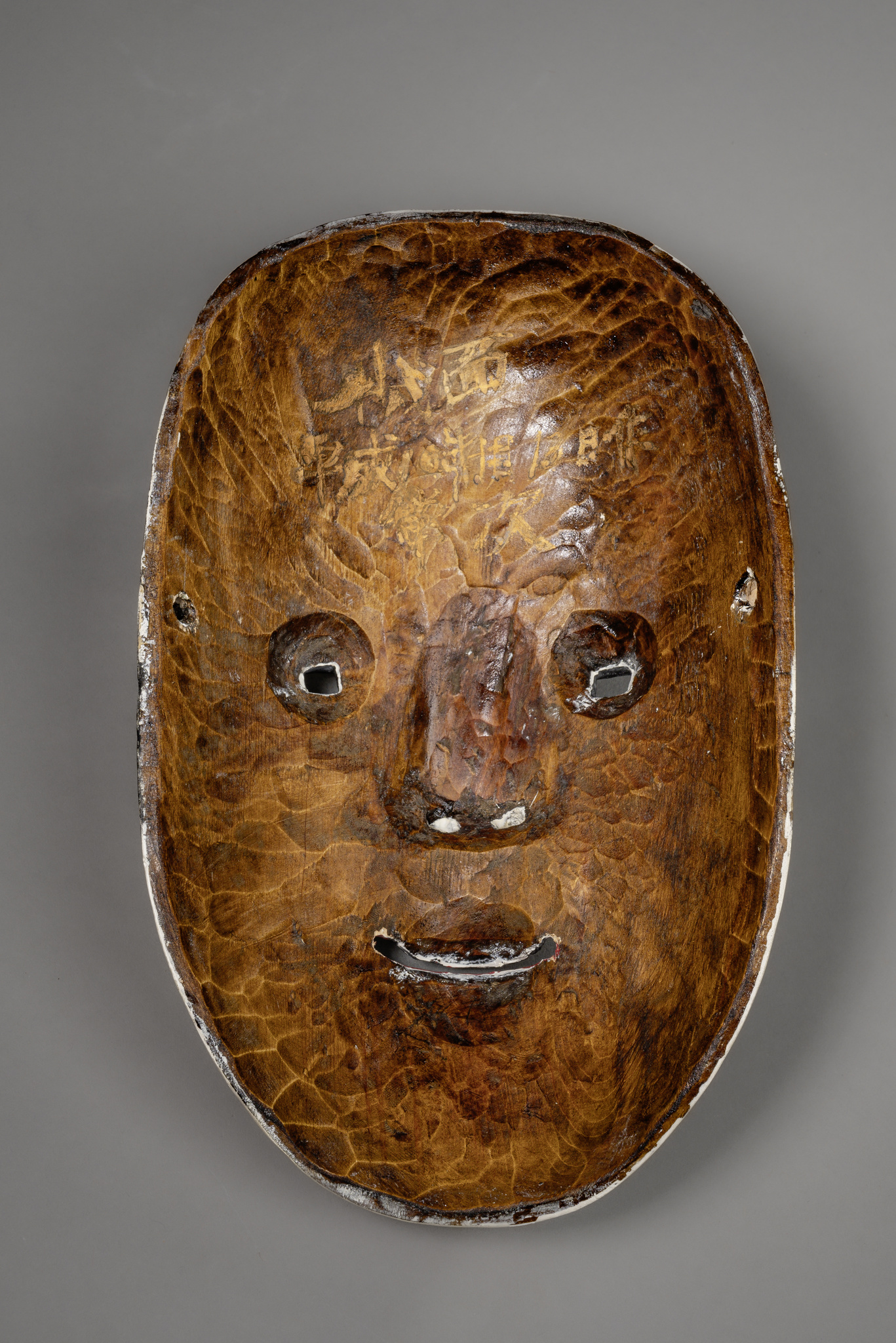
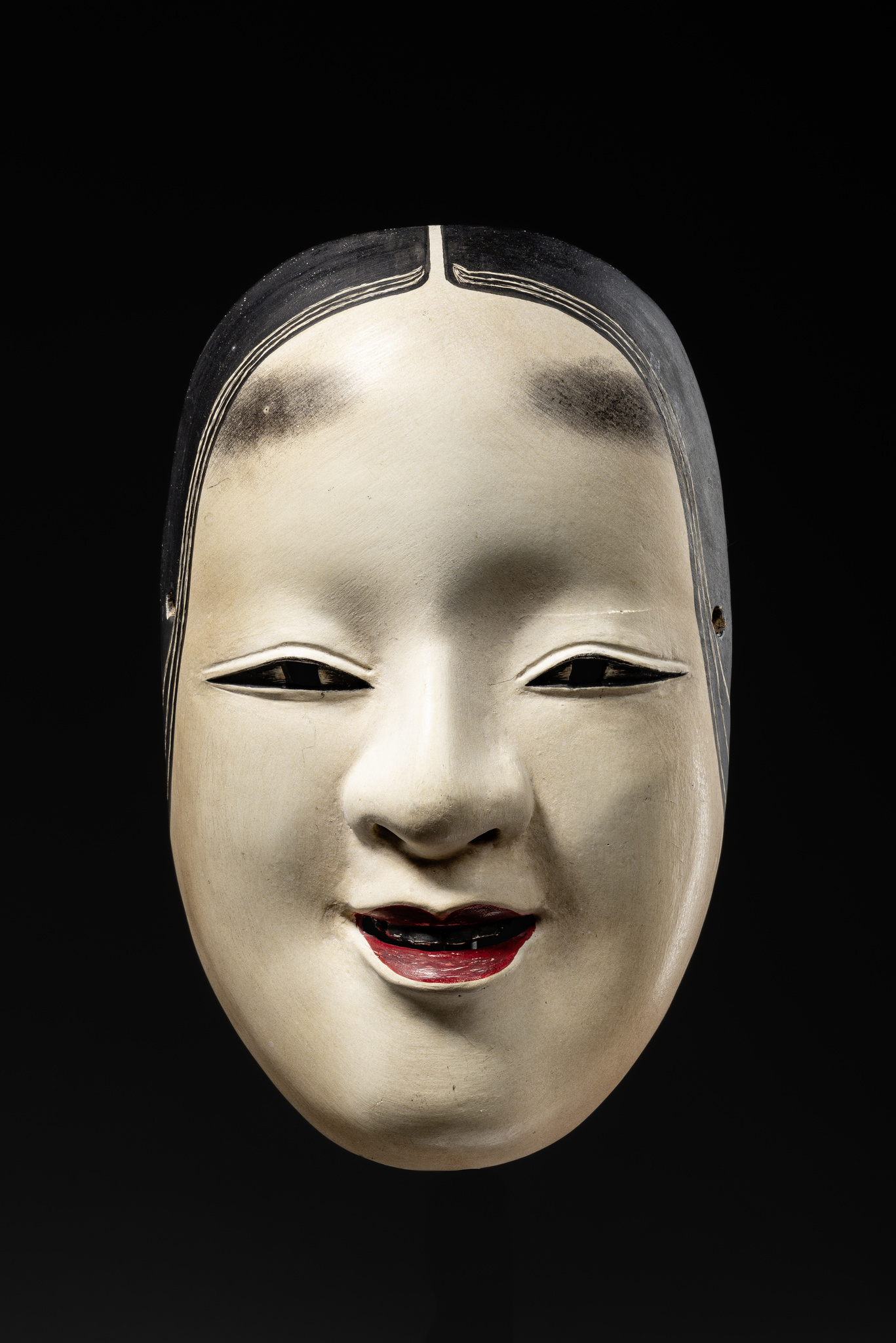
Masque de théâtre "nô" d'une belle jeune femme "zo-onna", début du 20e siècle. · Japon · ID: 3053222
Prix d'appel
1 000 €
Prix d'Estimation
2 000 €
Provenance
Thomas Schulze, Berlin, GermanyZemanek-Münster, Würzburg, 24 November 2012, lot 40
Taille
H: 21,5 cm
H: 8.5 inch
Description
light wood, japanese inscription in gold paint on the back
The “nô”-theatre evolved in the 14th century from the antique tradition of religious dances and burlesque plays, which used to be performed in temples. In the course of the time two independant forms developed: the severe “nô” drama and the humorous “kyogen” burlesque.
The primary concern of the “nô” art is to convey “yûgen” to the audience, which means as much as “beauty”, “depth of sentiment”, “gracefulness”, “elegance”. It is essential to convey characters and events through minimal gestures and movements, but not to play in a realistic manner.
Littérature comparée
Fahr-Becker, Gabriele (Hg.), Ostasiatische Kunst, Bd. 2, Köln 1998, p. 303