
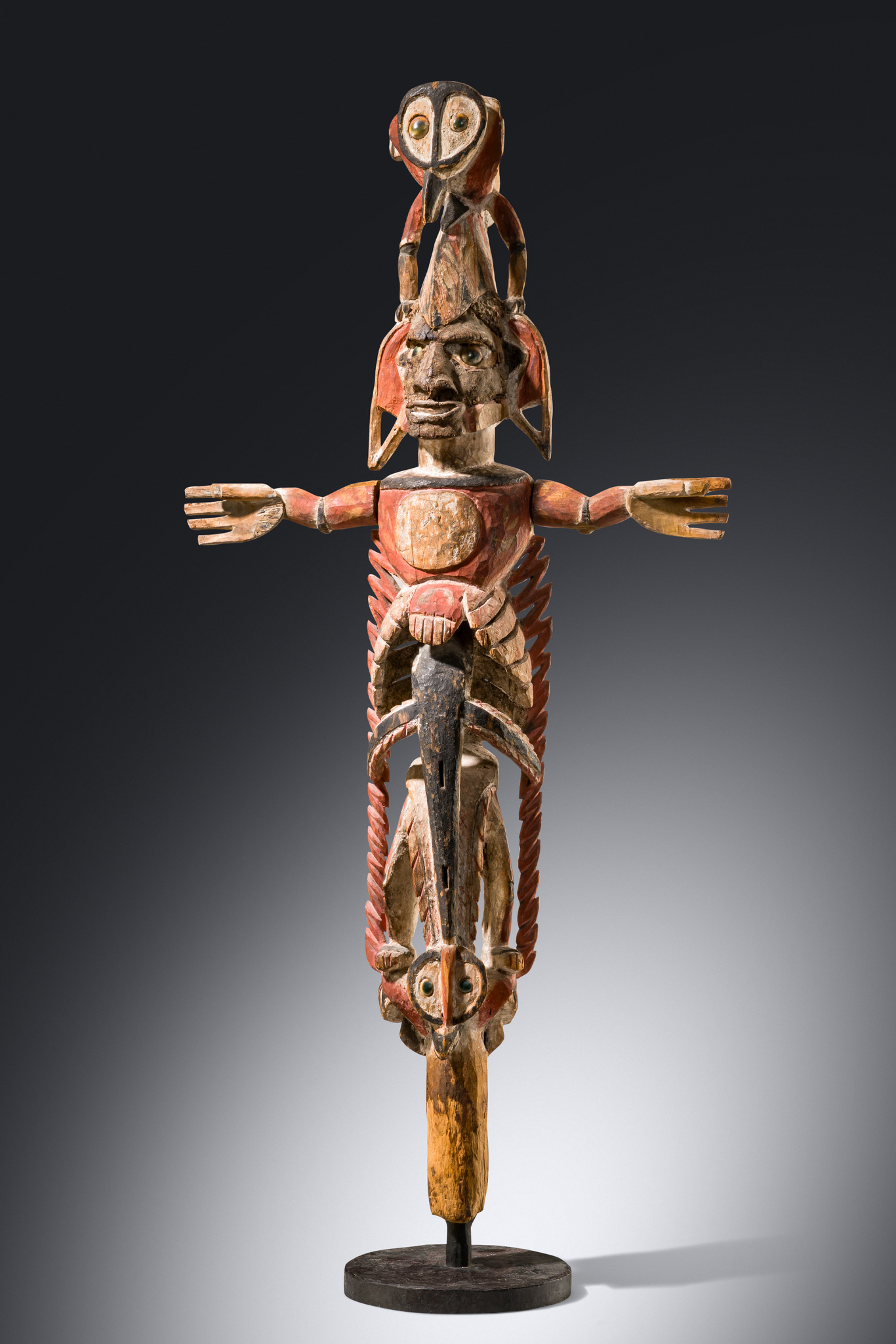
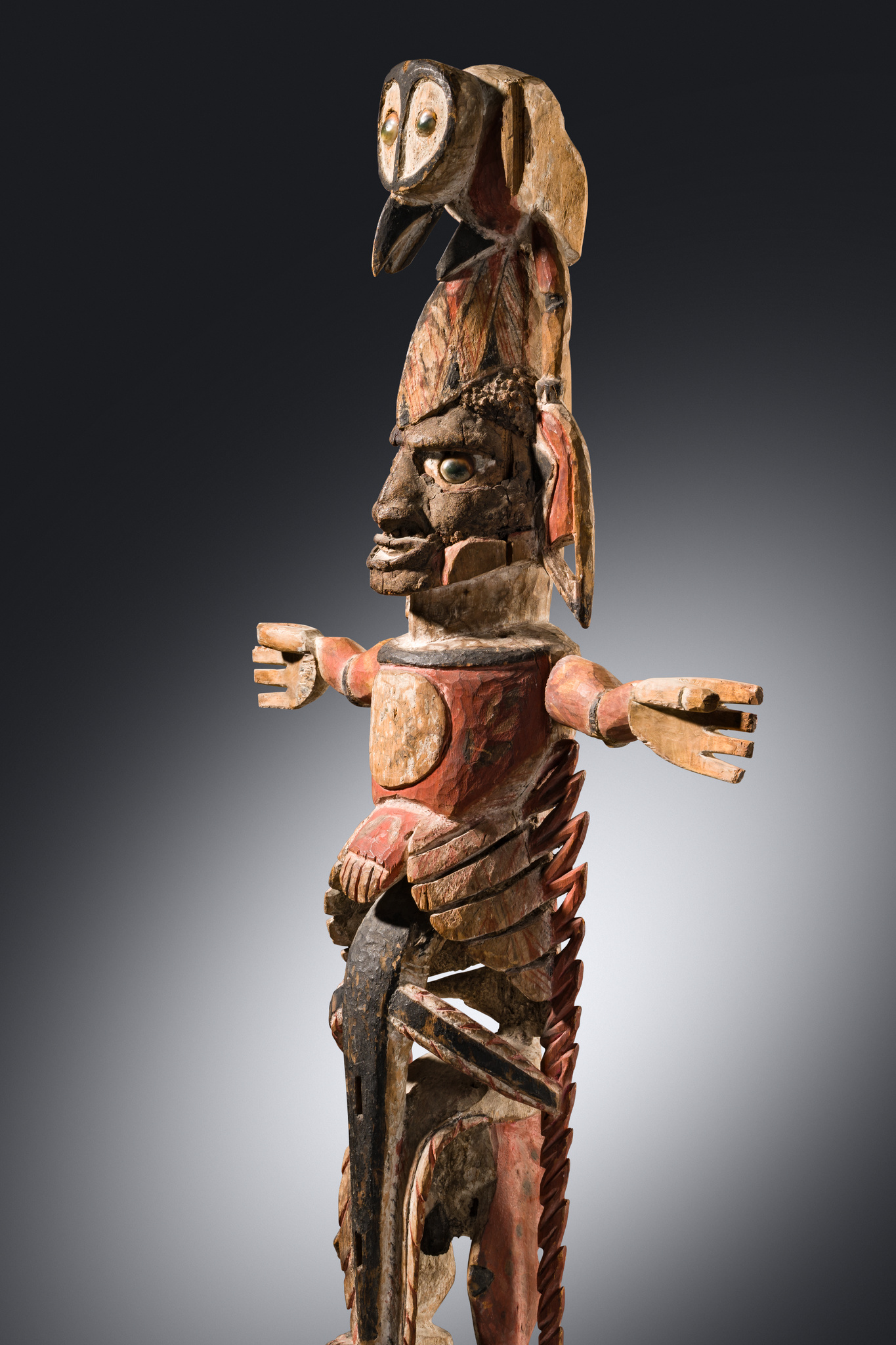
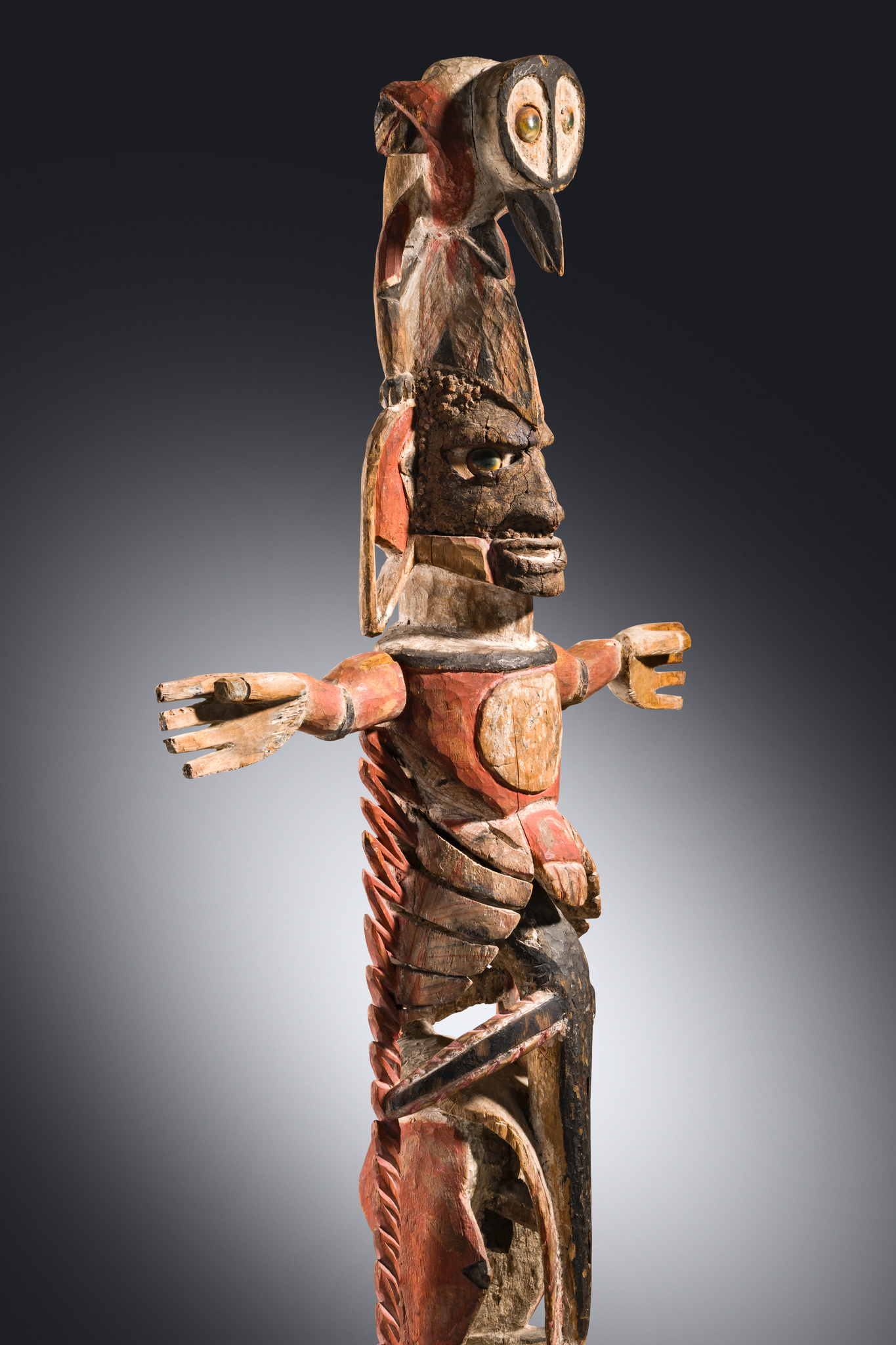
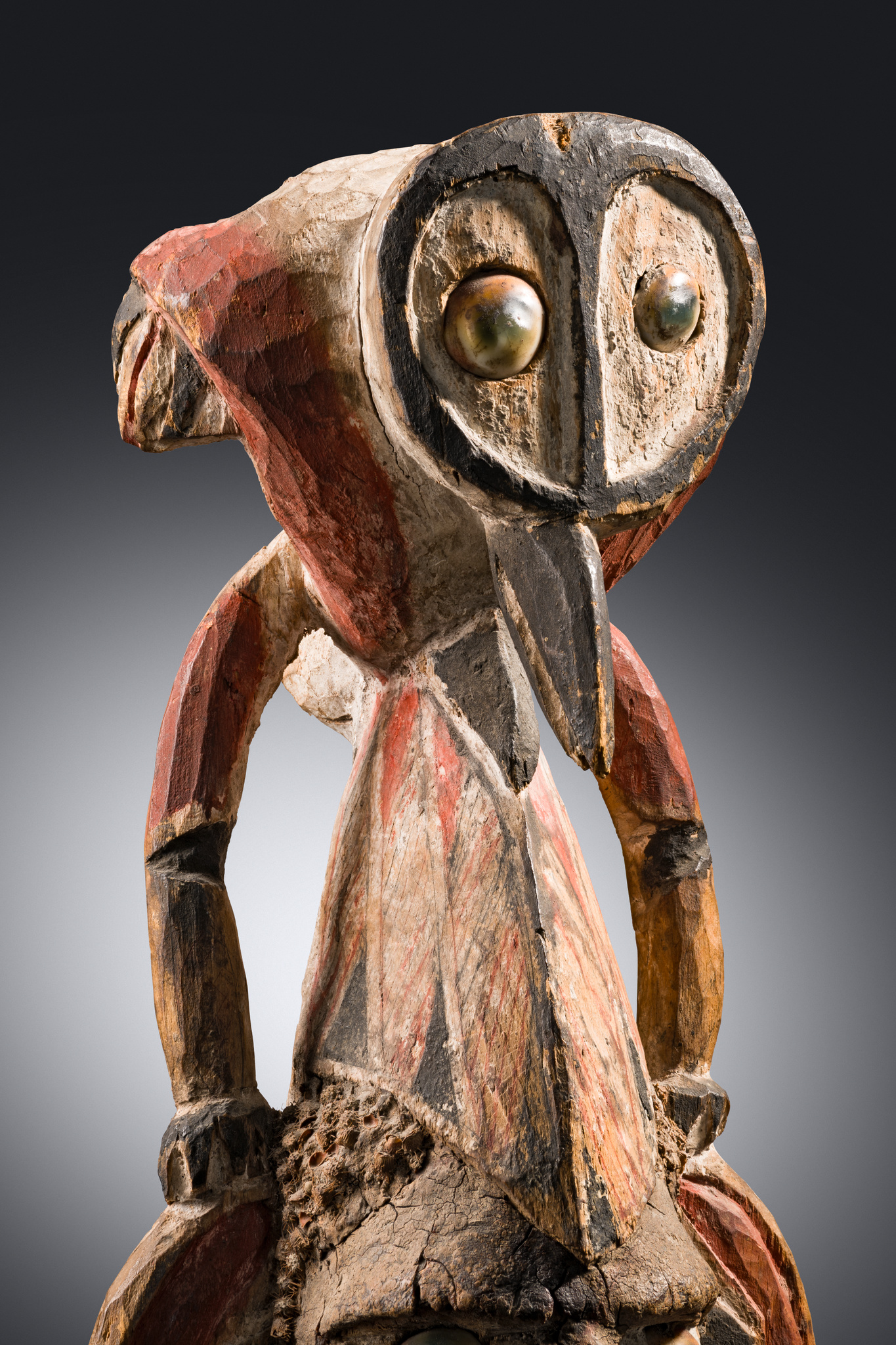
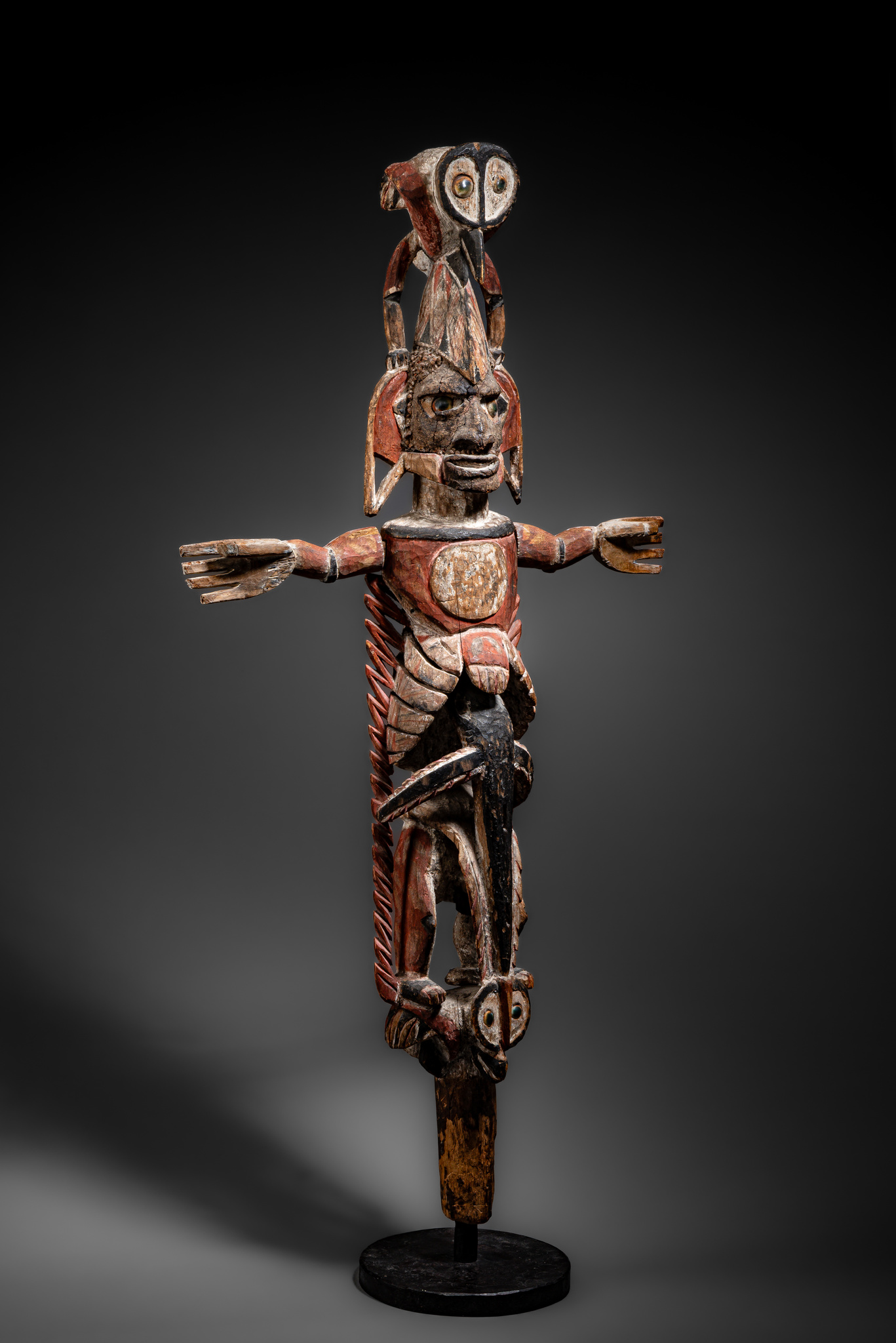
Figure "malagan" aux bras déployés · Papouasie-Nouvelle-Guinée - Archipel Bismarck - Nouvelle Irlande, îles Tabar · ID: 3053602
Description
wood, tripartite (arms worked separately), pigments, lime, shell inlay, rest., base
The present figure is likely a “malagan” of the “turu” type, as displayed publicly at the beginning of the commemorative cycle of a “malagan” ceremony. Three types of “malagan” carvings were used together in this context: the “turu” was placed on the ground in front of the wall of a display hut, often standing within a wooden shell. Above it was mounted a panel of the “malagan rarau” type, painted with two mirror-image fish. Beside the hut stood a large seated figure made of grass fibre, wearing a “ges” mask (cf. field photograph in Gunn 1997, p. 134, fig. 125).
The carvings were displayed as part of secondary burial rites for one or several deceased members of the community. The purpose of these rituals was to make peace with the dead and to enable their passage into the spirit world.
Littérature comparée
Christie's, Barbier-Mueller, Art as Legacy, 6 March 2024, lot 8 Gunn, Michael, Ritual Arts of Oceania - New Ireland, Geneva, Milan 1997, p. 134, fig. 125 Krämer, Augustin, Die Málanggane von Tombára, München 1925, p. 57, ill. right