
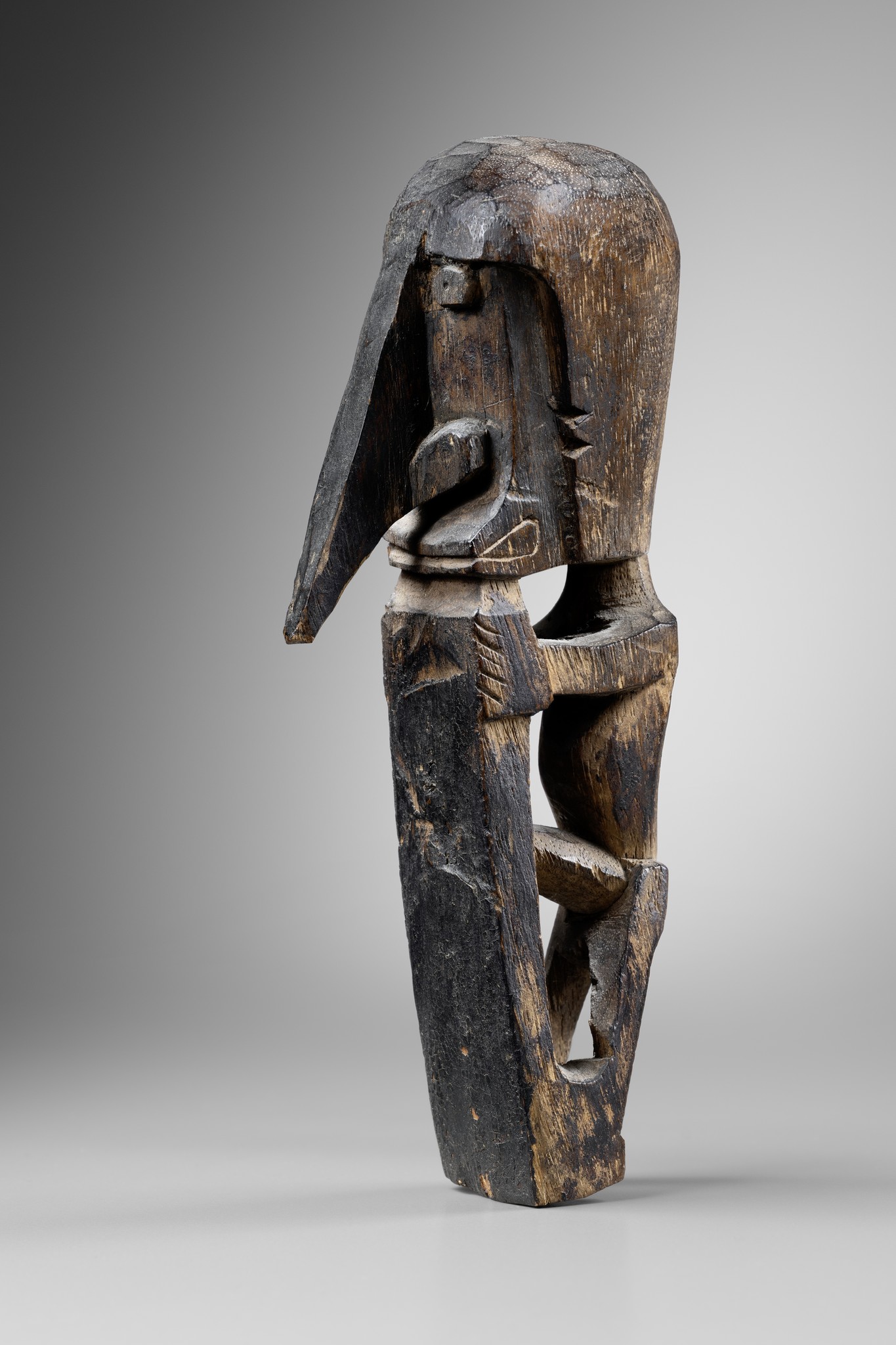
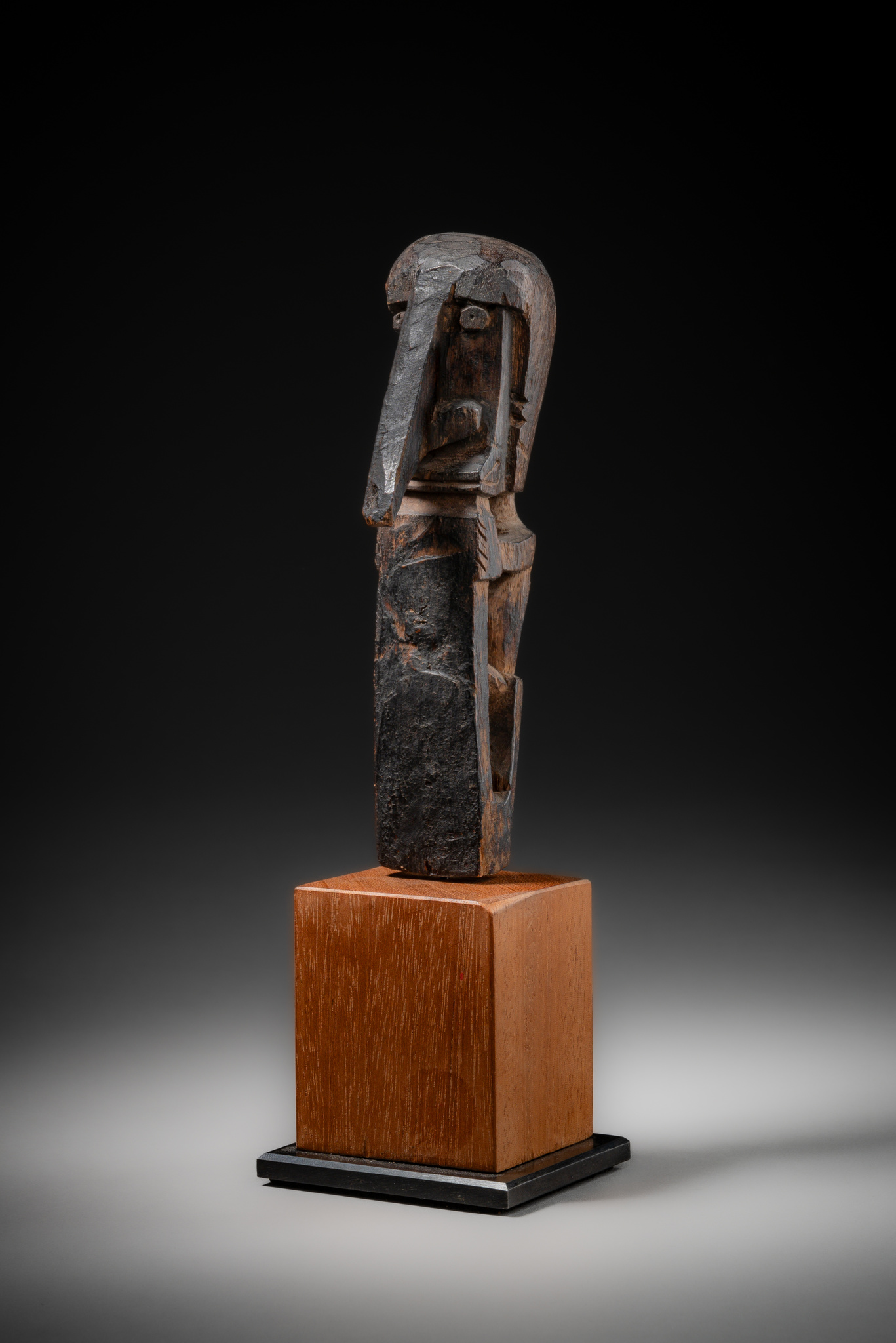
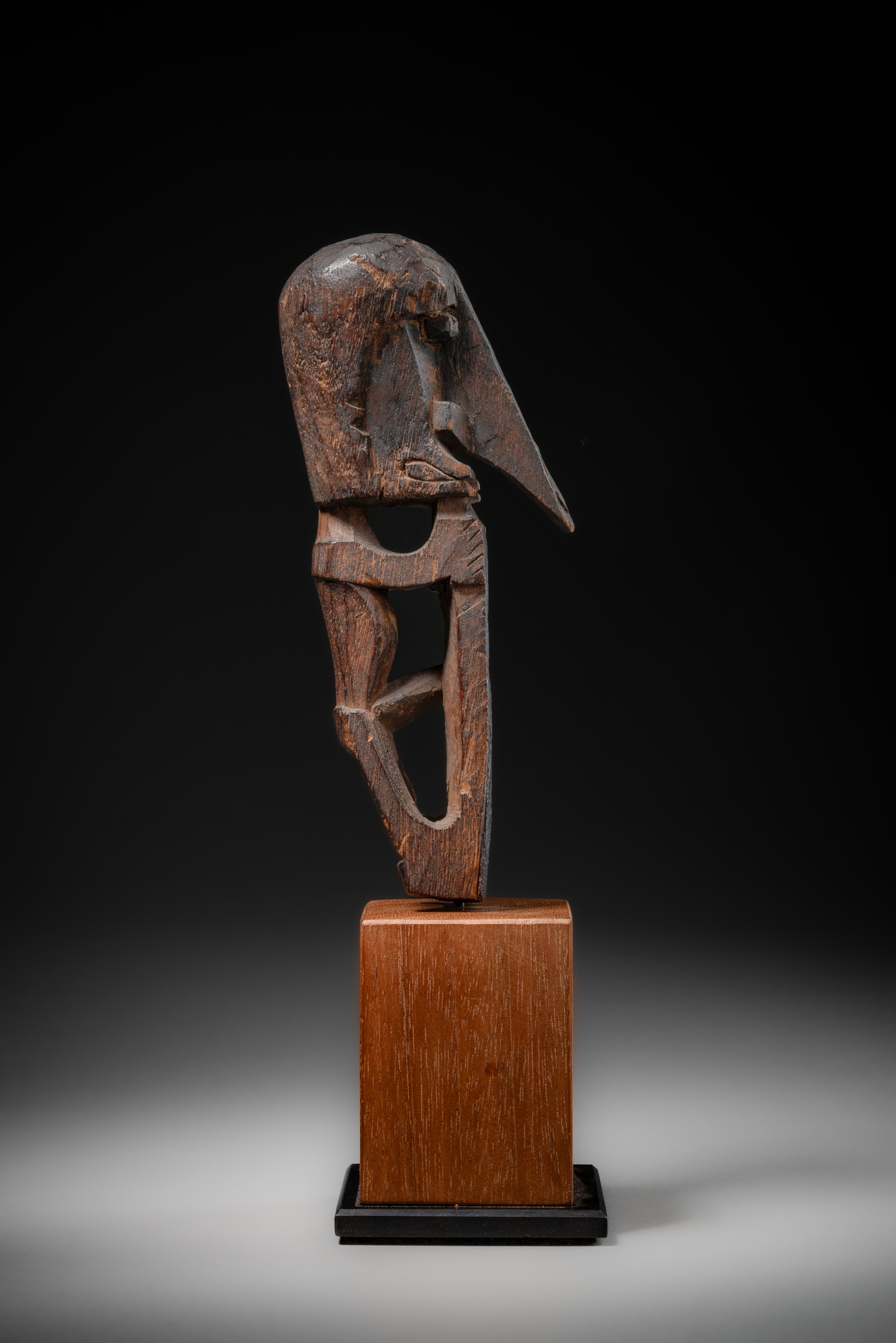
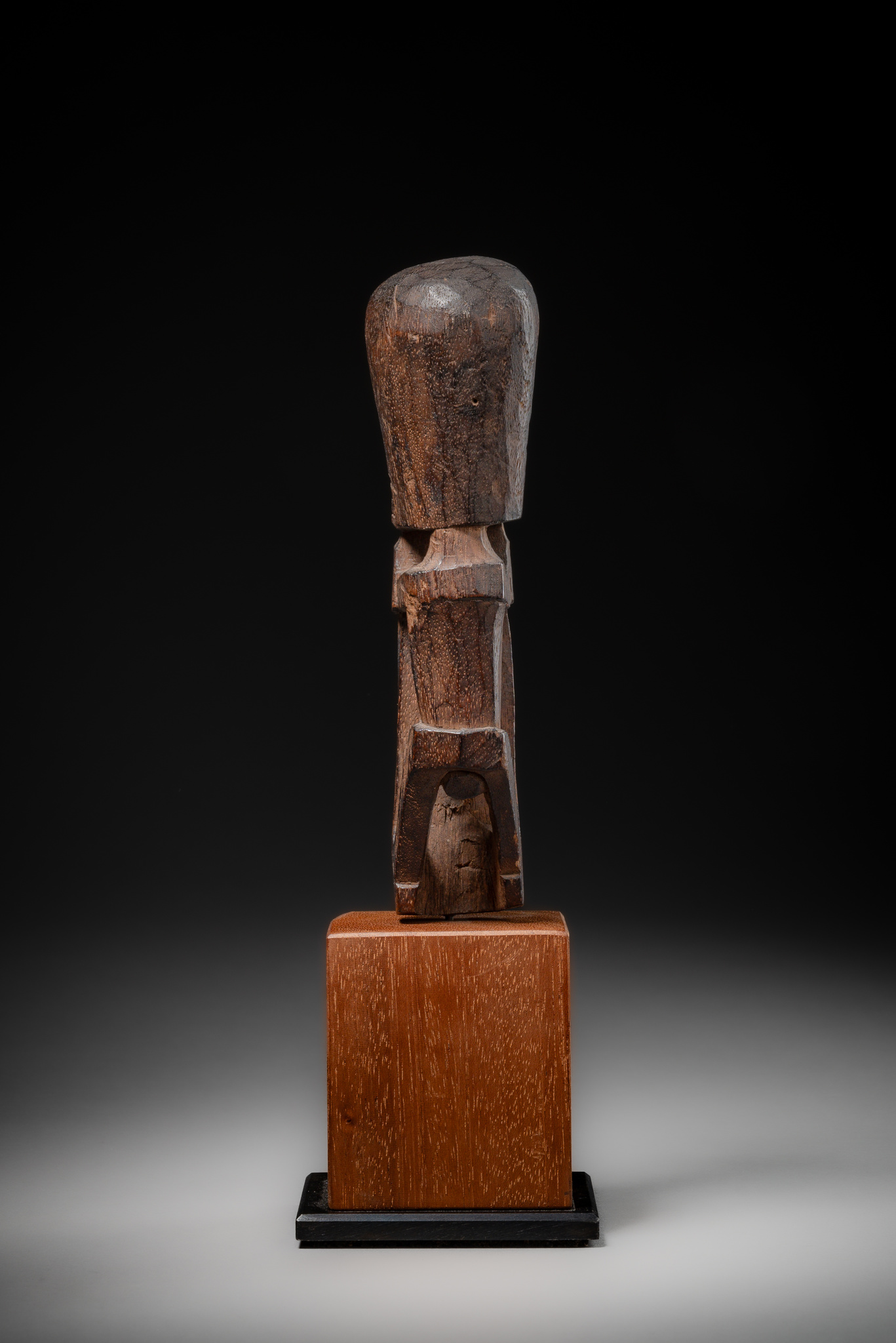
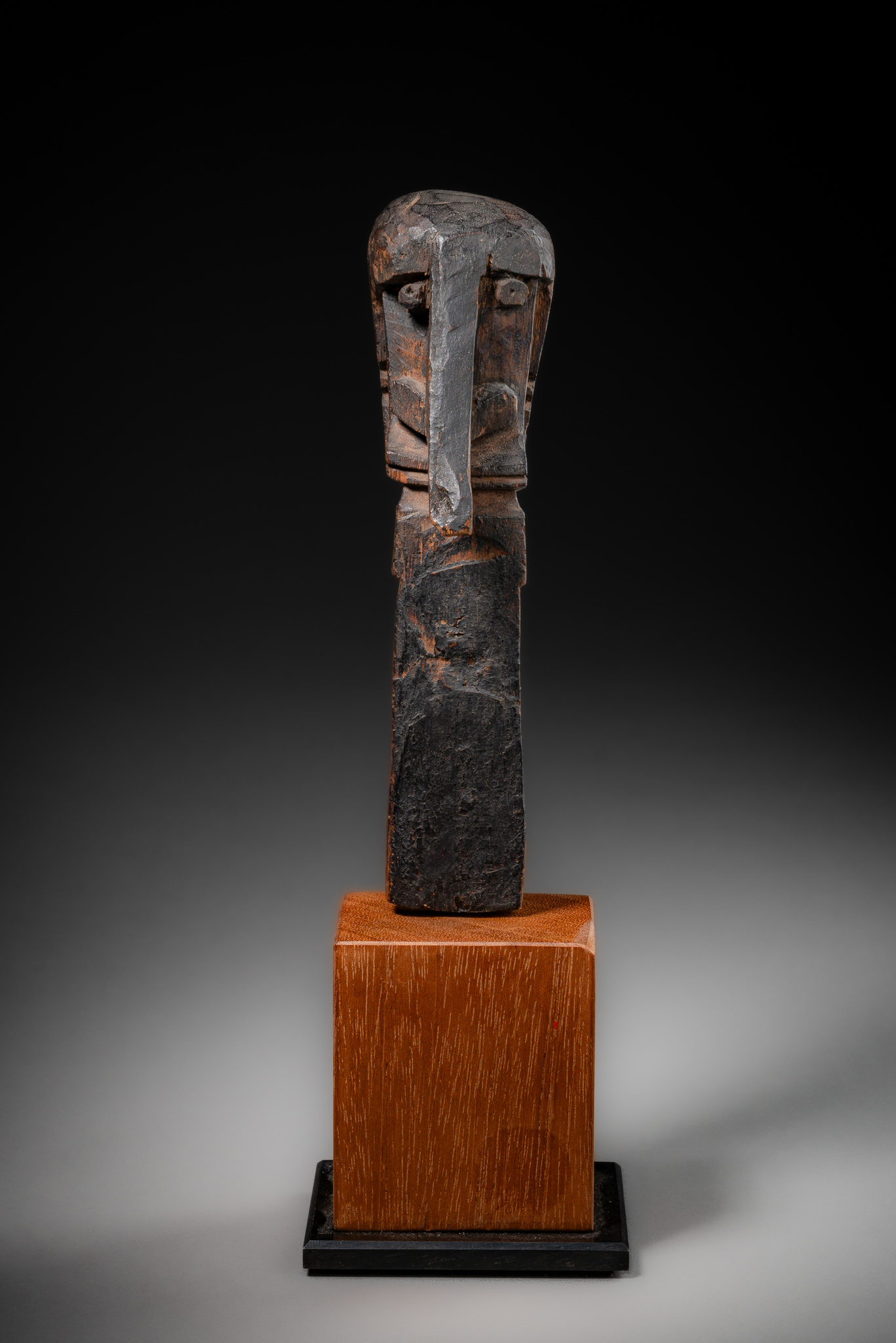
Figure ancestrale "korwar" avec bouclier, fin 19e / début 20e siècle · Indonésie, Papouasie occidentale (Irian Jaya) – Île Yapen · ID: 3053196
Dutch Private Collection, Amsterdam
Description
wood, black paint, base
The depiction of the “korwar” was highly conventional. The prominent head and arrow-shaped nose, exaggerated in a stylized manner in this example, are considered defining features of the style. The genitals of this “korwar” are particularly emphasized. Concepts relating to fertility and spiritual power were closely associated with sexuality and procreation.
“Korwar” represent deceased individuals and served as supernatural vessels that could house the spirit of the recently departed, allowing it to receive offerings and provide guidance. They were typically kept in the house of the deceased’s family but also accompanied dangerous sea voyages to ensure a successful outcome. Canoes incorporated “korwar” heads into their bow and stern decorations, and miniature “korwar” were carried as amulets. The pervasive presence of these ancestor images protected the living and highlighted the central importance of ancestors in all aspects of daily life.
Publications
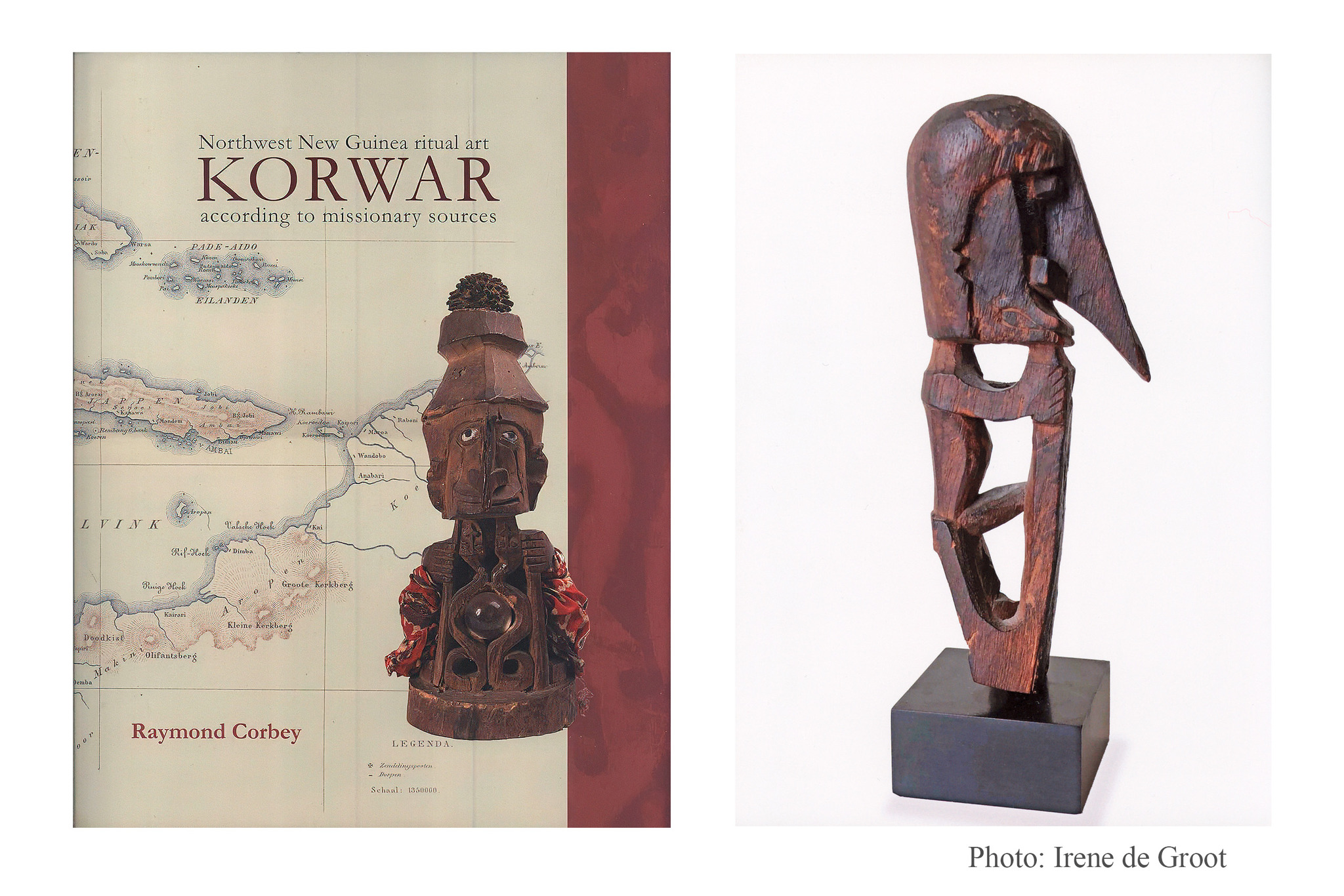
Corbay, Raymond, Korwar, Northwest New Guinea ritual art according to missionary sources, Leiden 2019, p. 186, fig. 155