
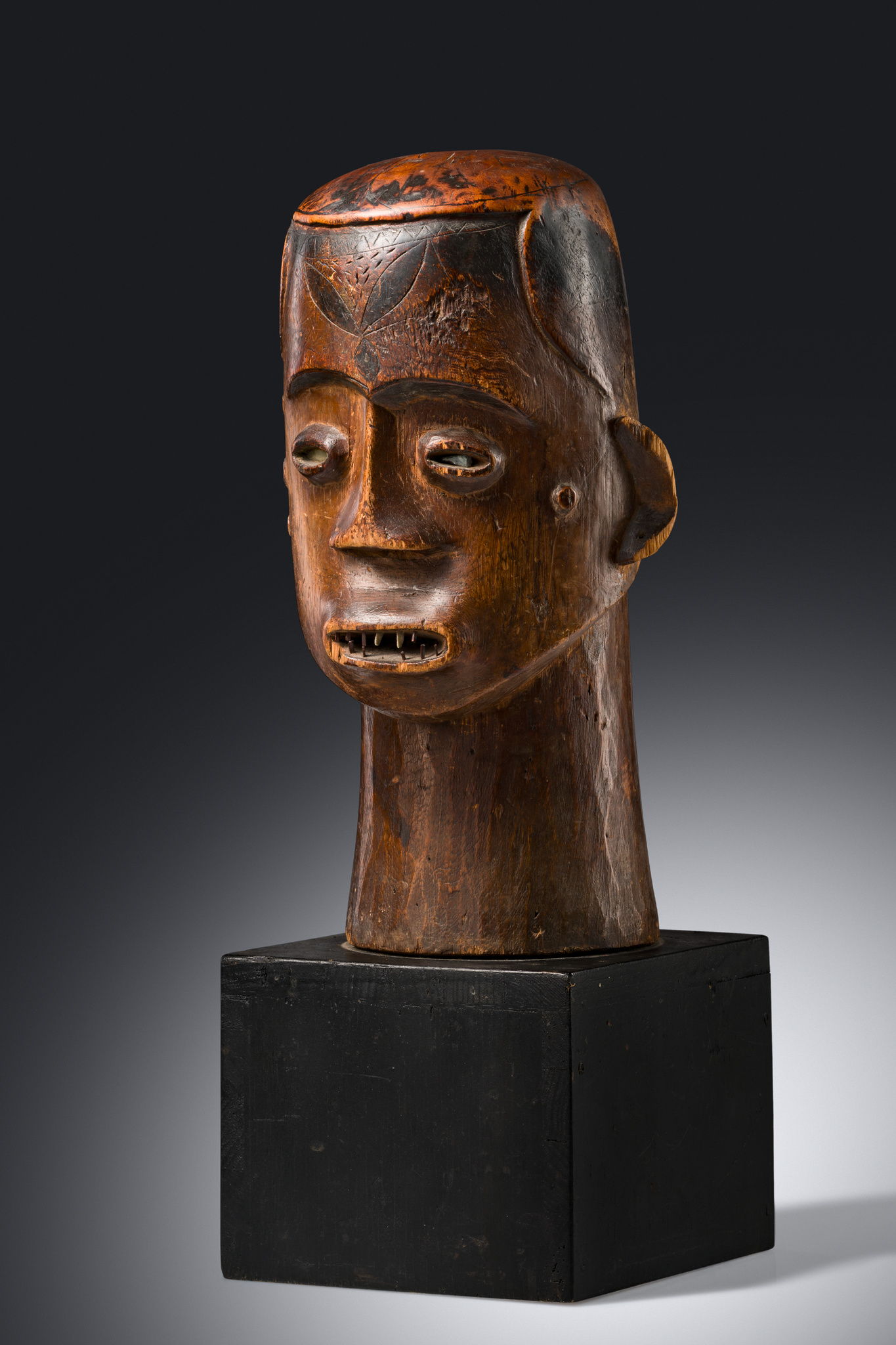
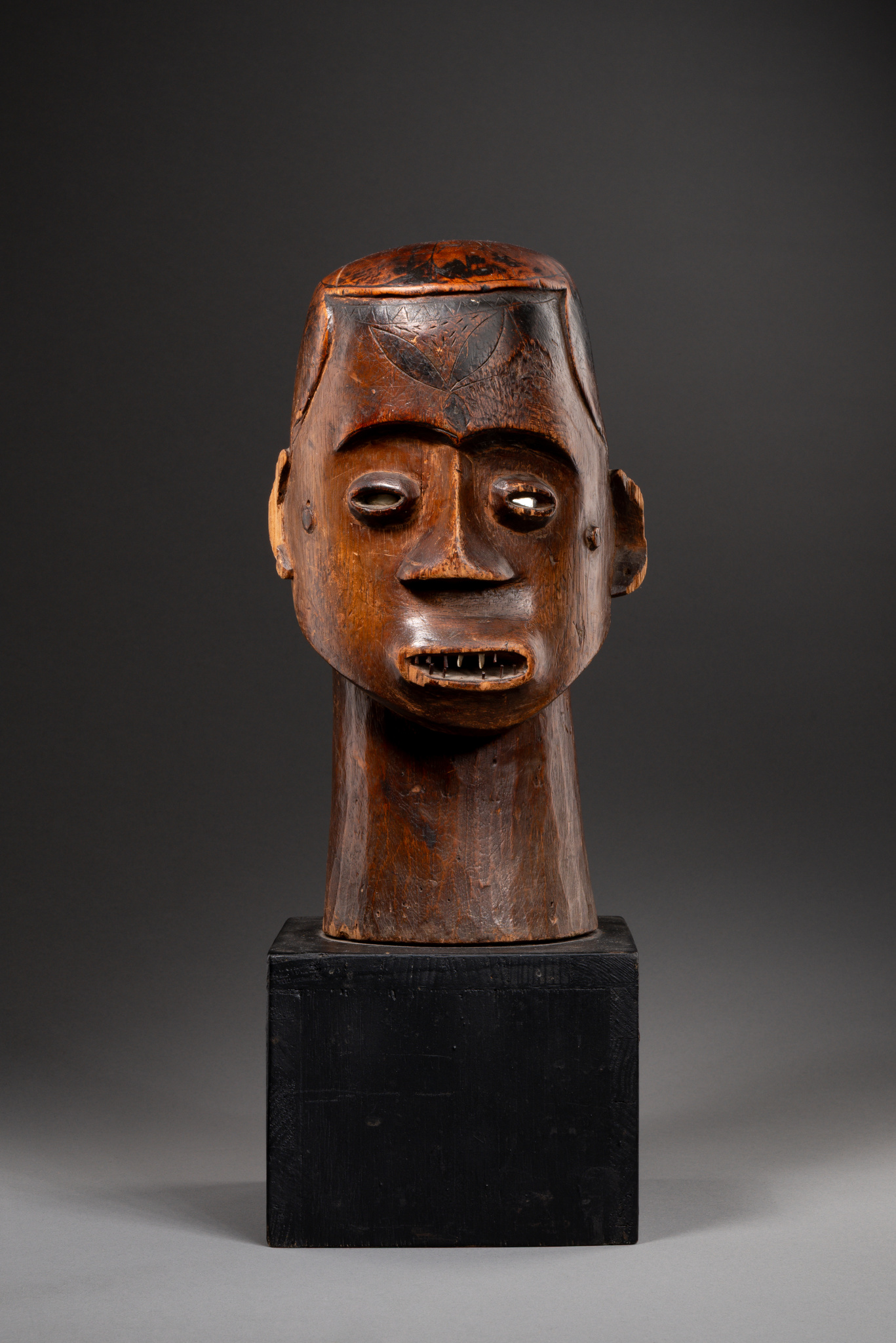
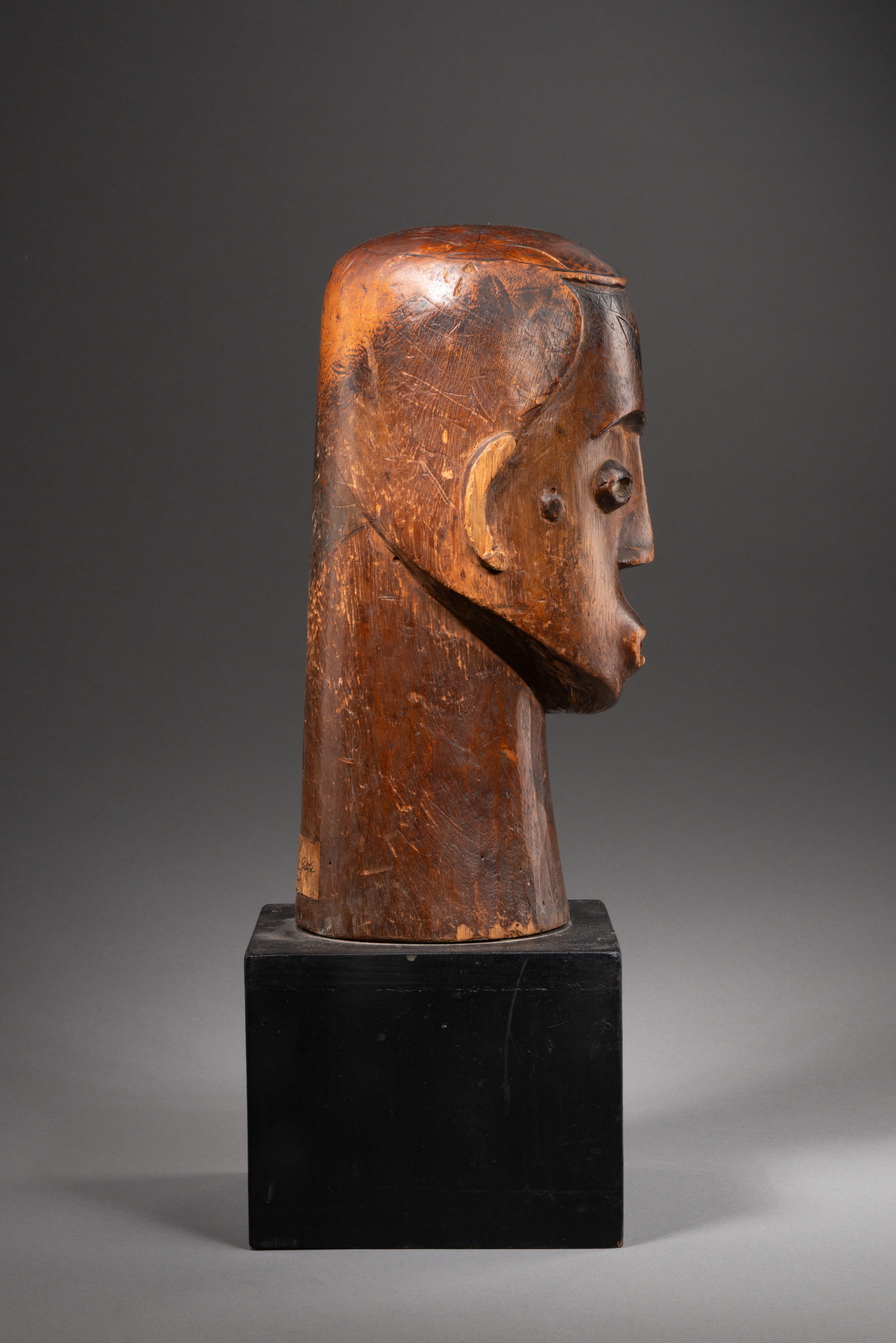
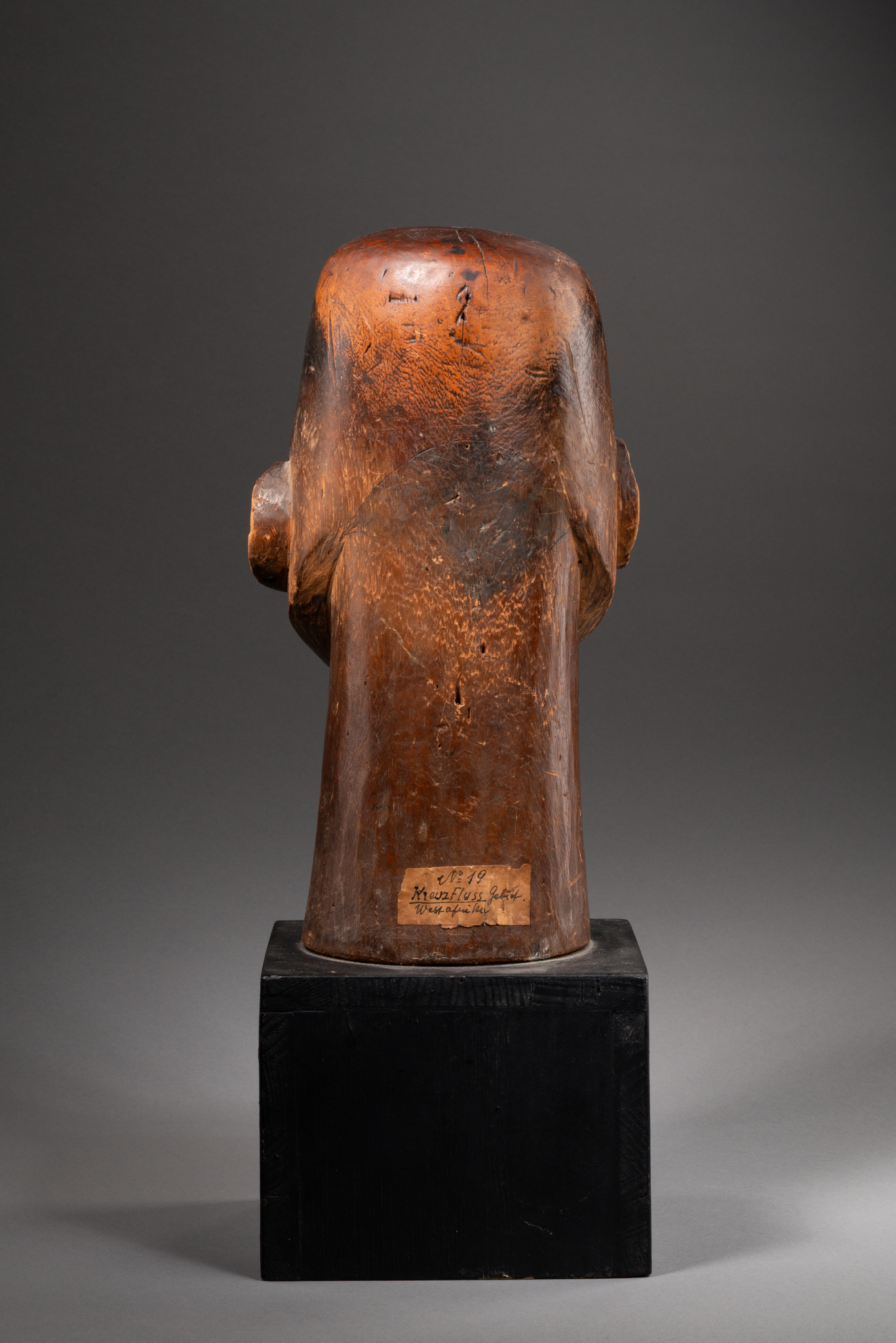
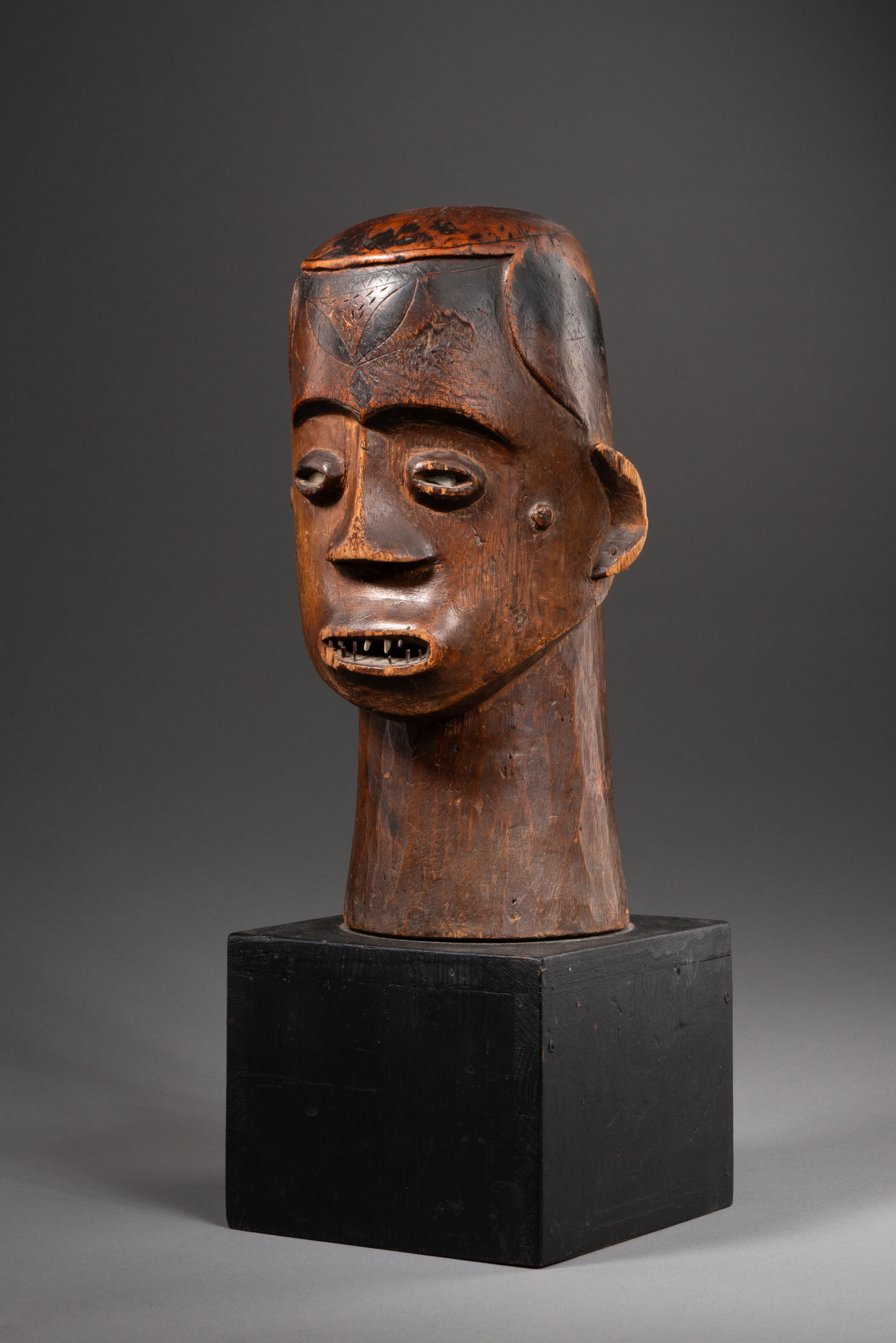
Cimier de danse anthropomorphe · Cameroun, Keaka · ID: 3053473
Ludwig Bretschneider, Munich, Germany
Arno Henseler, Munich, Germany
Description
wood, pigments, mirror glass, the head carved with delicate floral patterns in keeping with the fashion of the time, handwritten collection label: “No. 19 Kreuzfluss Gebiet. (Crossriver region) West-afrika”, in addition a bead neckring from Tanzania, Mwera or Makua, base
In former times such dance crests were said to have been made from real human skulls taken from killed enemies. They were exhibited on special trophy parades, worn by young men as a sign of manliness.
The headdresses are realistic but not portrait-like. They do not represent one specific ancestor. In fact they were handed down from one generation to another, thus - as a whole - embodying the nobel deeds of every ancestor, who ever owned them.
The use of human skin for coating the wooden core is just vaguely documented, commonly the skins of antelope, monkey or sheep were used.
The skin-covered headdresses were used - among others - by the “ngbe”-society of the Ejagham, which can be looked upon as the oldest Cross River secret society. In their language “ngbe” means “leopard”. The cult of the leopard had a unifying effect on the scattered communities of the Cross River Area.
Littérature comparée
Zemanek, David, Tanzaufsätze der Ejagham, Dresden 2008, p. 37, ill. 44