
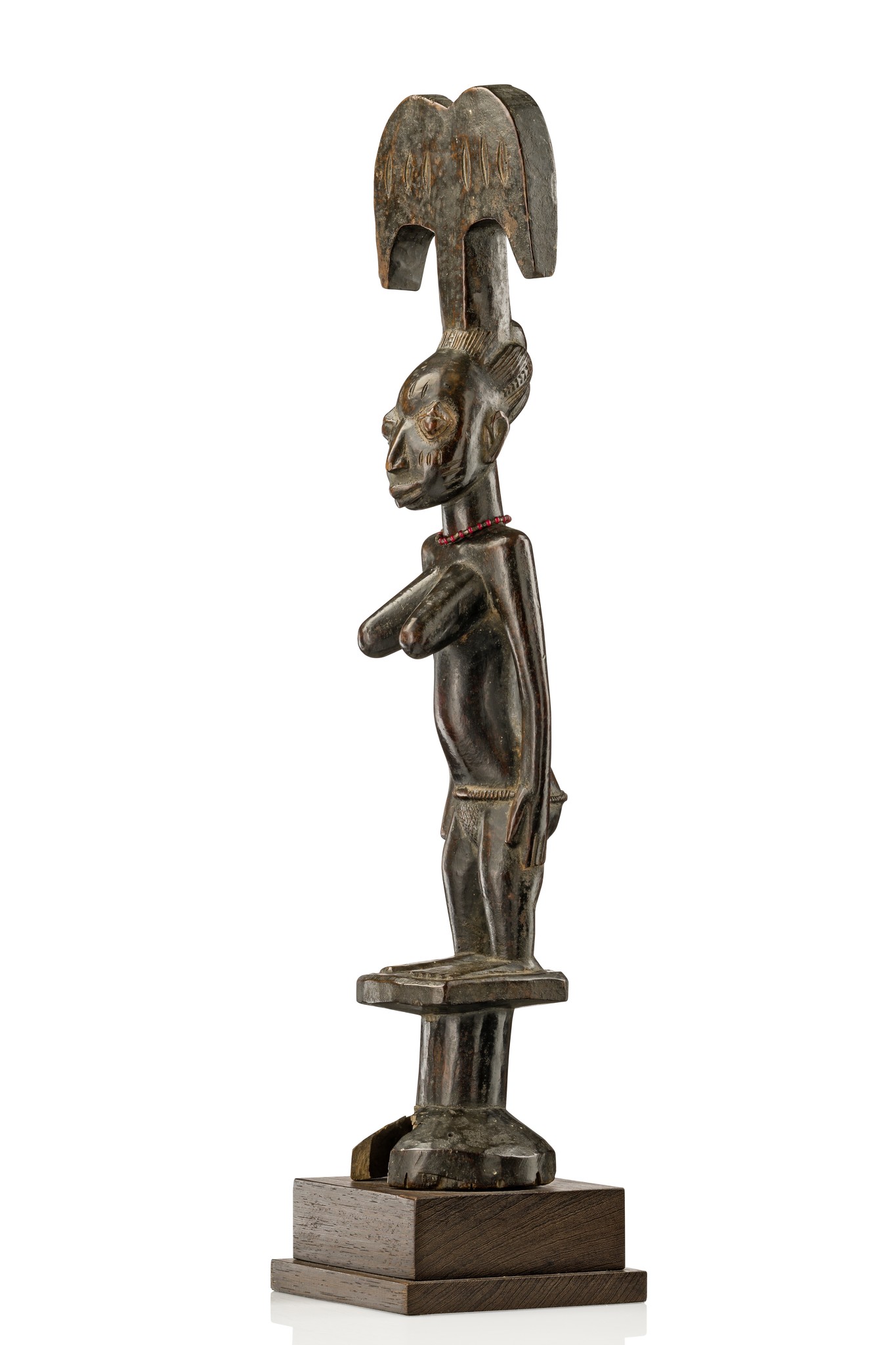
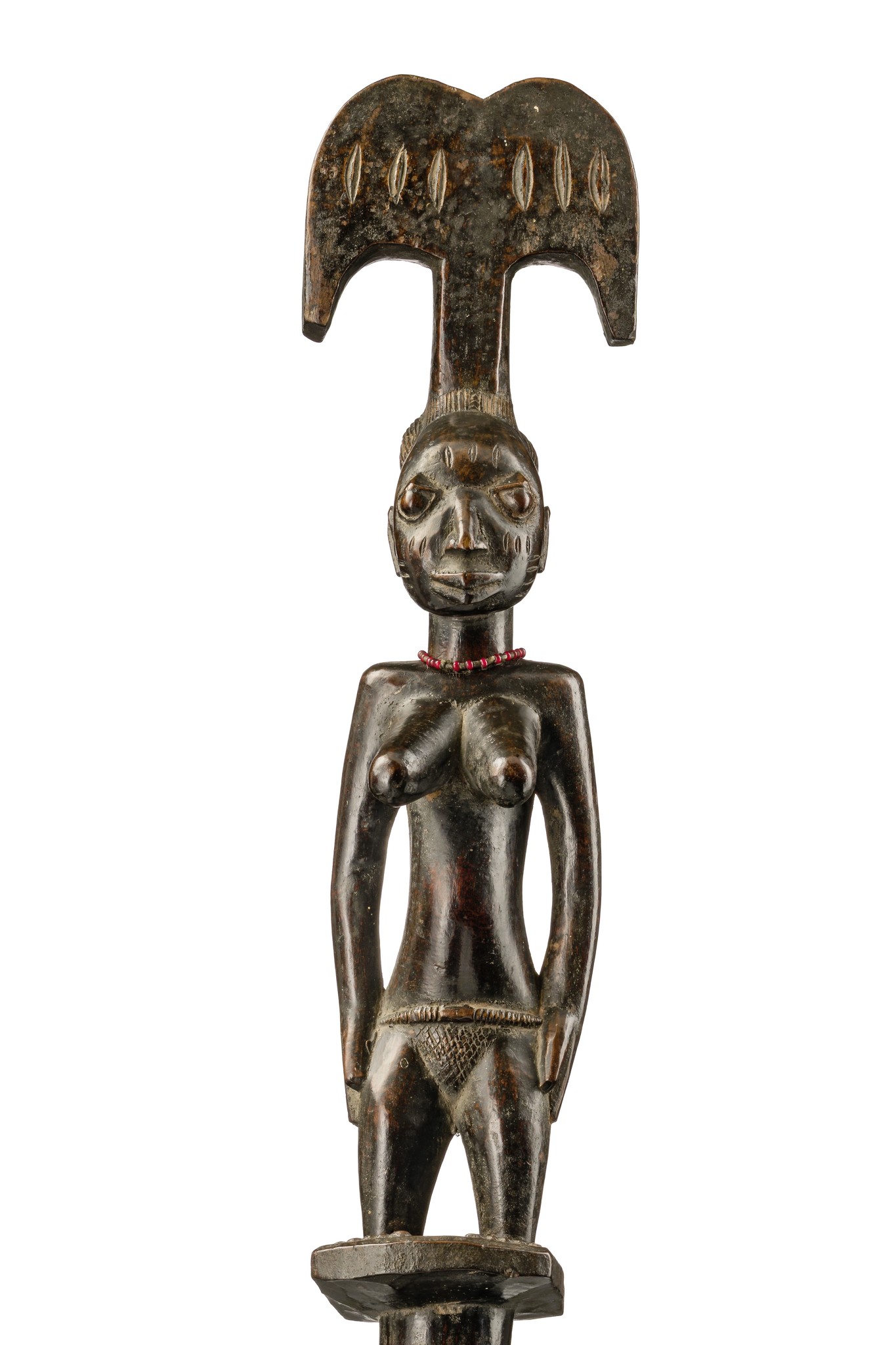
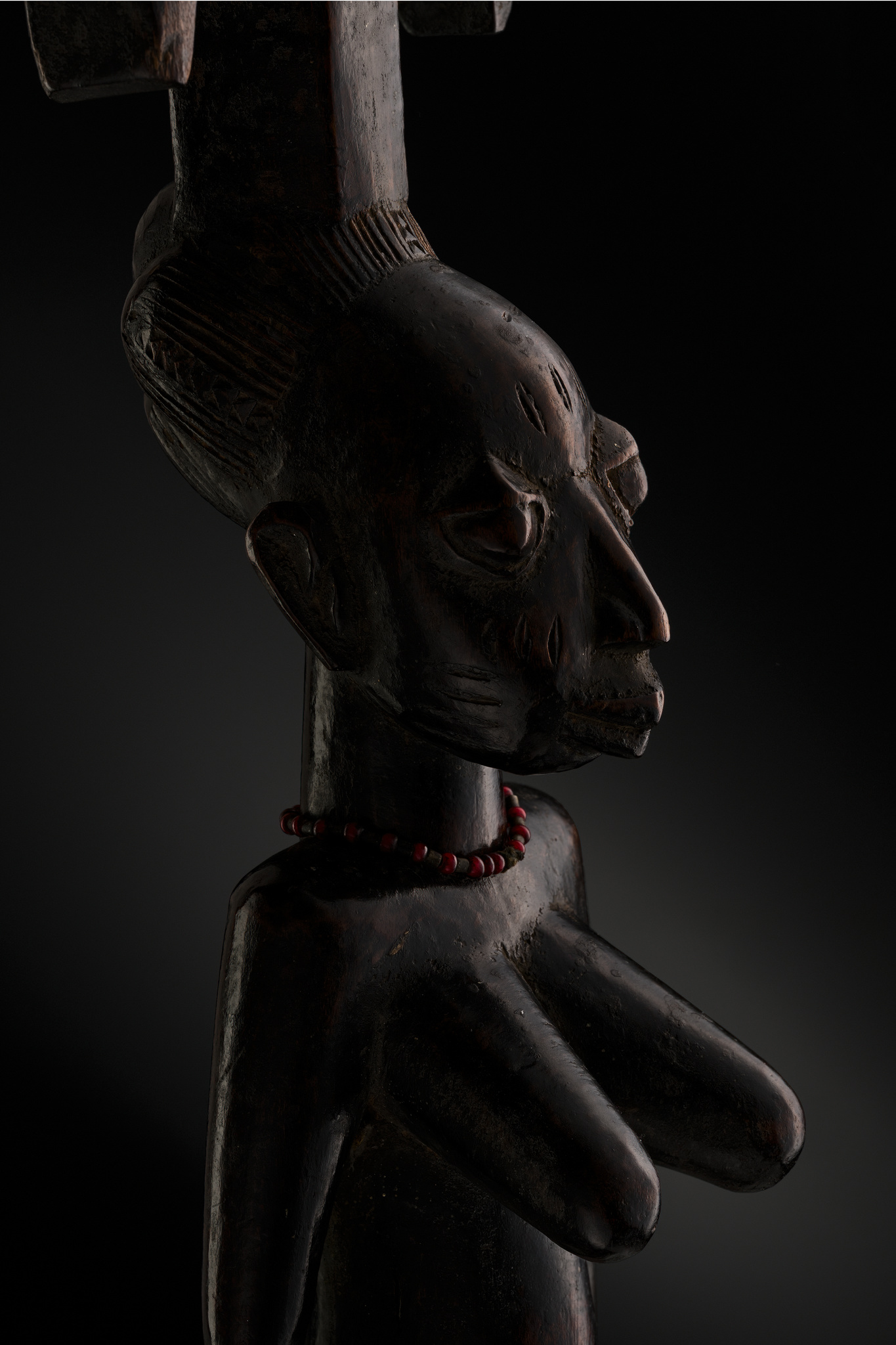
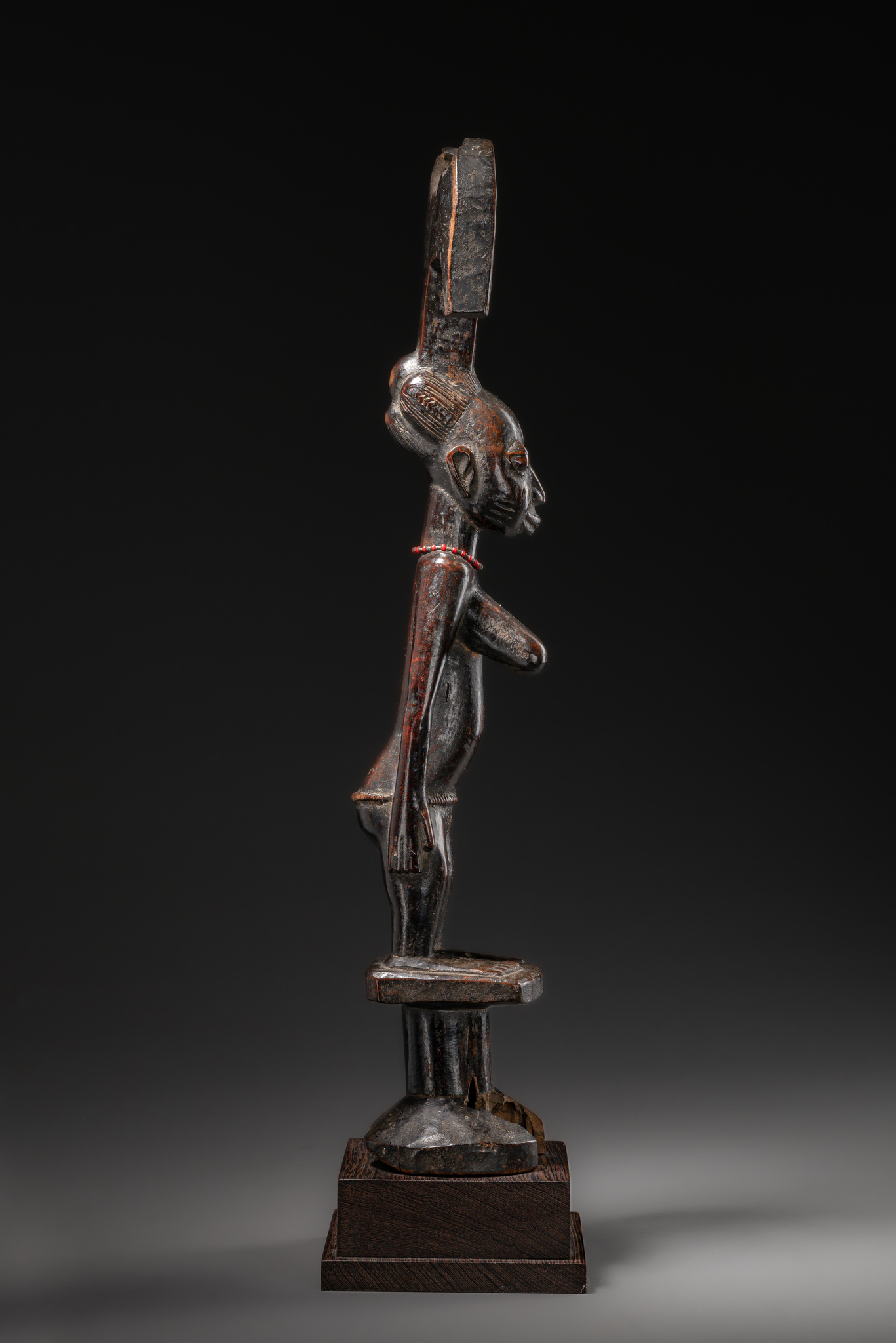
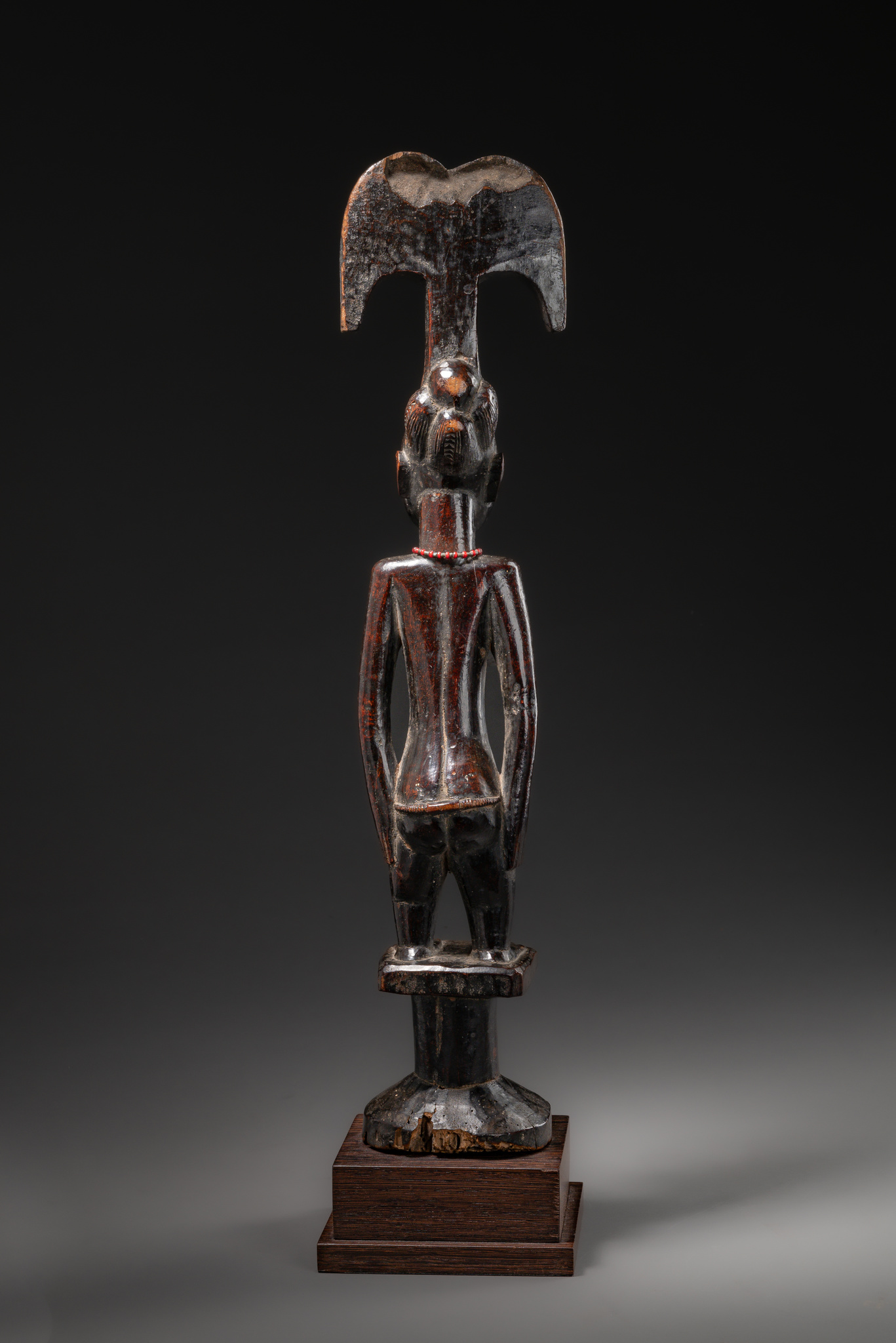
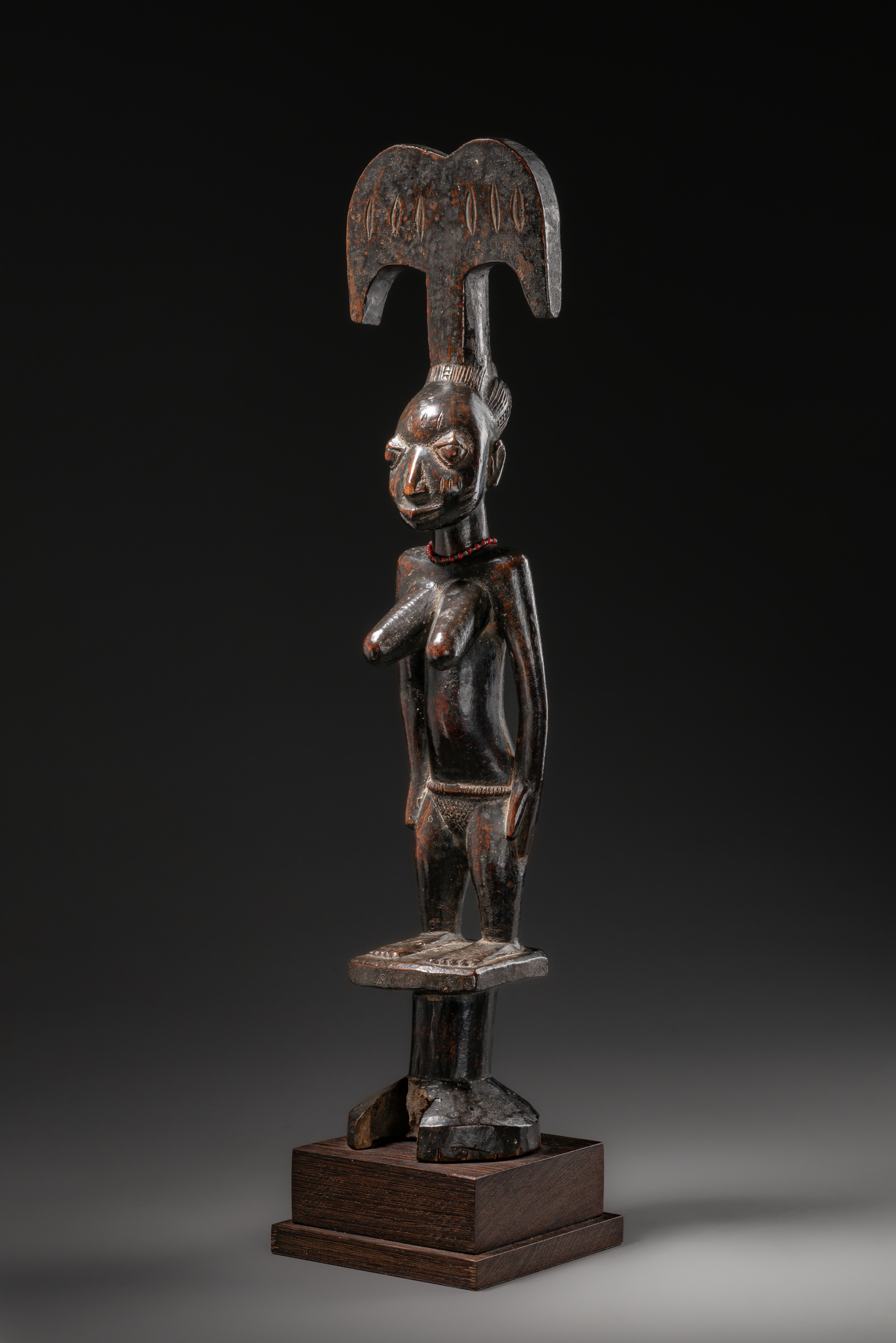
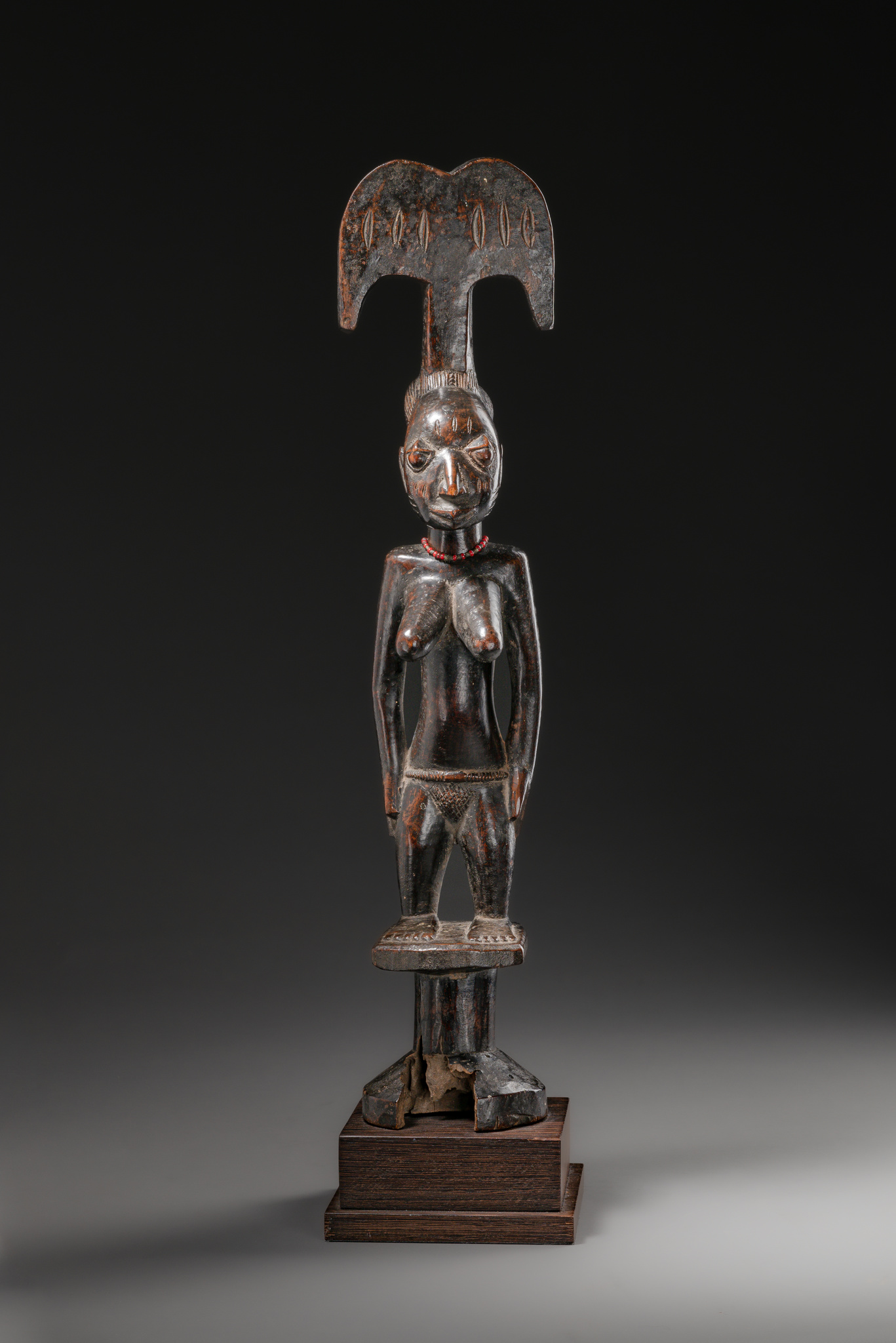
Bâton de danse "oshe shango" · Nigéria, Yoruba, Igbomina, district d'Oro, village d'Ijomui · ID: 3053119
Christie’s, Amsterdam, 12 December 2000, lot 470
Description
wood, miniature beads, base
Probably originating from the Ogbedi family workshop. Ogunremi (died 1933) or Onadokun (died c. 1930) are potential candidates as carvers. For further works from this workshop, see AHDRC 0104866 and 0194867.
In Yoruba iconography, the female figure is regarded as a bearer of respect and spiritual dignity. She often forms the central anthropomorphic motif of the “oshe” and embodies calm and balance, which counteract the destructive power of the thunder god “shango”. In some interpretations, she is associated with “oya”, the goddess of the wind, who precedes the stormy “shango” and prepares for his appearance.
The characteristic double axe refers to two connected faces and may correspond to ritual scars, as found on the patrons of such works. Whether this motif goes back to the Neolithic stone axe (“edun ara”) remains open. It is considered a material manifestation of “shango’s” lightning, which releases his “ase”, his concentrated spiritual power, when it strikes the earth.
Littérature comparée
Beaulieux, Dick, Belgium collects African Art, Brussels 2000, p. 54
Publications
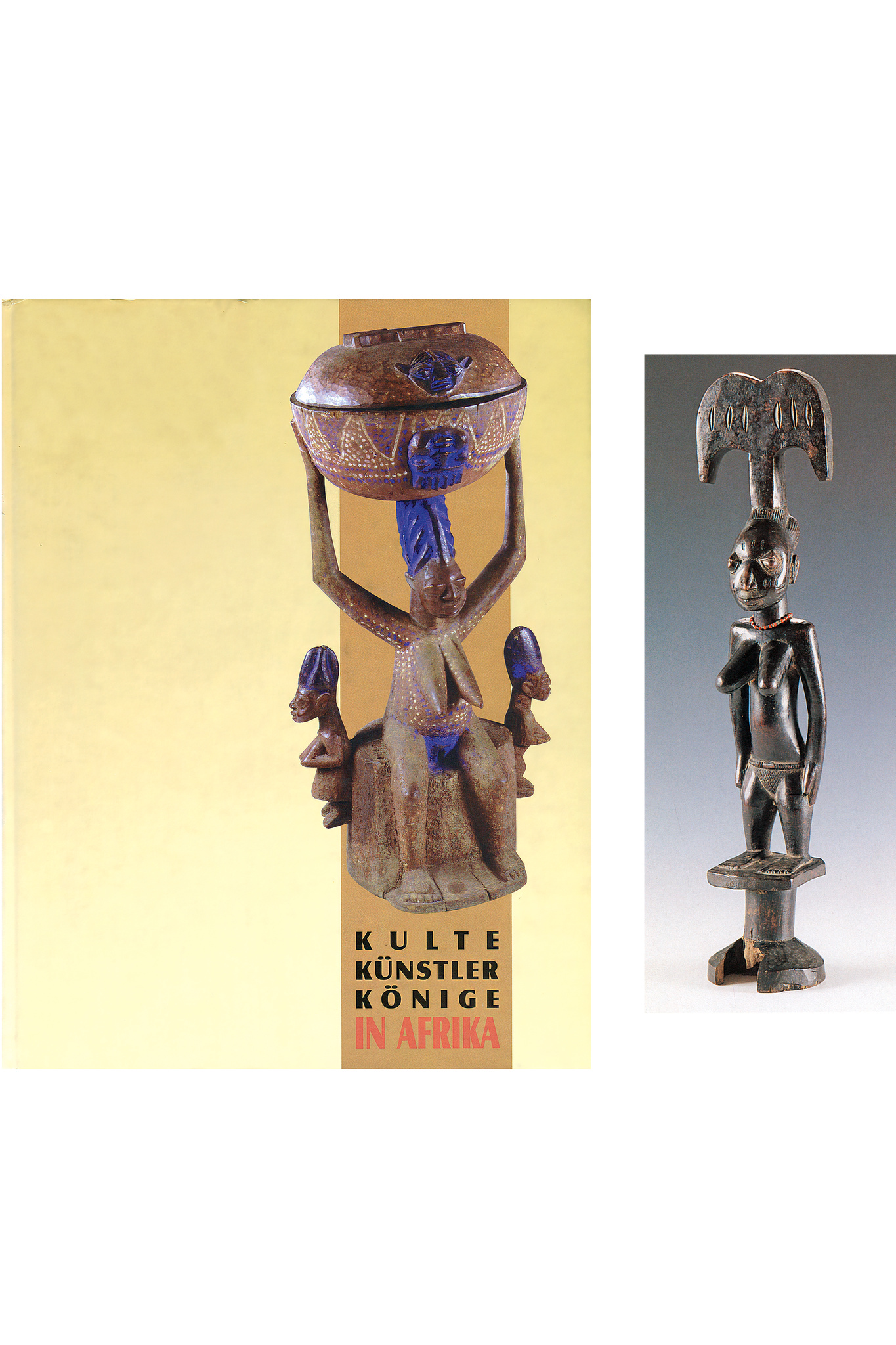
Eisenhofer, Stefan (Hg.), Kulte, Künstler, Könige in Afrika, Linz 1997, p. 206, ill. III/2.1
AHDRC: 0104864
Exposition
Schlossmuseum Linz, Austria, Kulte, Künstler, Könige in Afrika, Tradition und Moderne in Süd-Nigeria, 3 October 1997 - 5 April 1998