
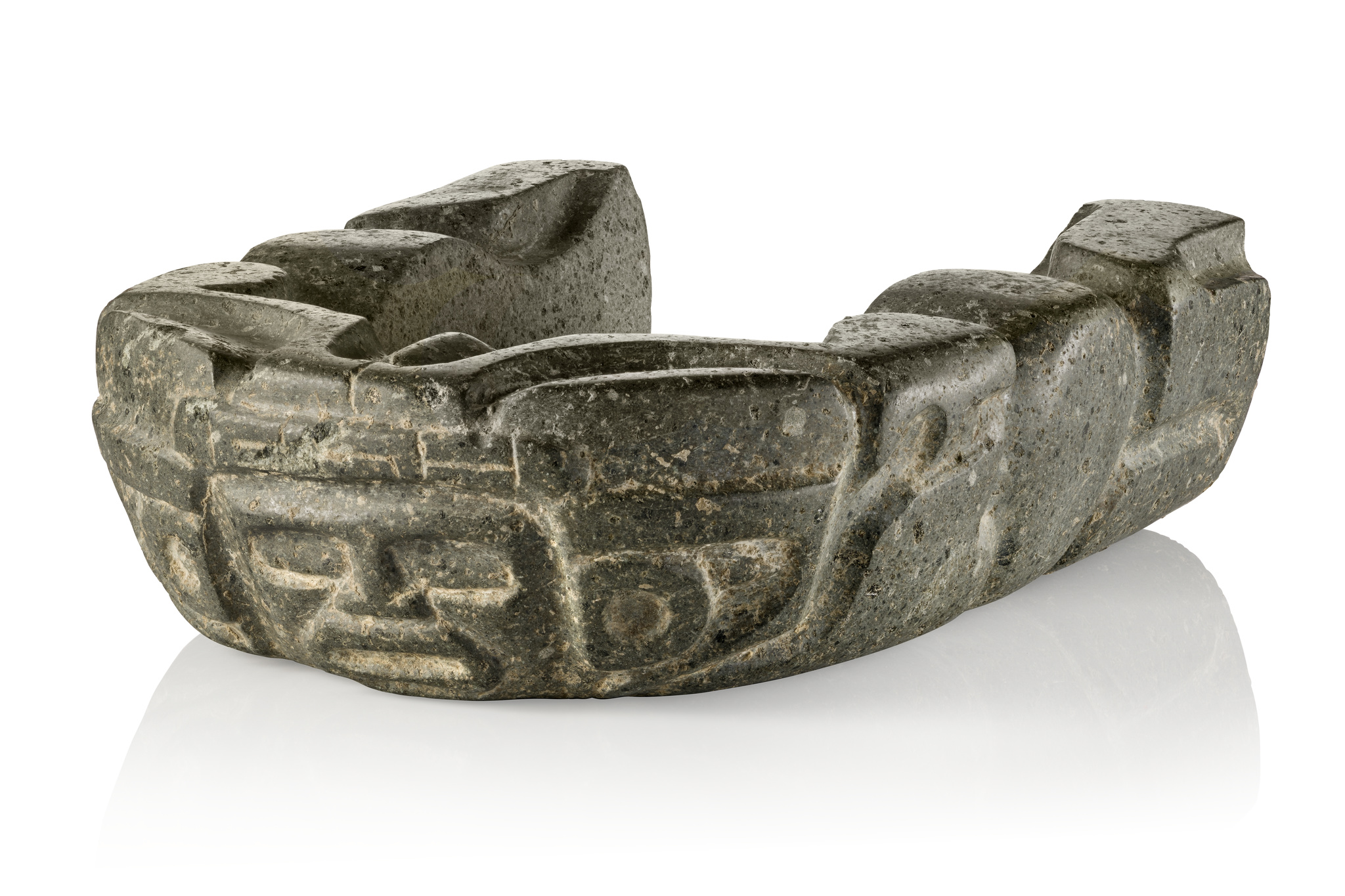
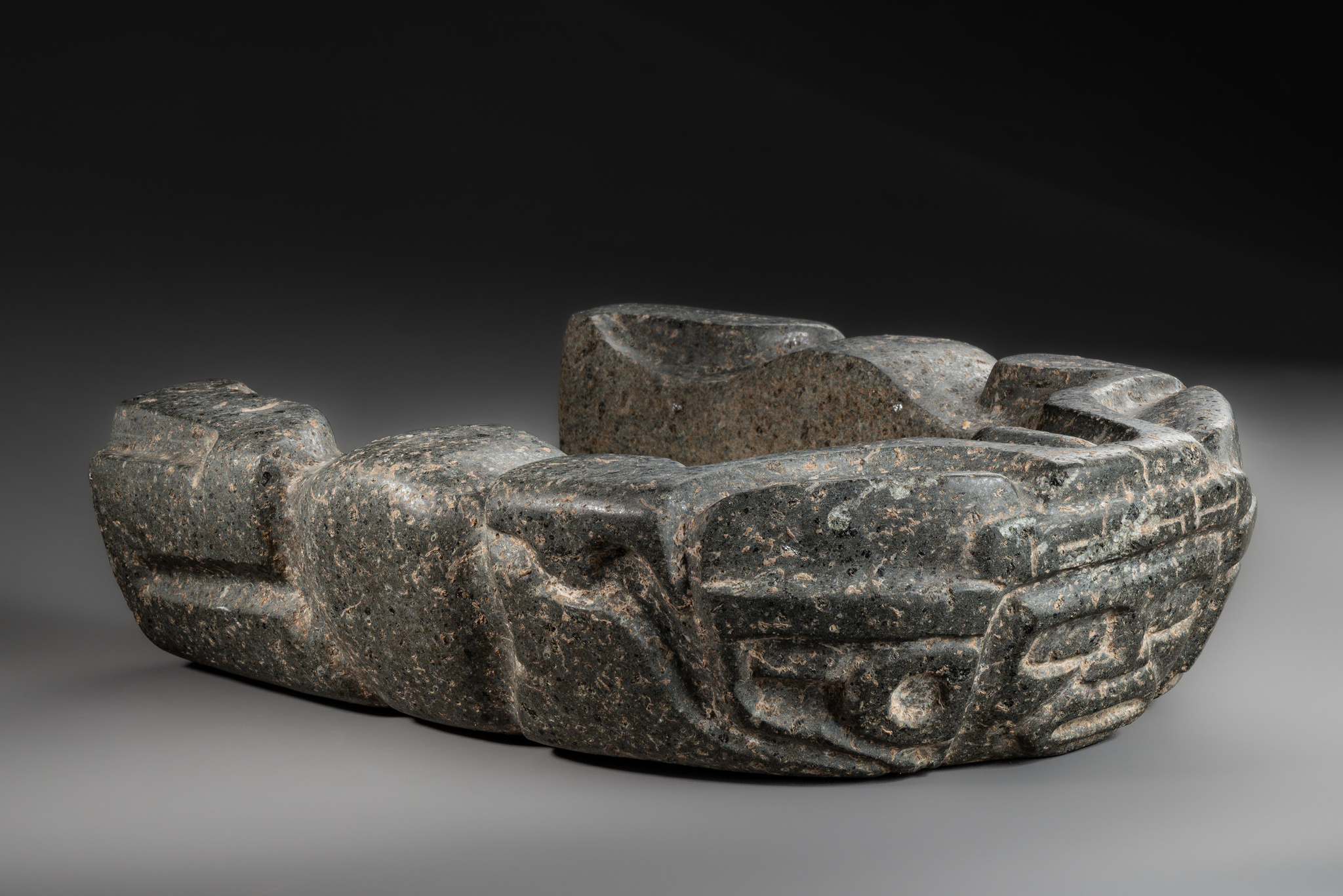
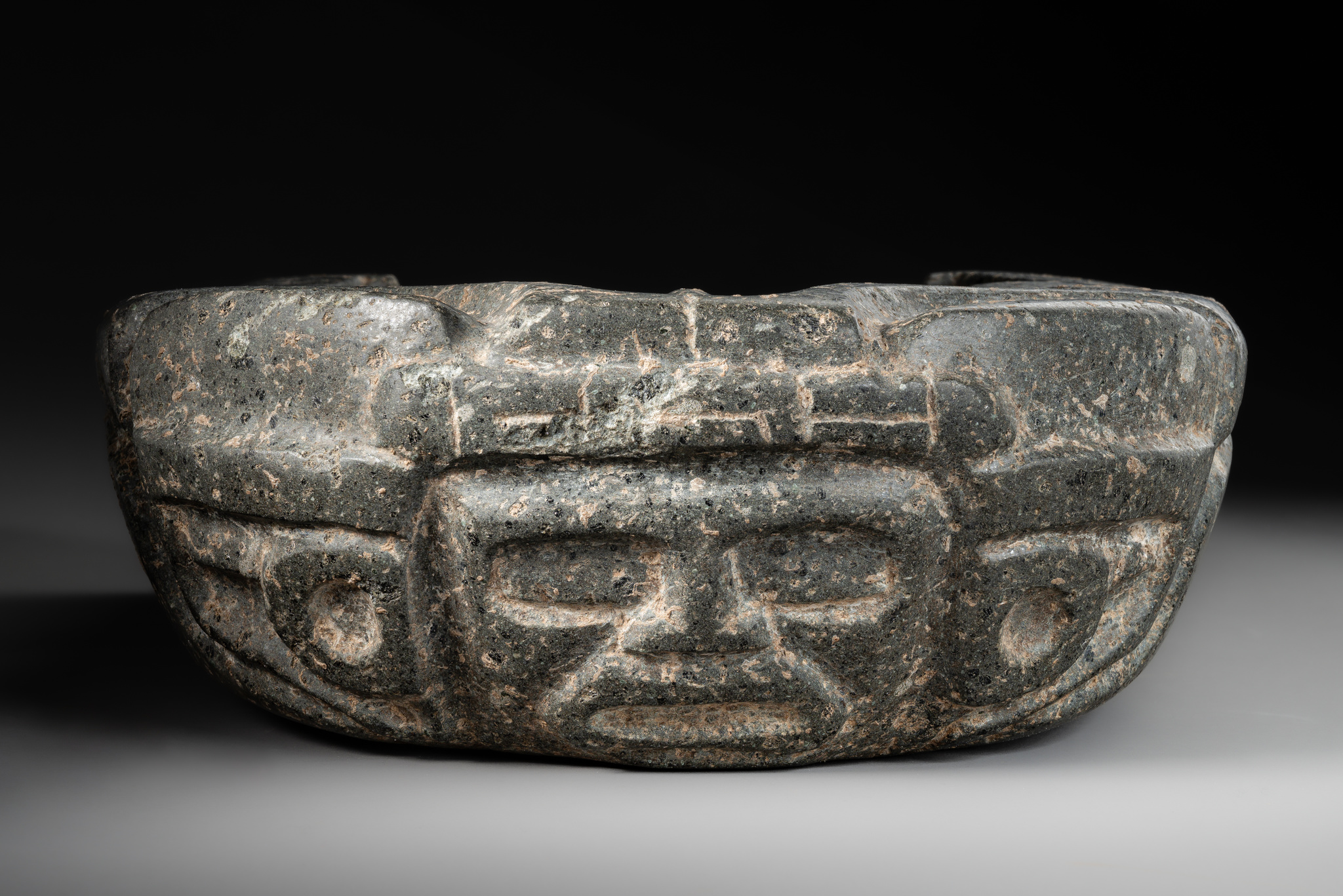
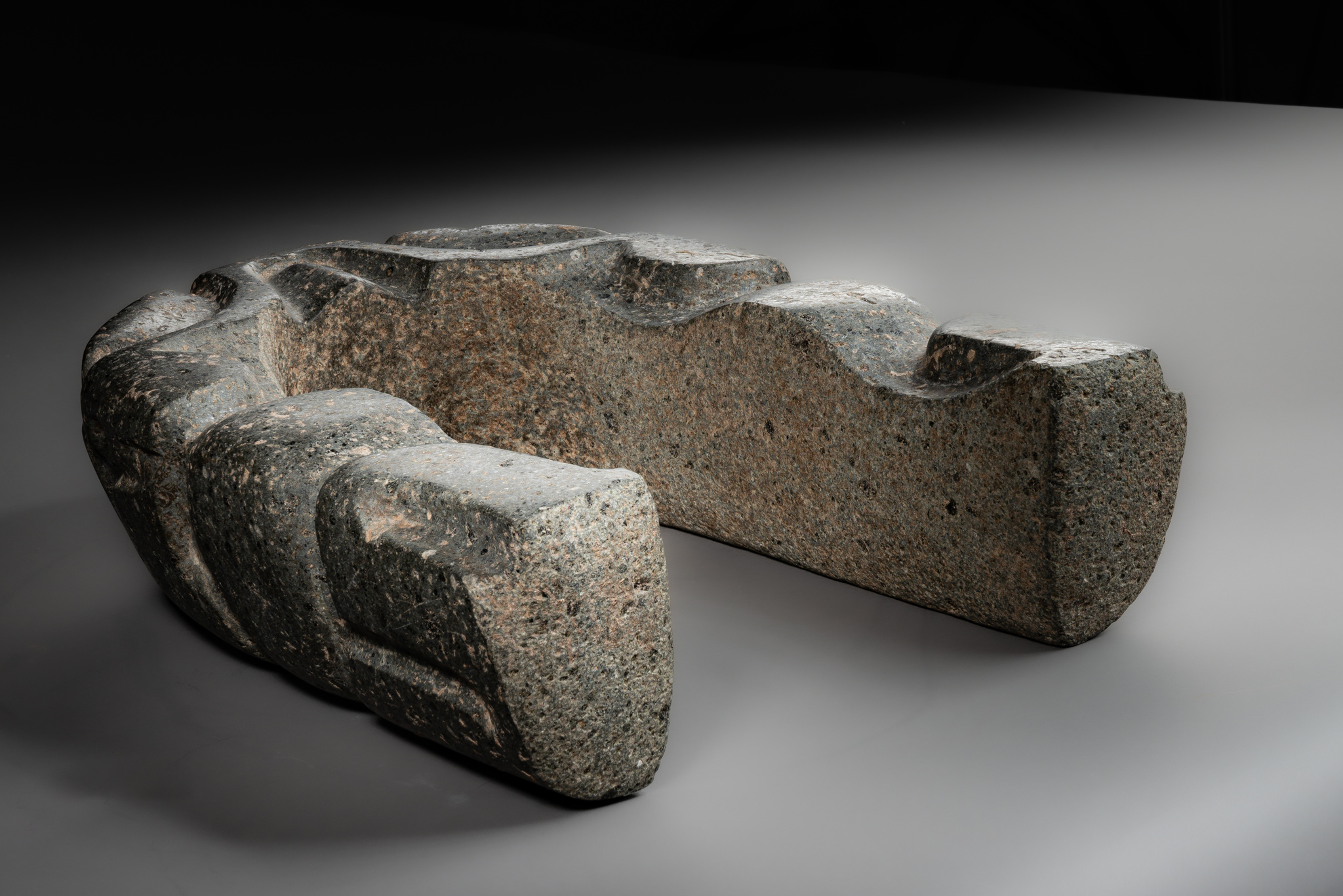
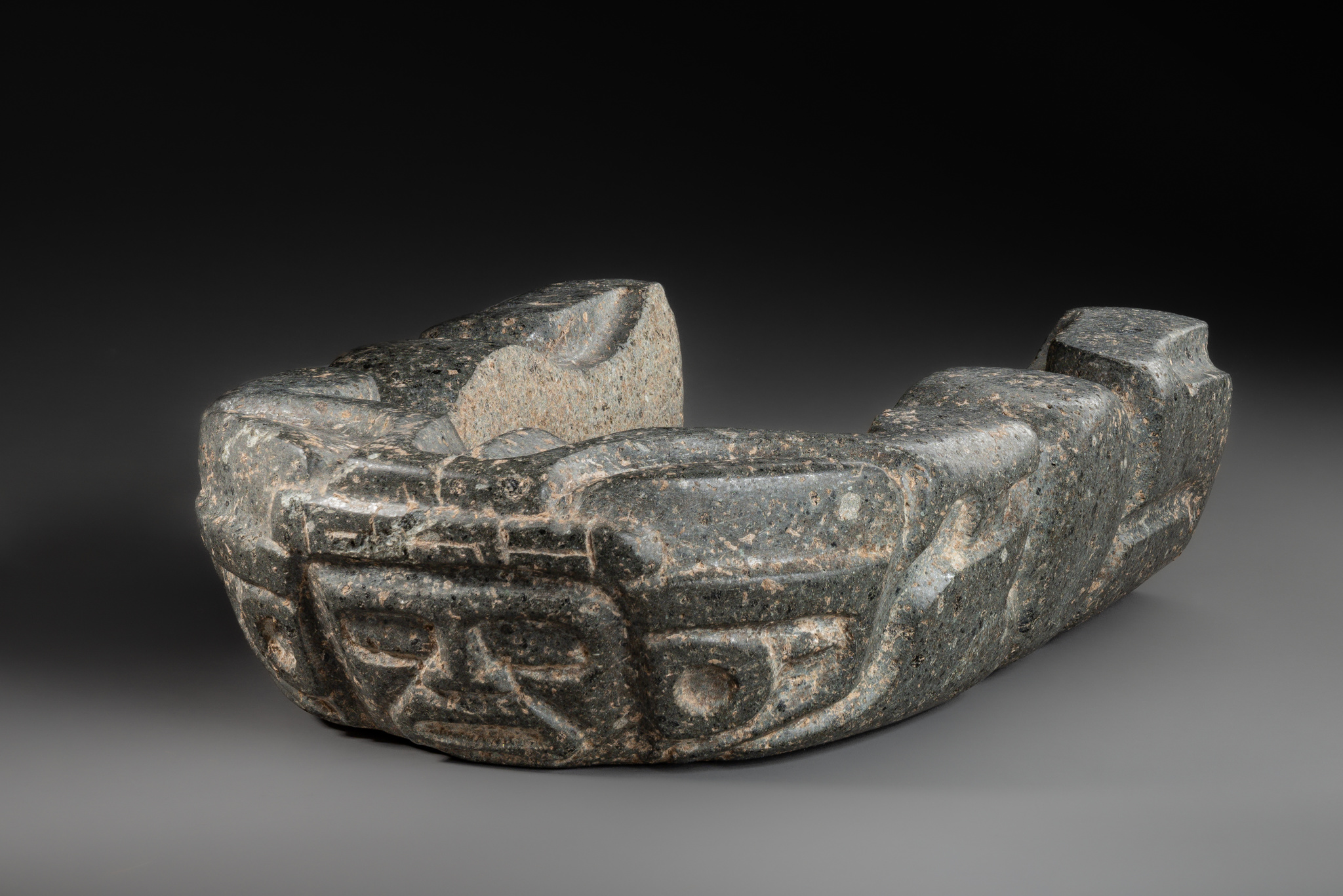
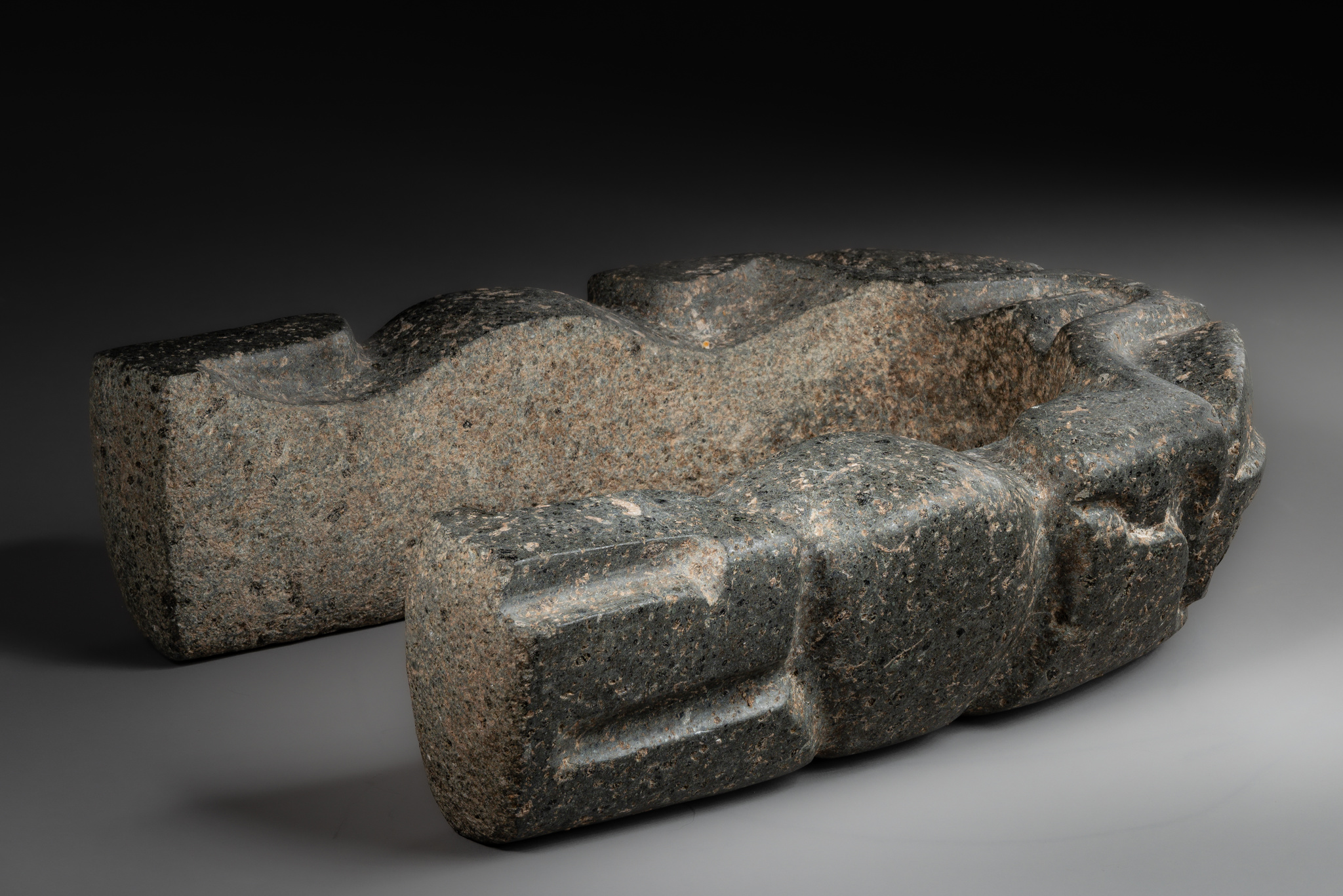
Yoke "yugo" with decor in relief, Classic Period, 600 - 900 AD · Mexico, Veracruz · ID: 3053017
Description
metadiorite,
No other art form is as closely associated with the Gulf Coast of Veracruz as the portable ball game sculptures known as yokes or “yugo”.
The term yoke is misleading and derives solely from the external similarity to ox yokes. Such objects are particularly common in central Veracruz, but have also been found as far away as central Mexico and El Salvador.
The earliest examples were simple, oval in shape and sometimes closed at the ends. The U-shape that later became dominant developed between 300 BC and 300 AD.
Stone yokes were not carried during the game itself, but as part of accompanying rituals and were a highly symbolic privilege of the elite.
Comparing literature
Bernal y Garcia Pimentel, Ignacio & Mireille Simoni Abbat, Mexiko, München 1987, p. 182, ill. 143 Paz, Octavio, Mexico, Splendor of Thirty Centuries, New York 1990, p. 165 ff.
Notices
This object is subject to the UNESCO Cultural Heritage Protection Act. Export documents are required for export (subjected to a fee).