
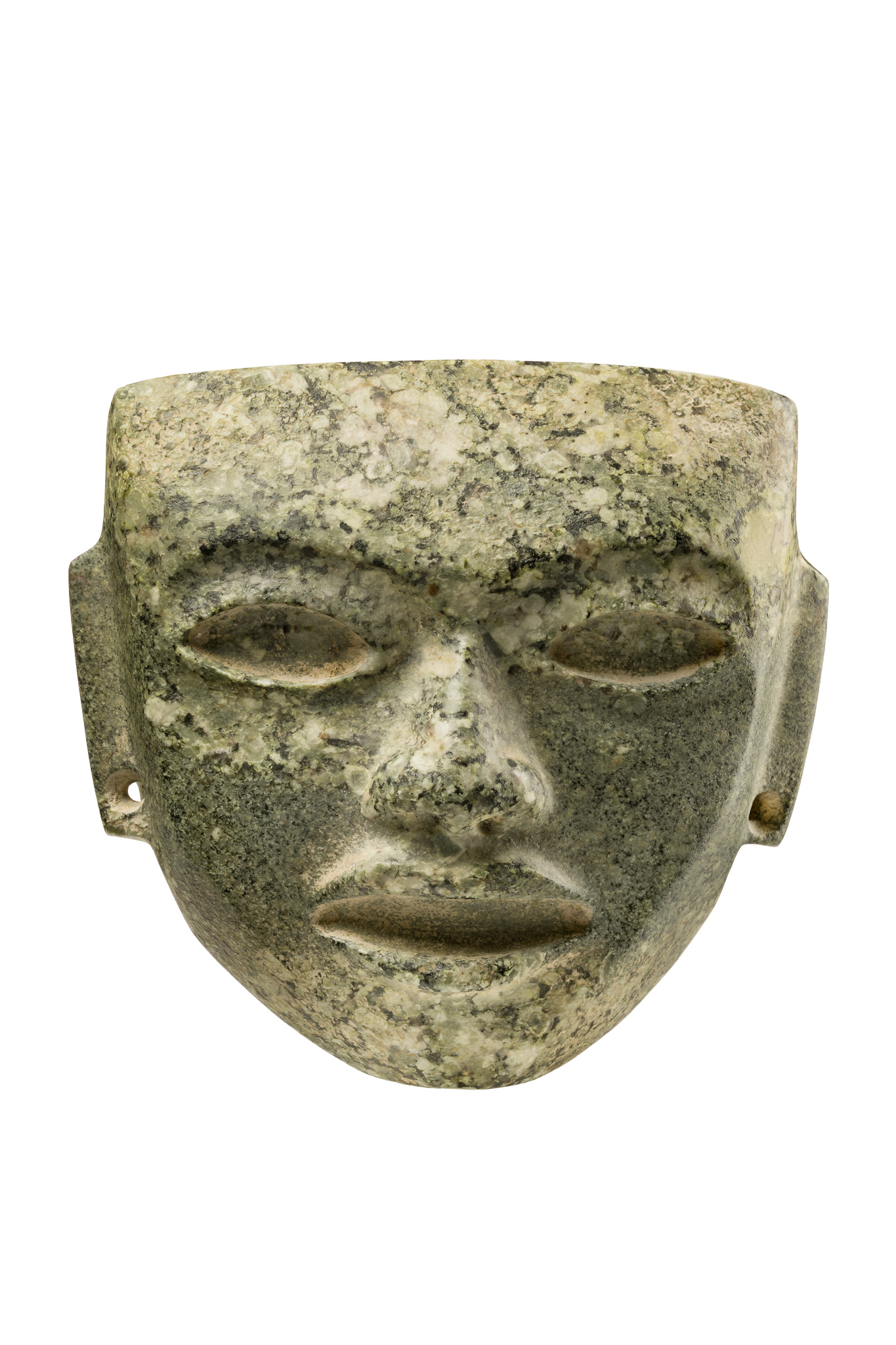
Small mask face, Classic Period, 200 - 650 BC · Mexico, Teotihuacán · ID: 3053035
Description
serpentine,
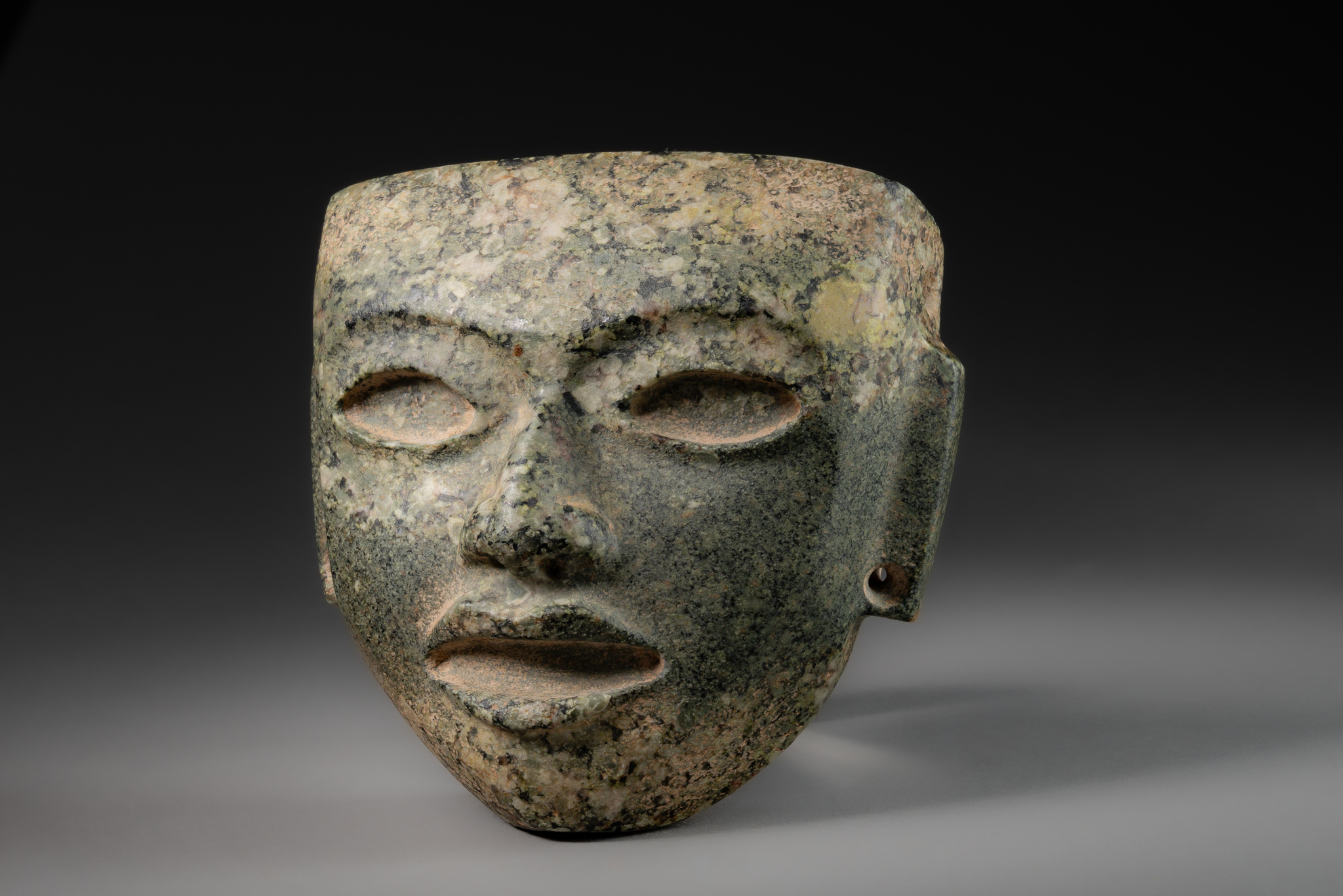
This mask is characterised by clear, regular features: a broad, high forehead, eyes and mouth arranged in parallel horizontal lines, and a geometrically shaped nose. Holes in the area of the ears suggest the presence of earrings, as worn by both men and women in Teotihuacan.
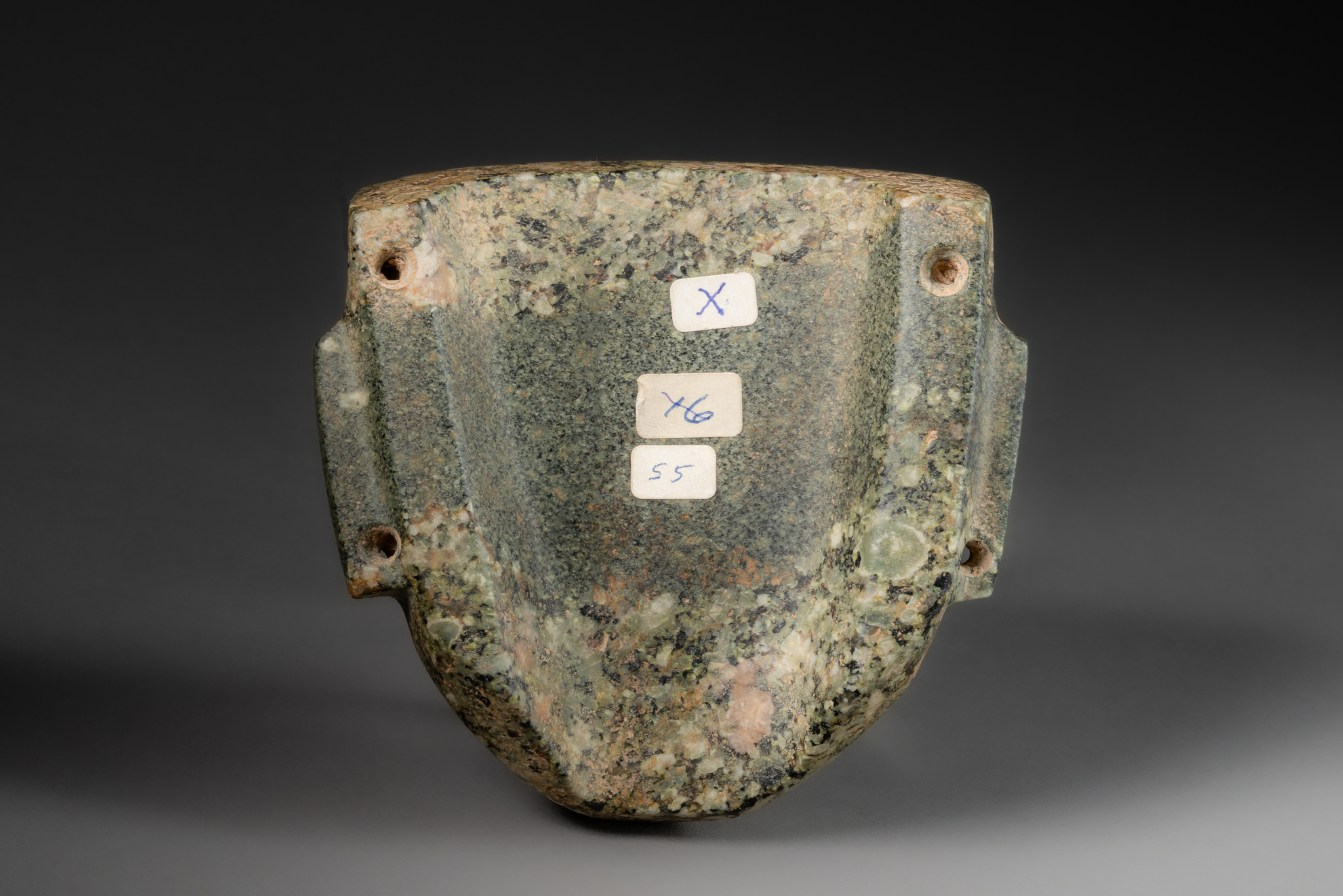
Recesses for the eyes and mouth suggest that the mask was originally fitted with inlays of shell or pyrite to represent the eyes and teeth. Nothing definite is known about its original function; it can be ruled out that it was actually worn. It was probably associated with the worship of ancestors or deities. Researchers also suspect that masks of this type may have originated in the context of the cult of the god of maize.
The culture of Teotihuacan in present-day Mexico is one of the earliest and most influential advanced civilisations of Mesoamerica.
Stone masks with stylised, human-like facial features occupy a significant place within the sculptural art of Teotihuacan. They follow a strictly idealised formal canon and appear to be symbolic representations rather than individual portraits, comparable to other standardised motifs of this culture.
The object Small mask face, Classic Period, 200 - 650 BC with the object ID 3053035 was last part of the auction Auction 106 at April 25, 2026 on Zemanek-Münster Auction house. The object with the lot number 25 achieved a sales price of EUR 4,000.
You can find more Masks and other popular object types on our related topic pages. You may also be interested in our page on American art and Pre-columbian art.
Comparing literature
Anton, Ferdinand, Azteken, Maya, Inka und ihre Vorläufer, Iphofen 1995, p. 50
Notices
This object is subject to the Cultural Heritage Protection Act. Export documents are required for export (subjected to a fee).