
Relief, Late Classical Period, ca. 750 - 850 AD · Mexico, Maya, Bonampak, Chiapas · ID: 3052993
Jules Berman, Beverly Hills, USA
Aliberto Guidani, Florence & Milano, Italy
German Private Collection, Munich
Description
fine sandstone,
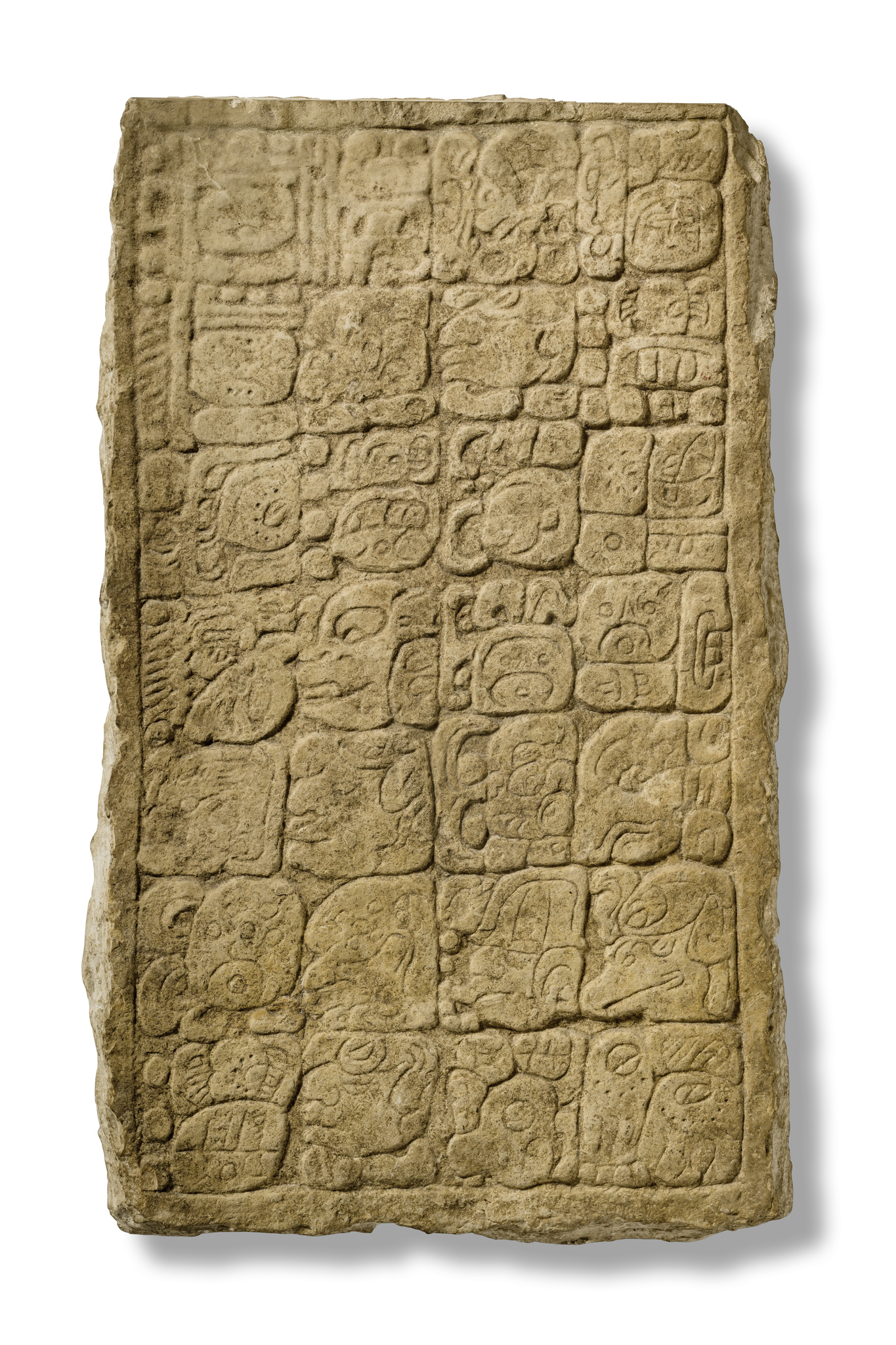
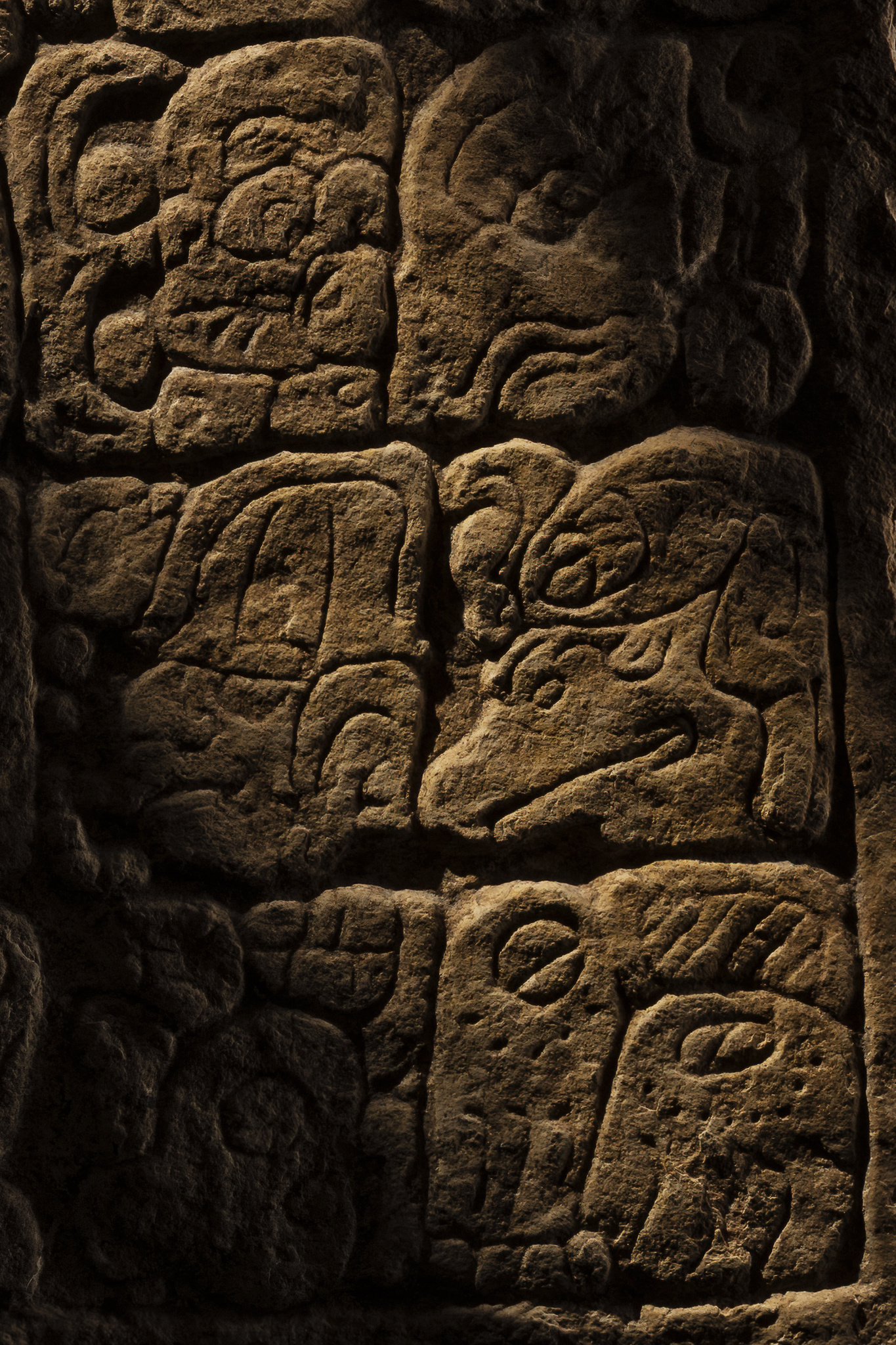
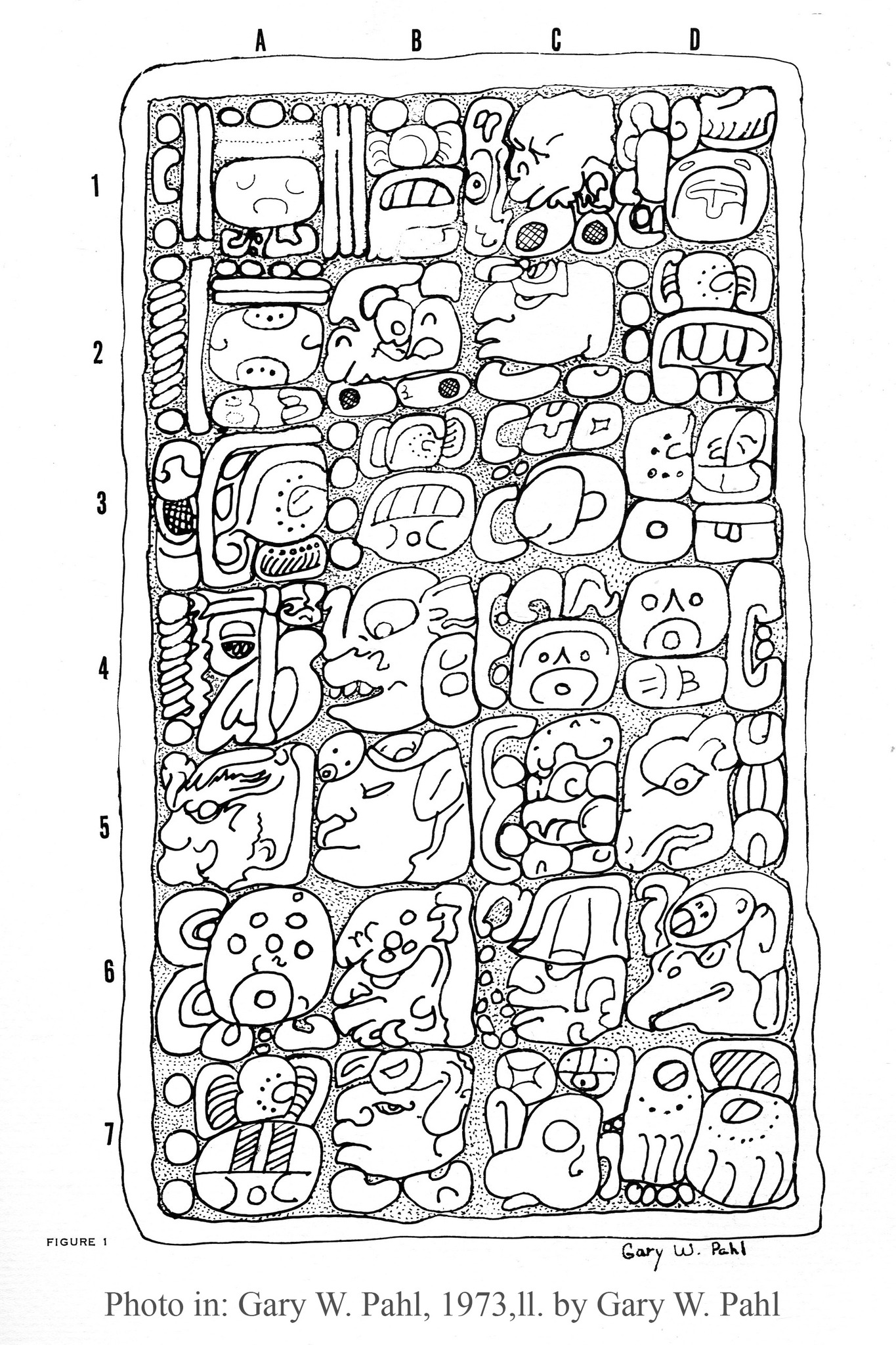
The well-preserved sandstone relief bears an inscription of 28 glyphs, arranged in four rows across seven blocks, and is framed along the upper, lower, and left edges.
The relief has been studied since 1973 and remains, to the present day, the subject of scholarly research in both archaeology and Maya epigraphy.
The text begins with a partially preserved distance number that likely linked two dates; the associated introductory sign for the distance statement is missing.
This is followed by an event that cannot yet be more precisely identified, relating to a high-ranking person described as the captor/seizer of fourteen captives and bearing multiple titles, including the office of guardian of Lakamtun and the designation as a “K’atun”- lord.
Other passages mention place names and proper names such as “Xukalnahb” and “Yaxik’”, thereby situating the depicted personality in a clearly defined political and ritual environment of the classical Maya world. At the same time, they appear in connection with the term “wayab”, which refers to a shamanic-magical function, and with the rank title “kaloomte”, one of the highest titles of rulers, which means “the one who acts” or “the one who exercises power” and indicates superior authority.
Dynastic legitimacy is emphasised by the formula “u mijin” (“son of the man”), which highlights genealogical continuity and legitimate succession to office. Reference is also made to a “young divine lord” (“h’ok jukub ajaw”), which refers to the sacred elevation of the ruler in the sense of divinely legitimised kingship. “Ak’e”, understood as the emblem glyph of “Bonampak” or “Lacanhá”, marks political affiliation to a specific city or dynastic unit.
The inscription concludes with the designation “bakab” (“First of the Earth”), a cosmologically charged title that links the ruler to a mythological dimension. Taken as a whole, the inscriptions thus unfold a multi-layered picture of power, ancestry and sacred world order, underscoring the object’s outstanding historical and ritual significance.
Expertise
Donald Hales, Hieroglyphic Panel from the Bonampak / Lancha region, 8 February 2026
Comparing literature
Publications
Pahl, Gary W., Pre-Hispanic Mexican Ar. Jules Berman Collection of Mexican Pre-Columbian Art, San Diego 1973, p. 12 ff.; Mayer, Karl-Herbert, Maya Monuments II, Sculptures of the Unknown Provenance in the United States, No. 30, p. 38 f., pl. 48, Ramona 1980; Mayer, Karl-Herbert, Maya Monuments V, Sculptures of the Unknown Provenance, Supplement 2, p. 18, pl. 76, Berlin 1989; Houston, Stephen D., Archaeology and Maya Writing, Journal of World Pre-History Vol.3, p. 18, fig. 5c; Patterson, Leonardo (ed.), The Magic of Middle American Culture Before 1492, München 1992, p. 60 ff.; Delgado, Paulino Castenada, et. al, La Iglesia en Angelica Evangelization y Cultural, Sevilla 1992; Biro, Peter, The Classical Maya Western Region, Oxford 2011, p. 236 ff., fig. 232
Exhibition
Expo 1992, Sevilla, Spain, 20 April - 12 October 1992
Notices
This object is subject to the UNESCO Cultural Heritage Protection Act. Export documents are required for export (subjected to a fee).