
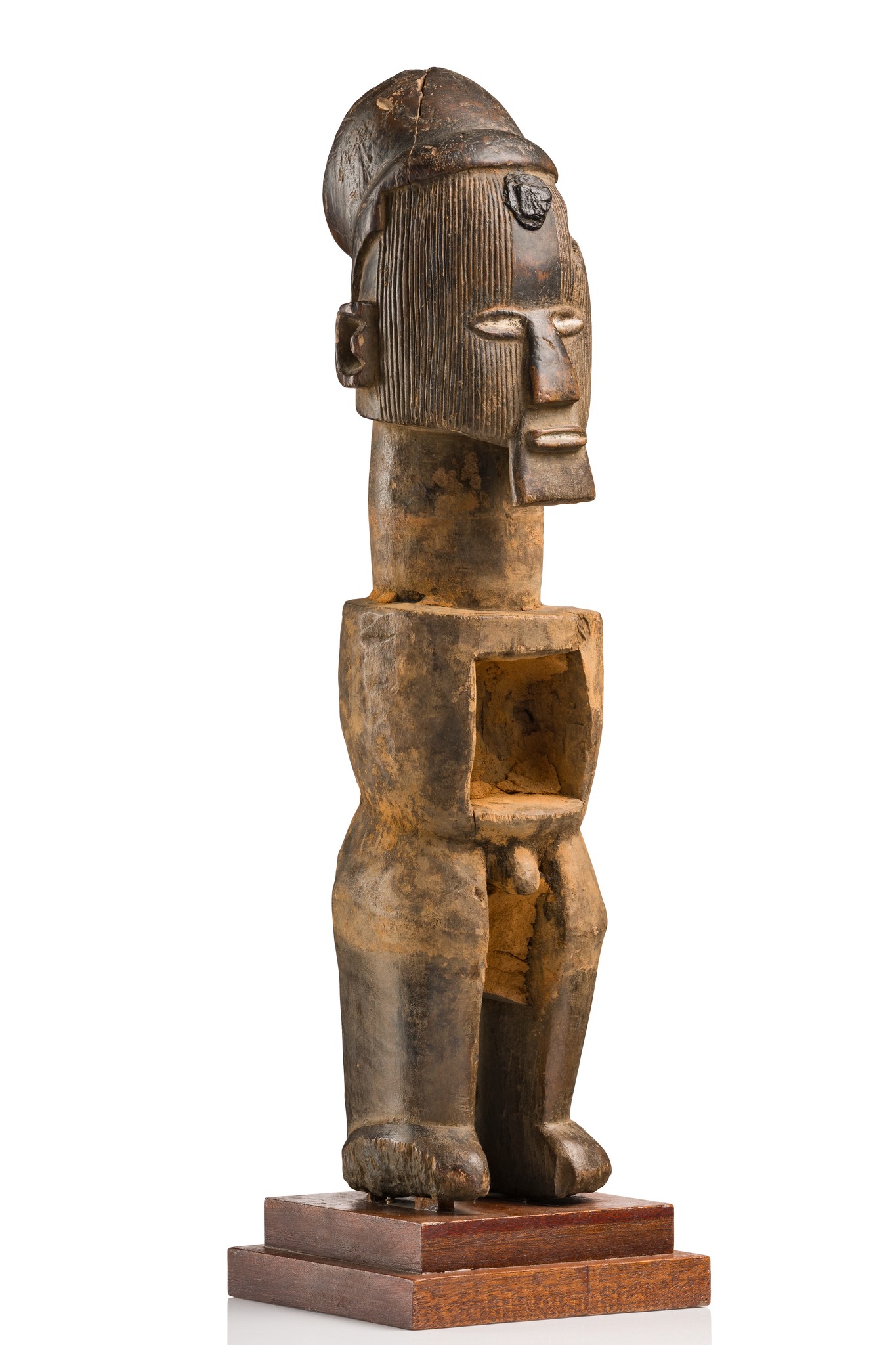
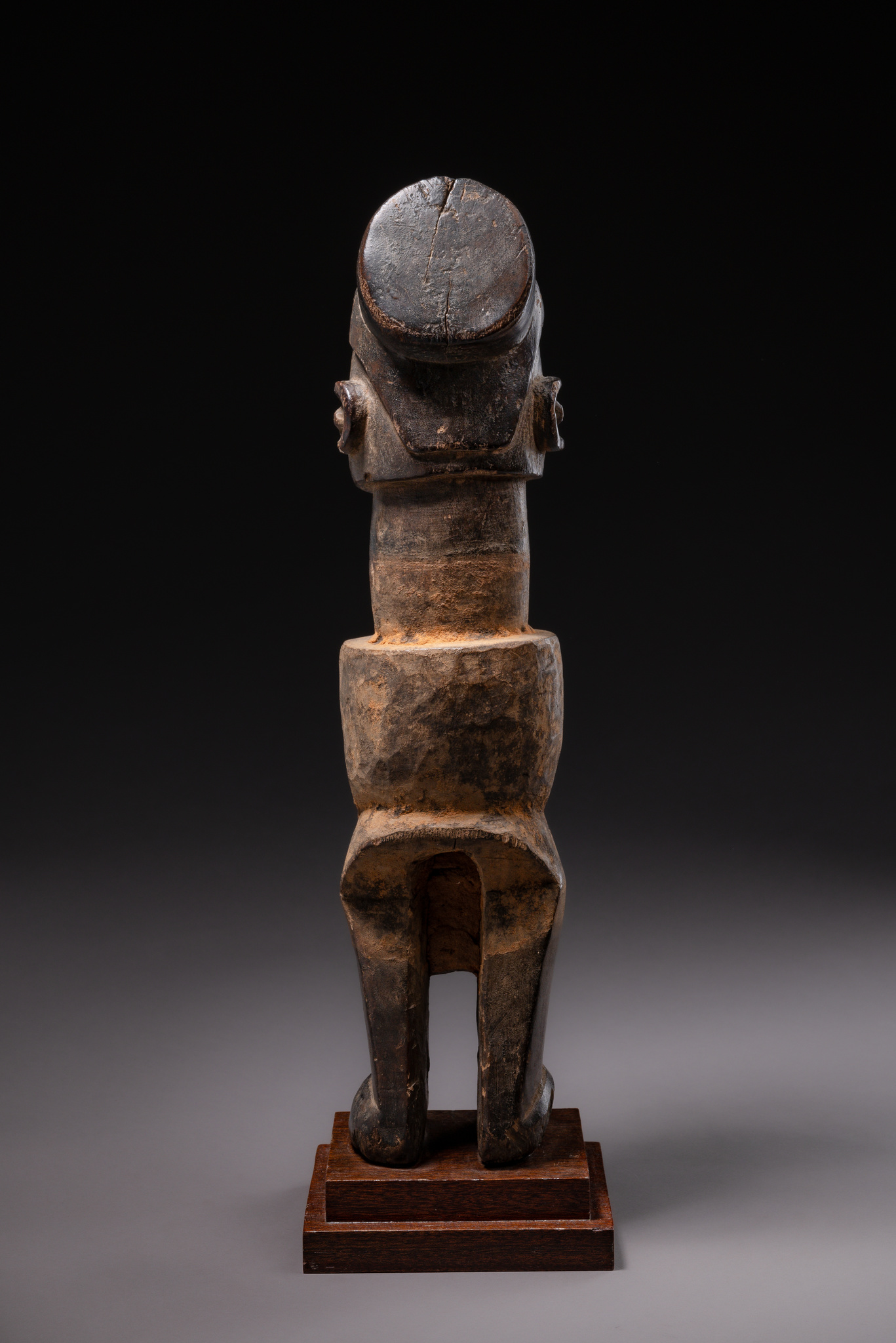
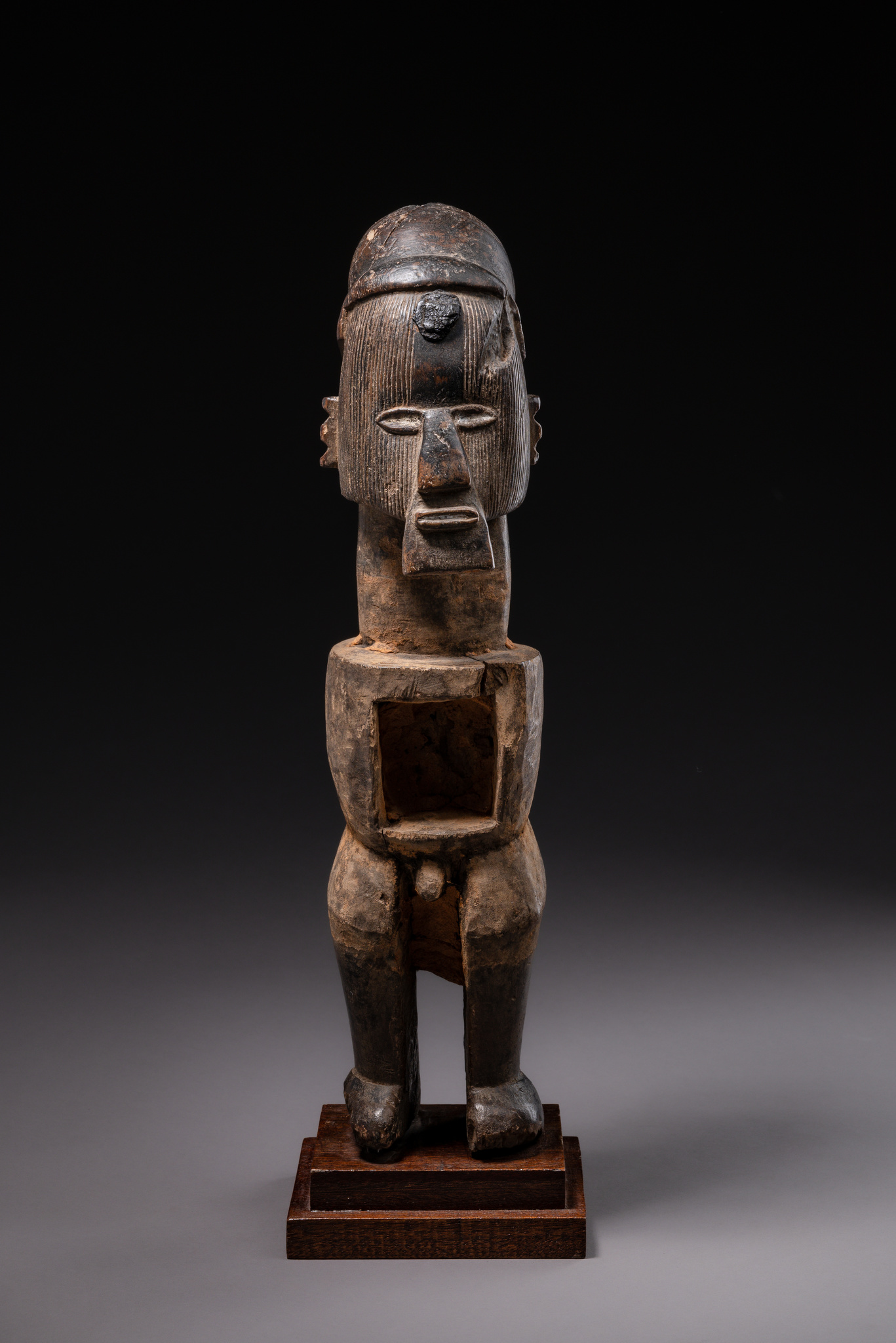
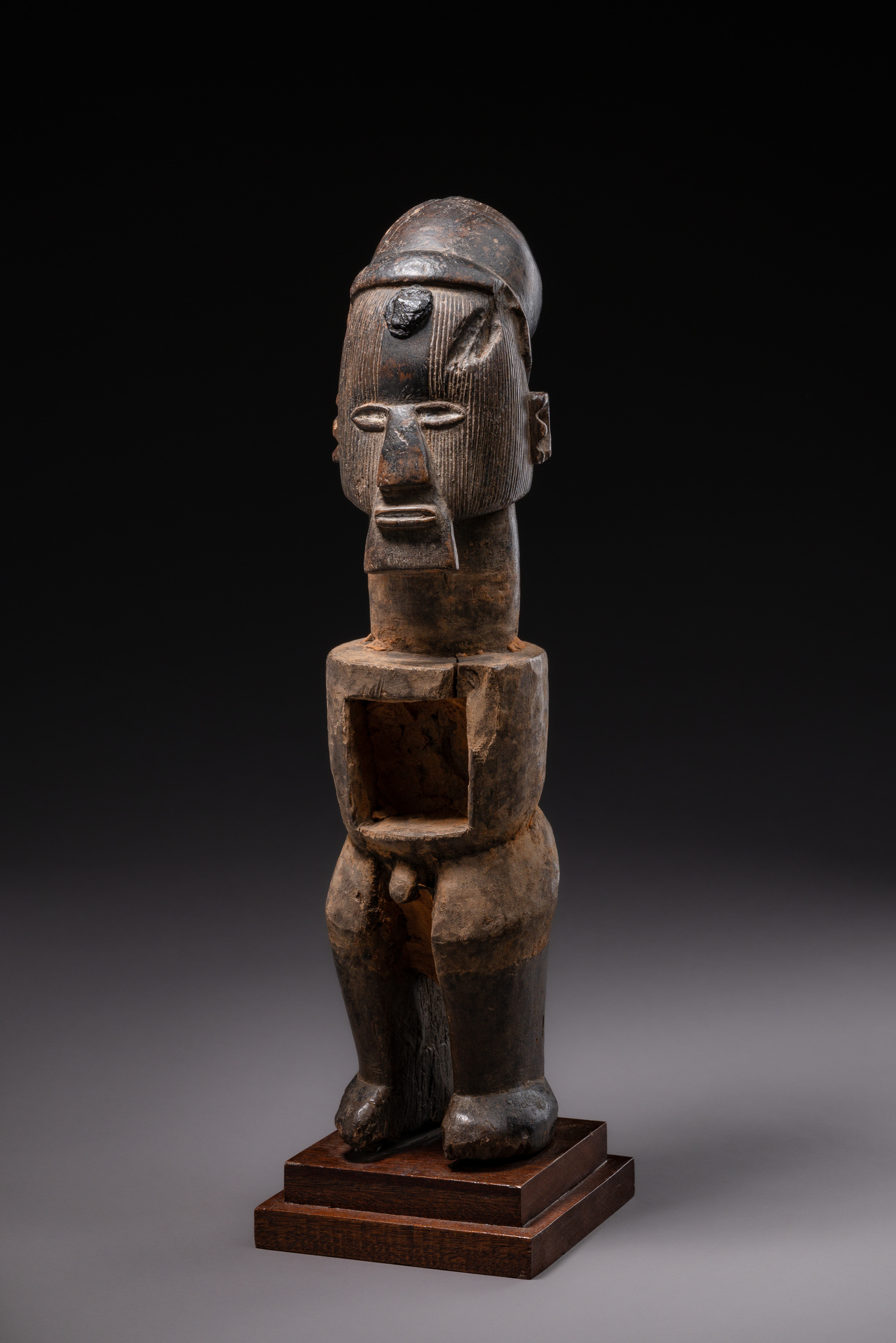
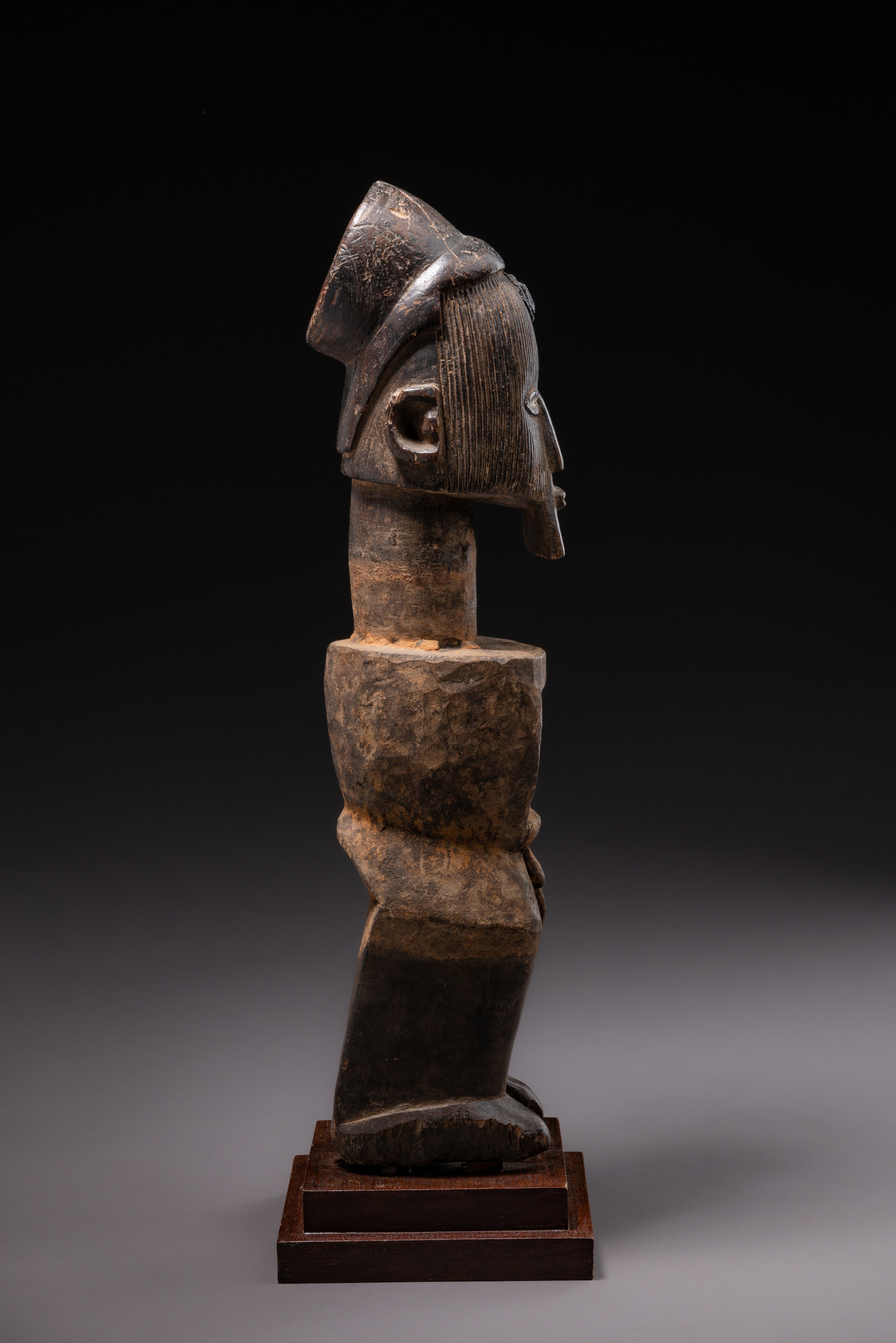
Male power figure 'buti' · D. R. Congo, Teke · ID: 3052291
Rolf Kunitsch, Münster, Germany
Description
wood, red “tukula” powder, clay, black paste, kaolin, base
In general, the Teke saw themselves as dependent on the power of the spirits as well as on the power of the ancestors.
The spirits are the mediators between God and humans. They require cultic veneration because they can bring about good and evil. The hut-like shrines of the spirit figures were often found on the outskirts of villages, where offerings were made to them.
Anthropomorphic statues, “buti” (“butti”), represent the ancestors and are, as it were, containers for their souls. Their barrel- or sphere-shaped magical charge, called “bilongo” or “bonga”, therefore often contain physical remains of the ancestors, such as hair or fingernails.
The cultic use determines the composition of the magical contents, which are put together by the “nganga” and decide on the effectiveness of the ritual figures. The external appearance of the Teke sculptures gives no indication of the purpose for which they were made. Figures that had not help in the hoped-for sense against illness, hunting accidents and other misfortunes were destroyed or thrown away without much respect (according to Korinthenberg, 2021, p. 13 ff.).
The object Male power figure ‘buti’ with the object ID 3052291 was last part of the auction Auction 105 at November 15, 2025 on Zemanek-Münster Auction house. The object with the lot number 378 achieved a sales price of EUR 1,000.
You can find more Figures and other popular object types on our related topic pages. You may also be interested in our page on African art.
Comparing literature
Korinthenberg, G., ed. by H. Simonis, Teke, Köln 2021, p. 13 ff.