
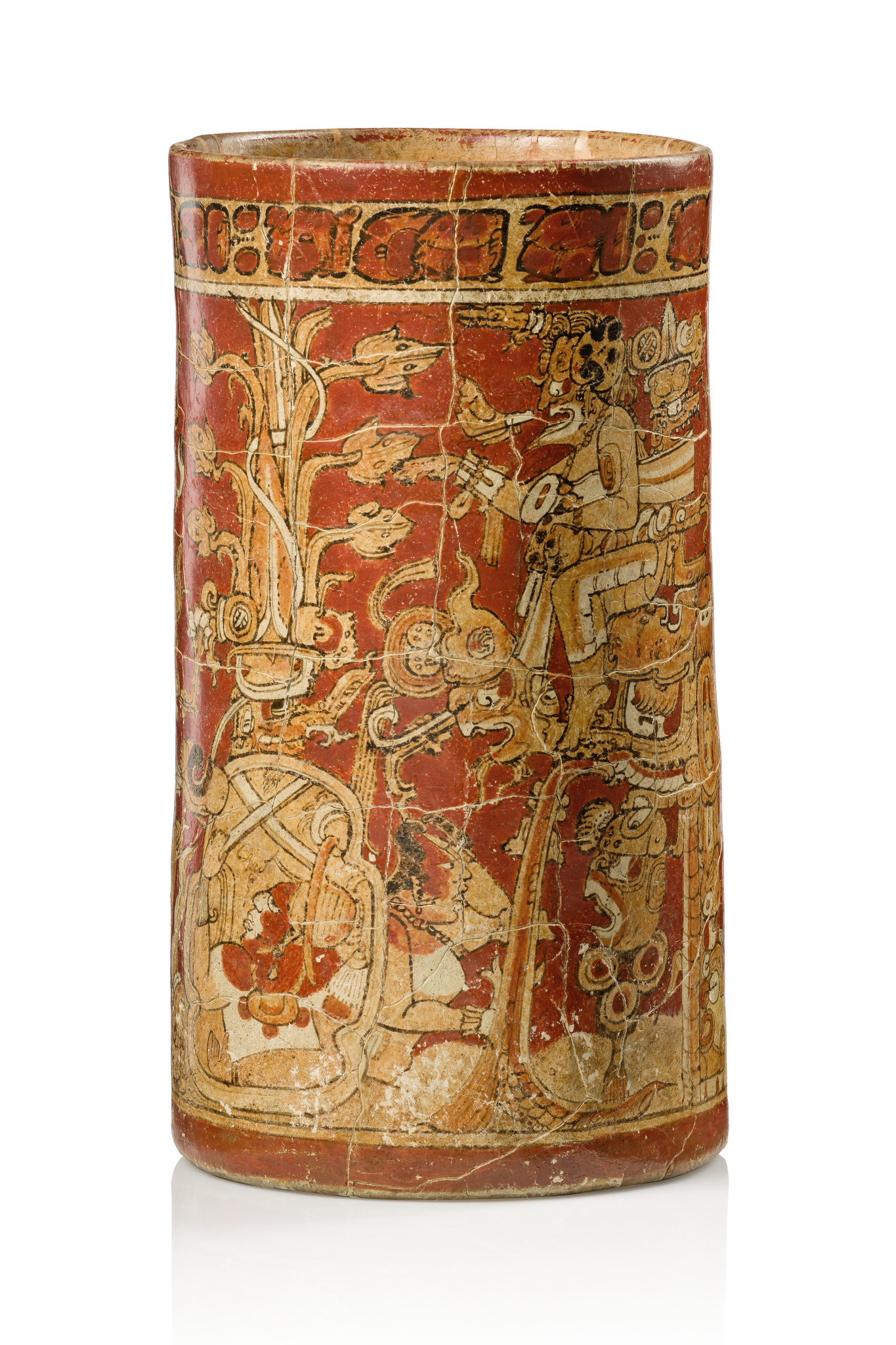
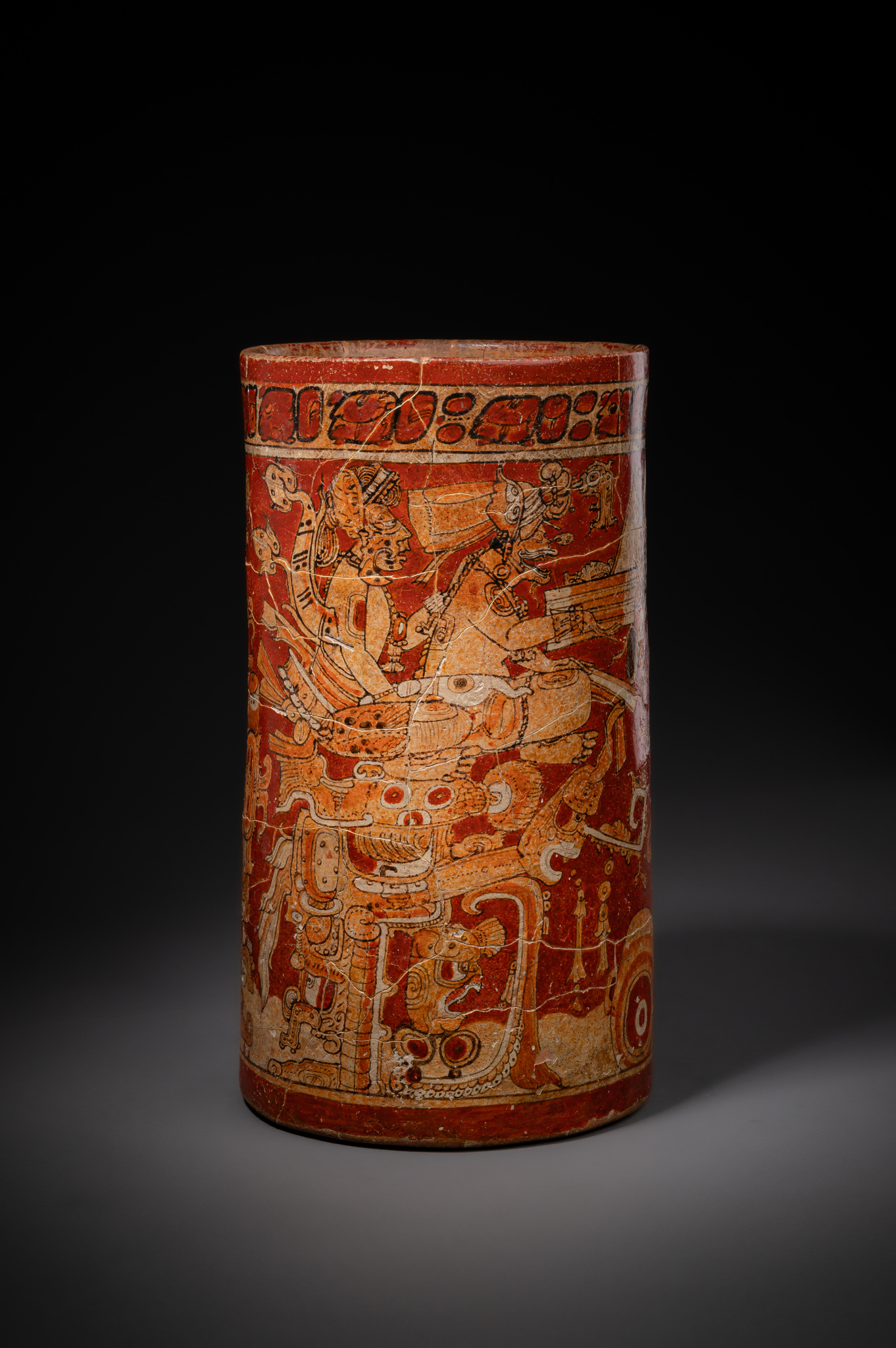
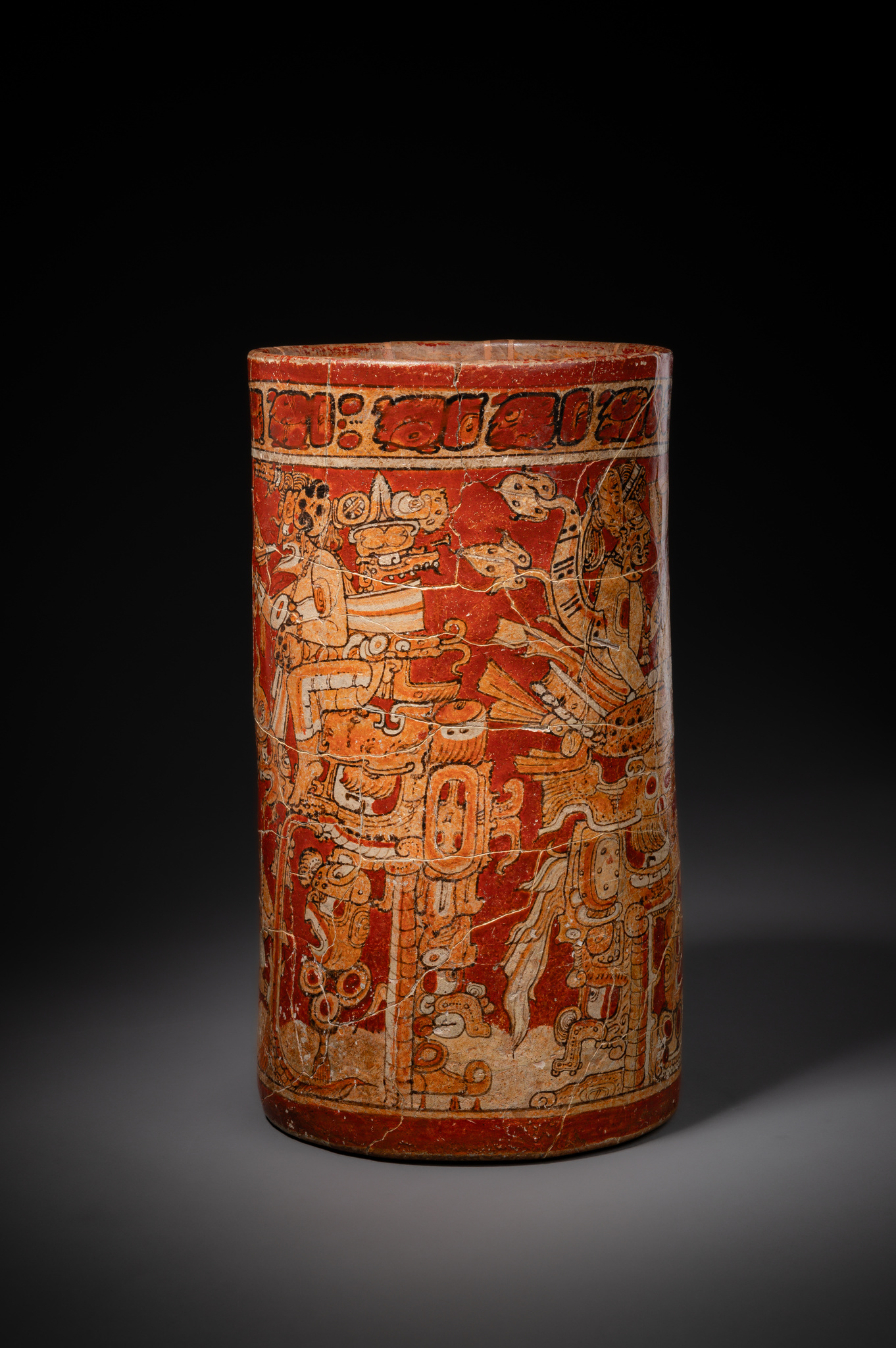
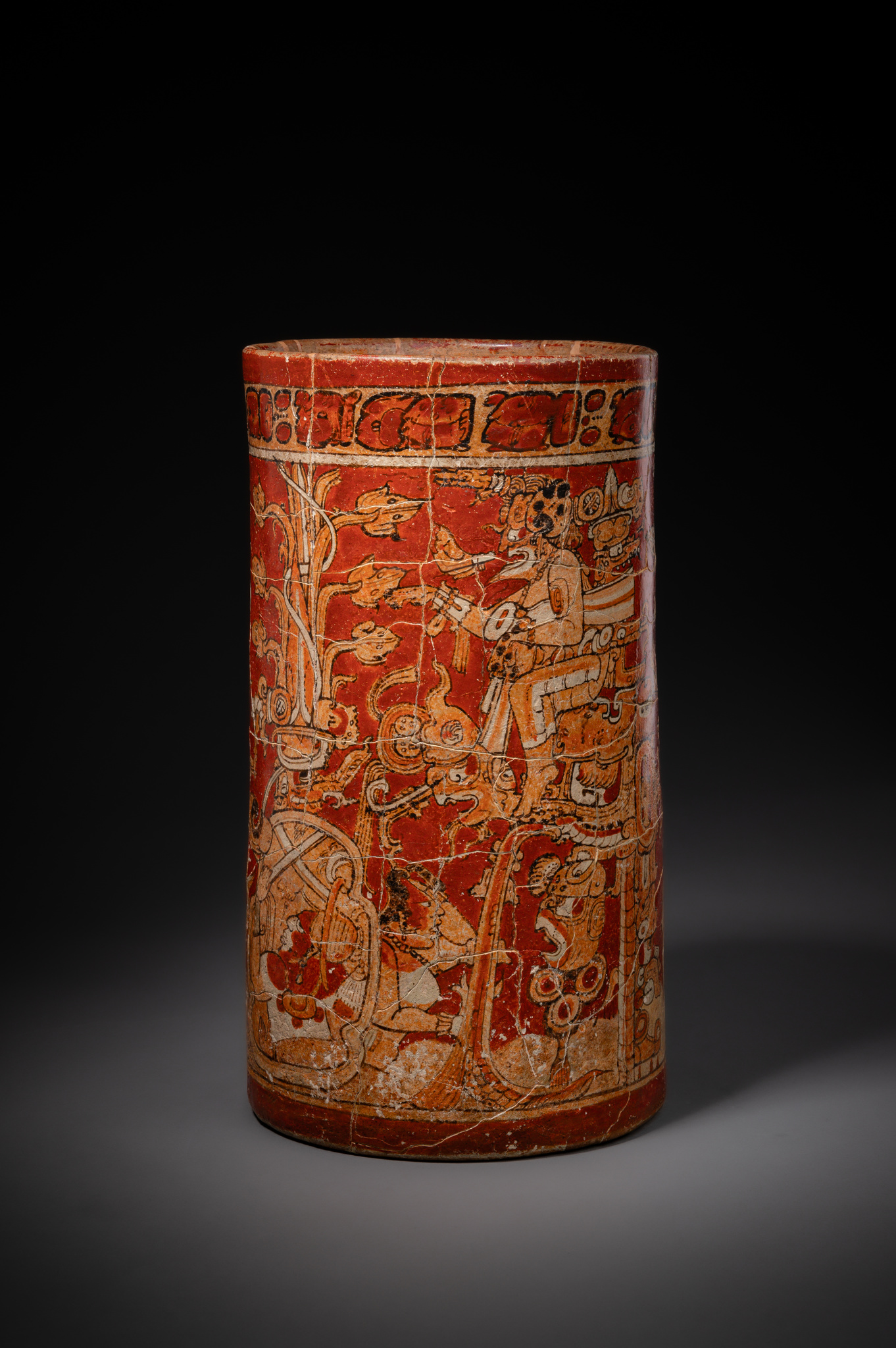
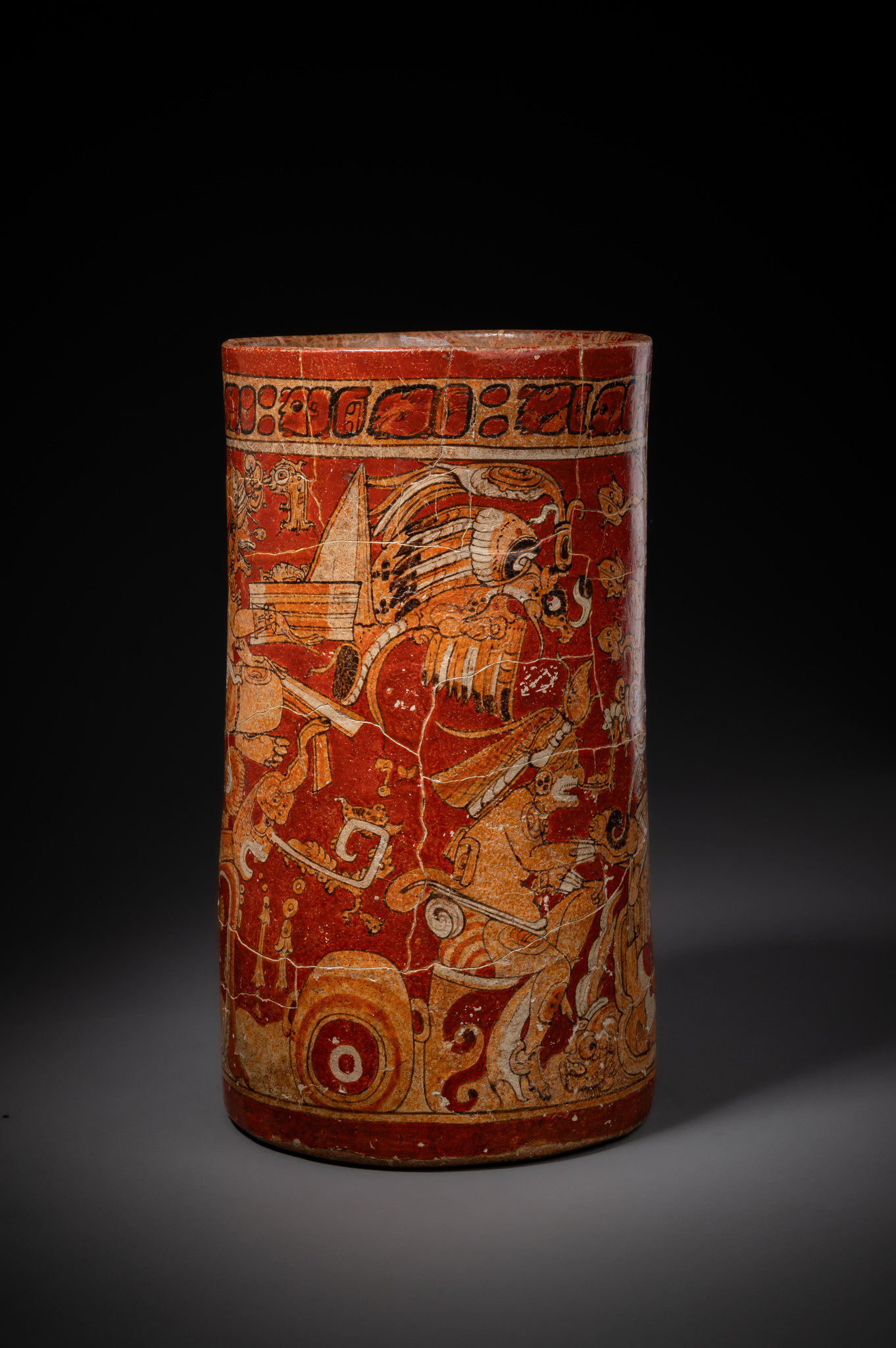
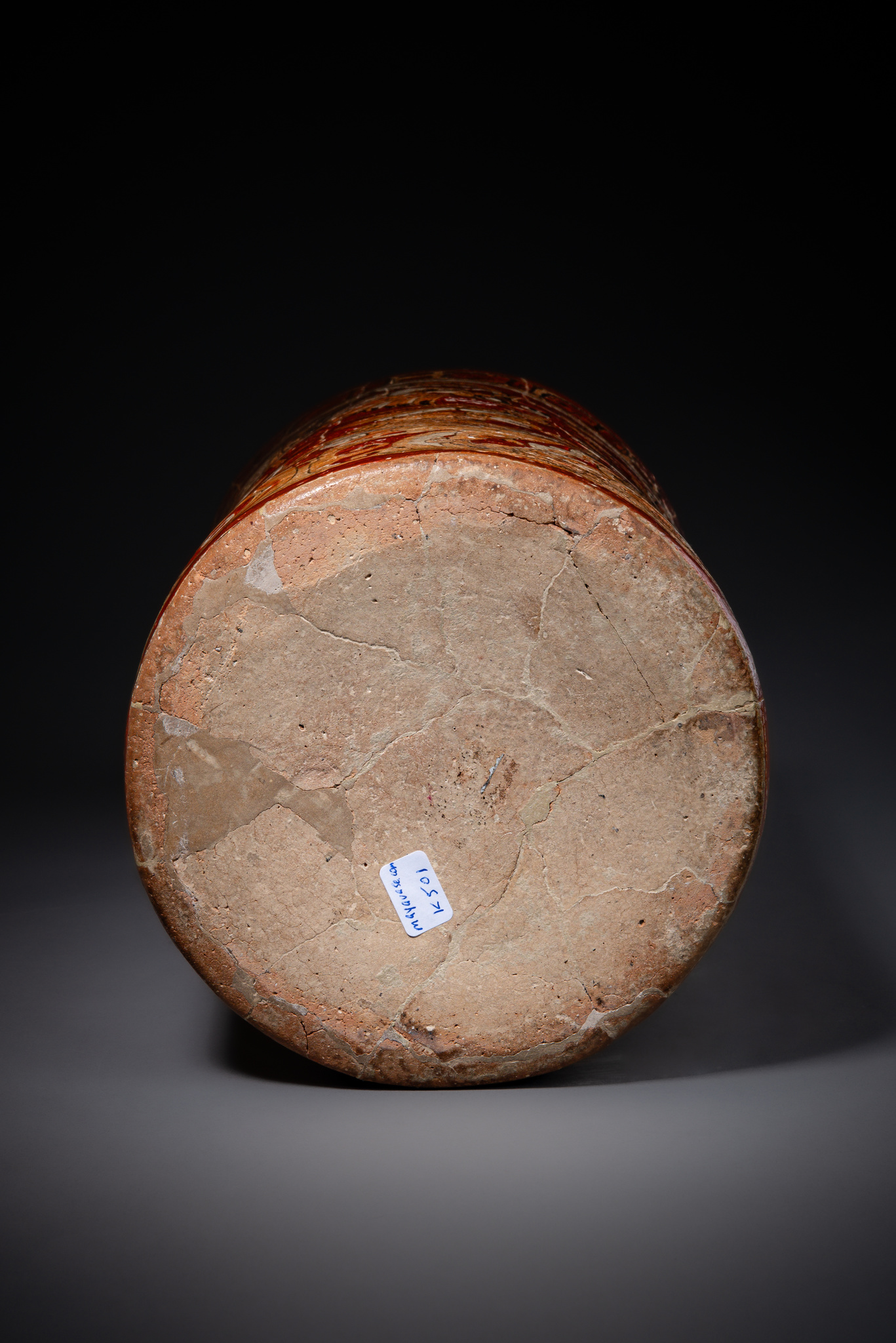
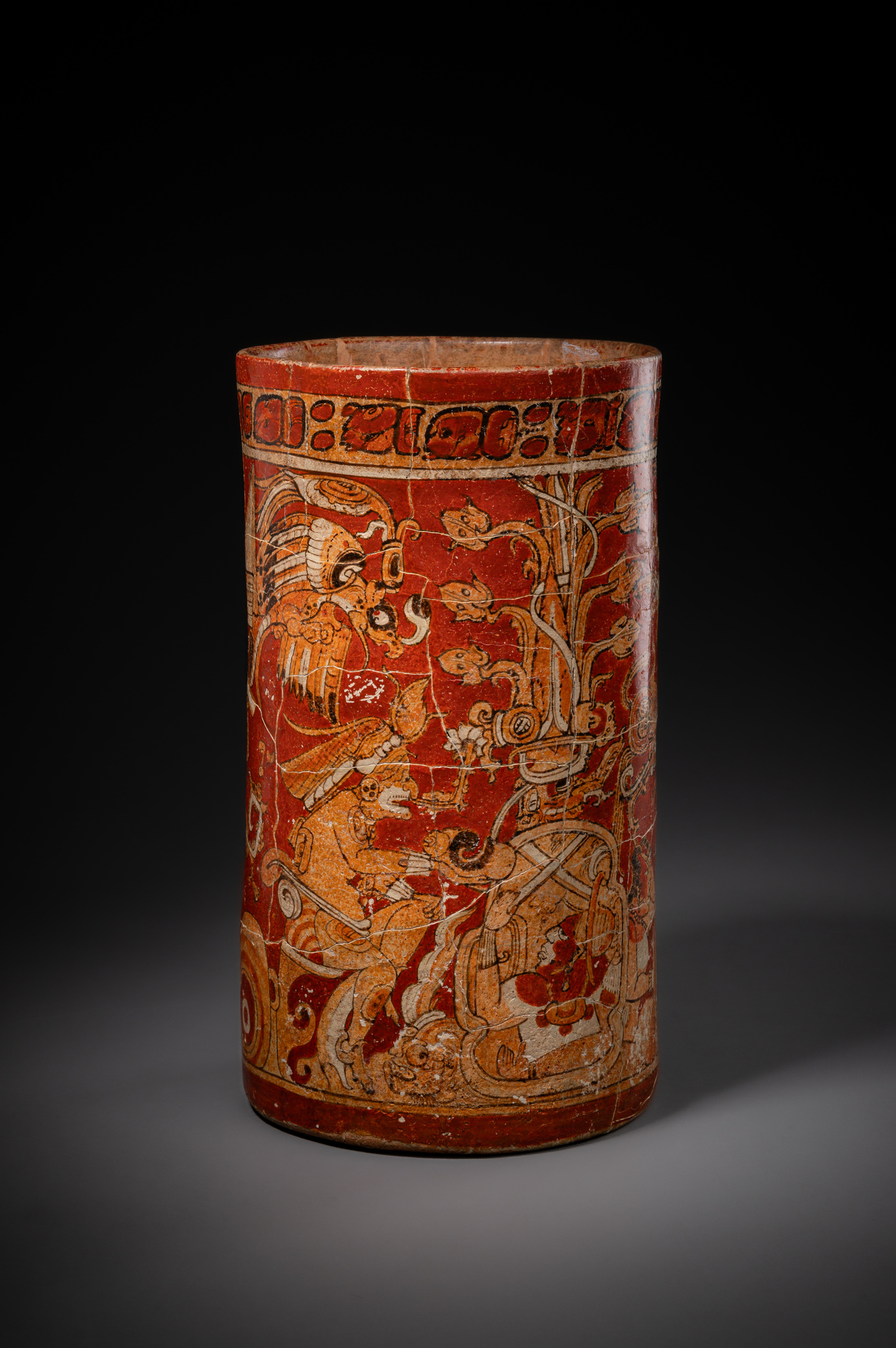
Large polychrome cylinder vase, Classic Period, ca. 550 - 800 AD · Guatemala, Northern Petén area / Southern Campeche, Maya · ID: 3053008
German Private Collection, Munich
Description
ceramic with an earthy-red base, painted in light orange, white, and black, meticulously rest.
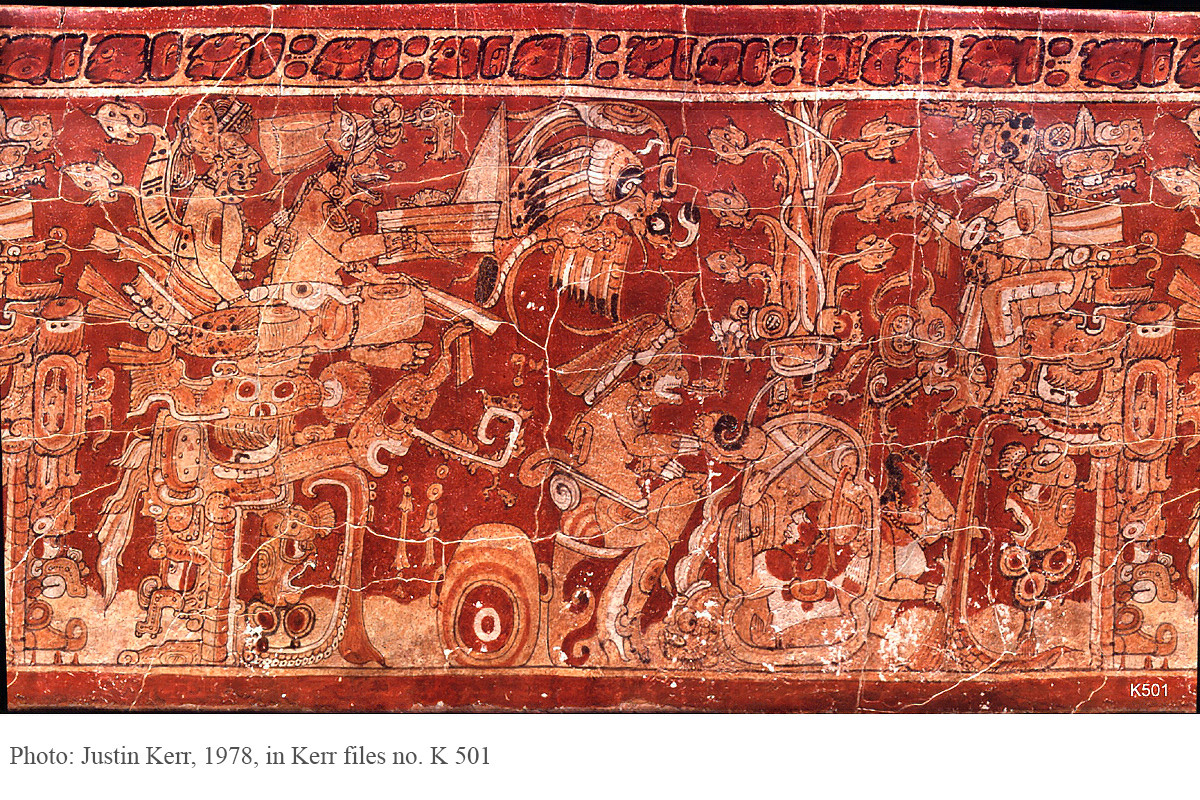
An exquisite work of the Maya high culture. The vessel is covered with a complex tableau of deities and mythological scenes, executed with exceptional fineness and meticulous attention to detail.
The scene is framed by two gigantic “Cauac” monsters (figs. 3 and 10), serving in their usual role as seats or thrones. At the center is the veneration of the World Tree (fig. 6), which rises from a quatrefoil cartouche (fig. 7). From an ethnographic and cosmological perspective, the World Tree represents the connection between the underworld, the earthly realm, and the sky, making it a central symbol in Mesoamerican worldviews.
The “Cauac monster throne” on the left supports two figures (figs. 1 and 2), both deities associated with writing and knowledge. Figure 1 wears a bound hairstyle, ear ornaments, and a jaguar-skin loincloth; vegetation emerges from his armpits - symbolizing creative power, fertility, and the generation of knowledge. Figure 2 is one of the two monkey-like deities identified with “Hun Batz” and “Hun Chouen” from the “Popol Vuh”. He carries a codex in the right hand, on which is placed an effigy head. In Maya mythology, both are considered gods of the arts, musicians, sculptors, and scribes.
Figure 4 depicts a masterfully painted “Moan” bird looking down on the scene. As a nocturnal, underworld-associated creature, it plays a mediating role between cosmic realms.
The World Tree (fig. 6) together with the quatrefoil cartouche (fig. 7) forms the central axis of the tableau. The cartouche contains a half-figure (or seated) deity wearing a hat. To its left is God “pauah tun” (fig. 5), from whose mouth extends a type of speech scroll ending in a flower - a motif referencing the Aztec metaphor for poetry, “xochicuicatl” or “flower song.” To the right of the cartouche is a female figure, presumably representing the youthful moon goddess (fig. 9).
The “Cauac monster throne” on the right (Fig. 10) serves as the seat for the Jaguar God of the Underworld (Fig. 8), depicted as an elder figure with jaguar attributes (spotted fur) on a jaguar throne. Due to its nocturnal activity, the jaguar was revered as ruler of the night and guardian of the underworld, symbolizing the transition between the world of the living and the dead.
Publications
Kerr, Justin, Maya Vase Data Base, An Archive of Rollout Photographs, K 501 (1998); Coe, Michael D., Lords of the Underworld, Masterpieces of Classic Maya Ceramics, Princeton University 1978, p. 106 ff.; Robicsek, Francis, Donald M. Hales, The Maya Book of the Dead, University of Virginia Art Museum, 1981, fig. 30b
Notices
This object is subject to the UNESCO Cultural Heritage Protection Act. Export documents are required for export (subjected to a fee).