
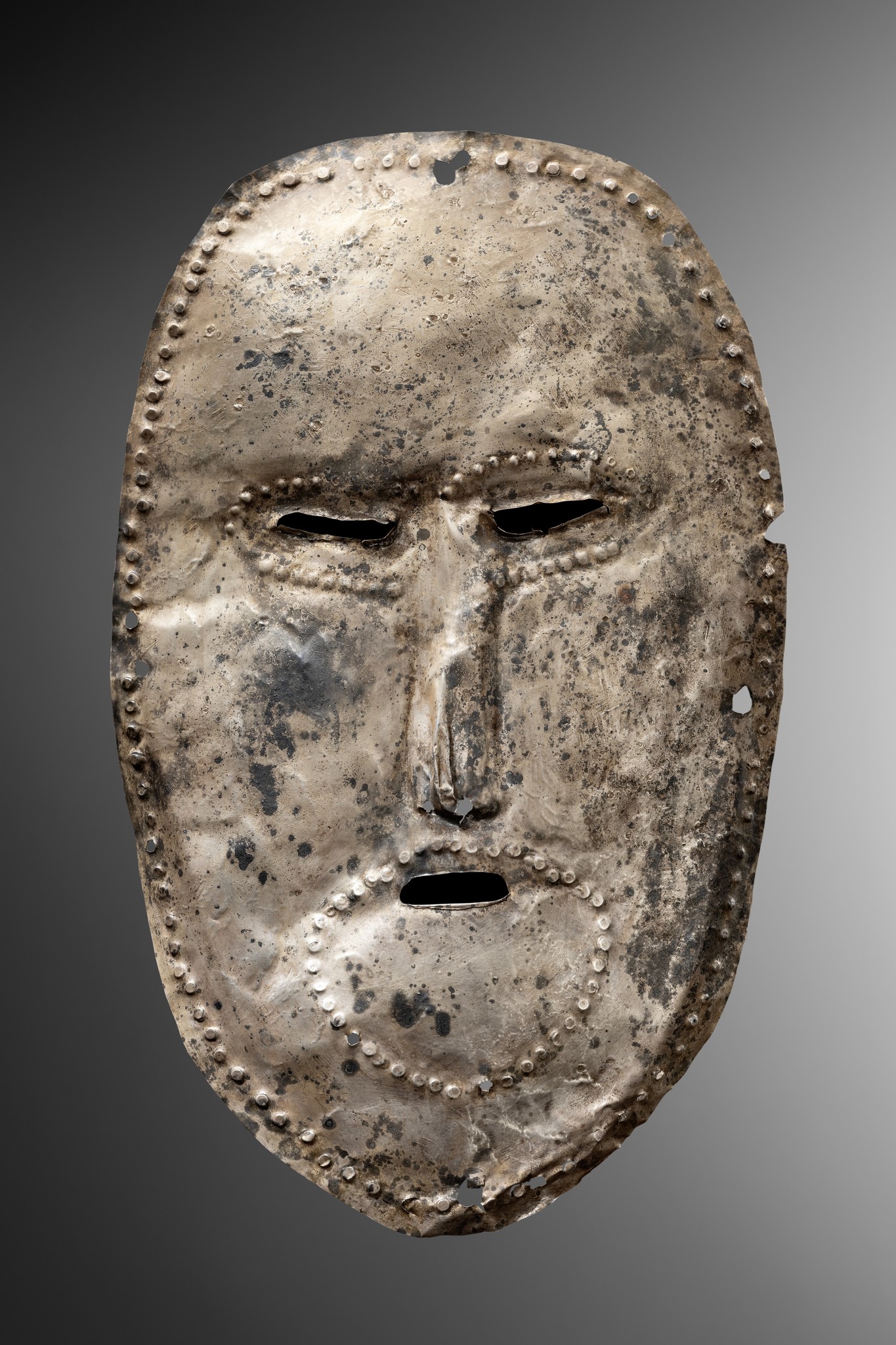
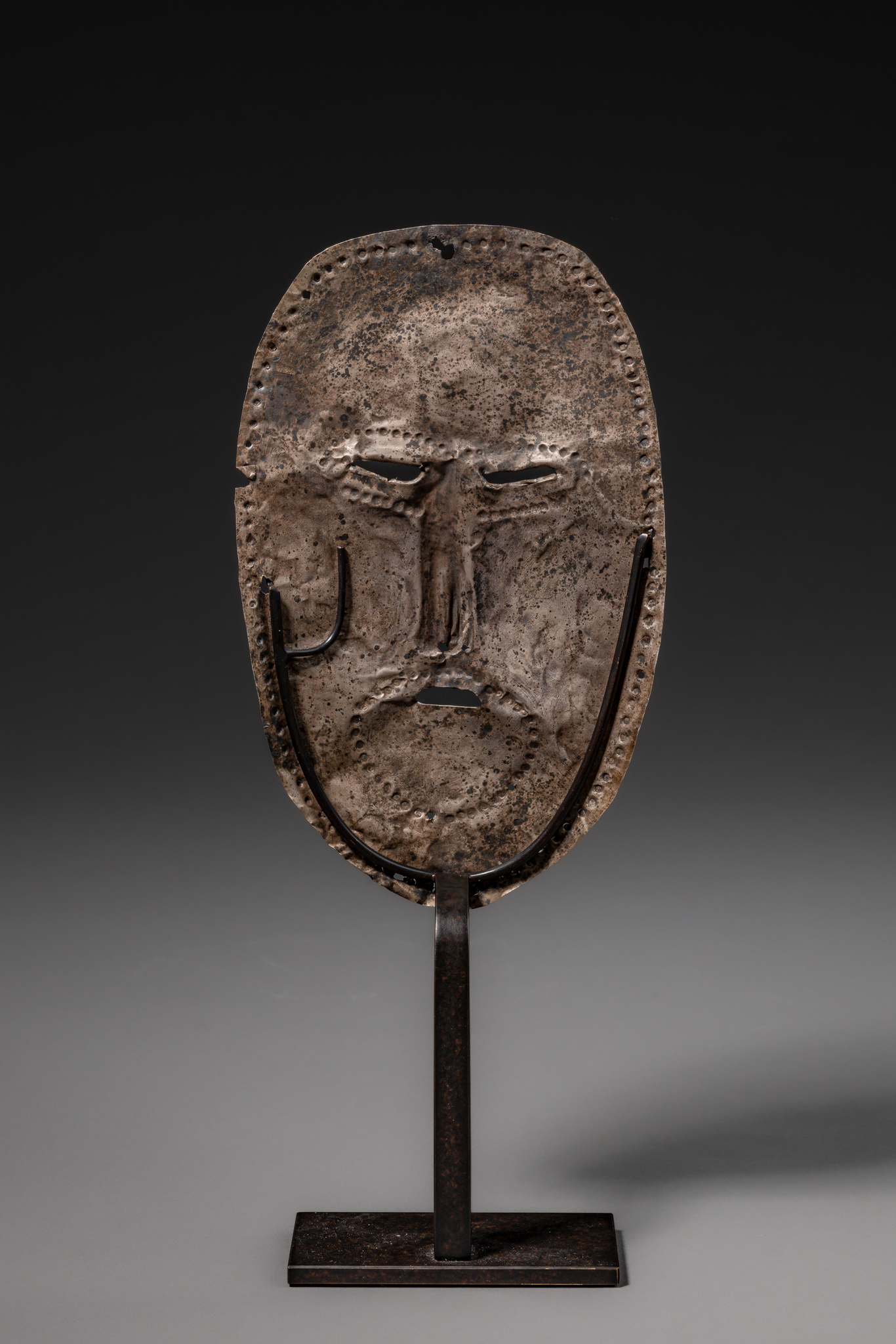
Burial mask, ca. 10th - 11th century · Russian Federation, Perm Cis-Ural, Magyars · ID: 3053193
Belgian Private Collection
Description
silver, base
The oval mask is crafted from thinly hammered silver sheet. The eyes and mouth are cut out and, like the mask’s edge, are outlined with punched decoration. Various holes along the edge served to secure the mask in place.
These masks were placed over a silk face covering on the deceased. They were often made of silver, a revered sacred material, as in the present example (after Margolis, 2023, p. 81).
The Perm region lies in the foothills of the Ural Mountains (Cis-Ural) along the Kama River in the far eastern part of European Russia. Recent research shows that the Ural region - particularly Perm Krai and the Volga-Ural area - was inhabited by Magyars in the 4th and 5th centuries, until they migrated to the Carpathian Basin at the end of the 9th century.
Comparing literature
Margolis, Richard, Ancient Bronze Art and Ethnographic Objects from Siberia and the Urals, 2nd rev. and exp. ed., Seattle 2023, p. 85 f.
Publications
Ron Bronckers, Masks of the Evenki and Magyar - New Connections, in Tribal Art Magazine, XXV:3 (No. 100), Summer 2021, p. 74, fig. 4