
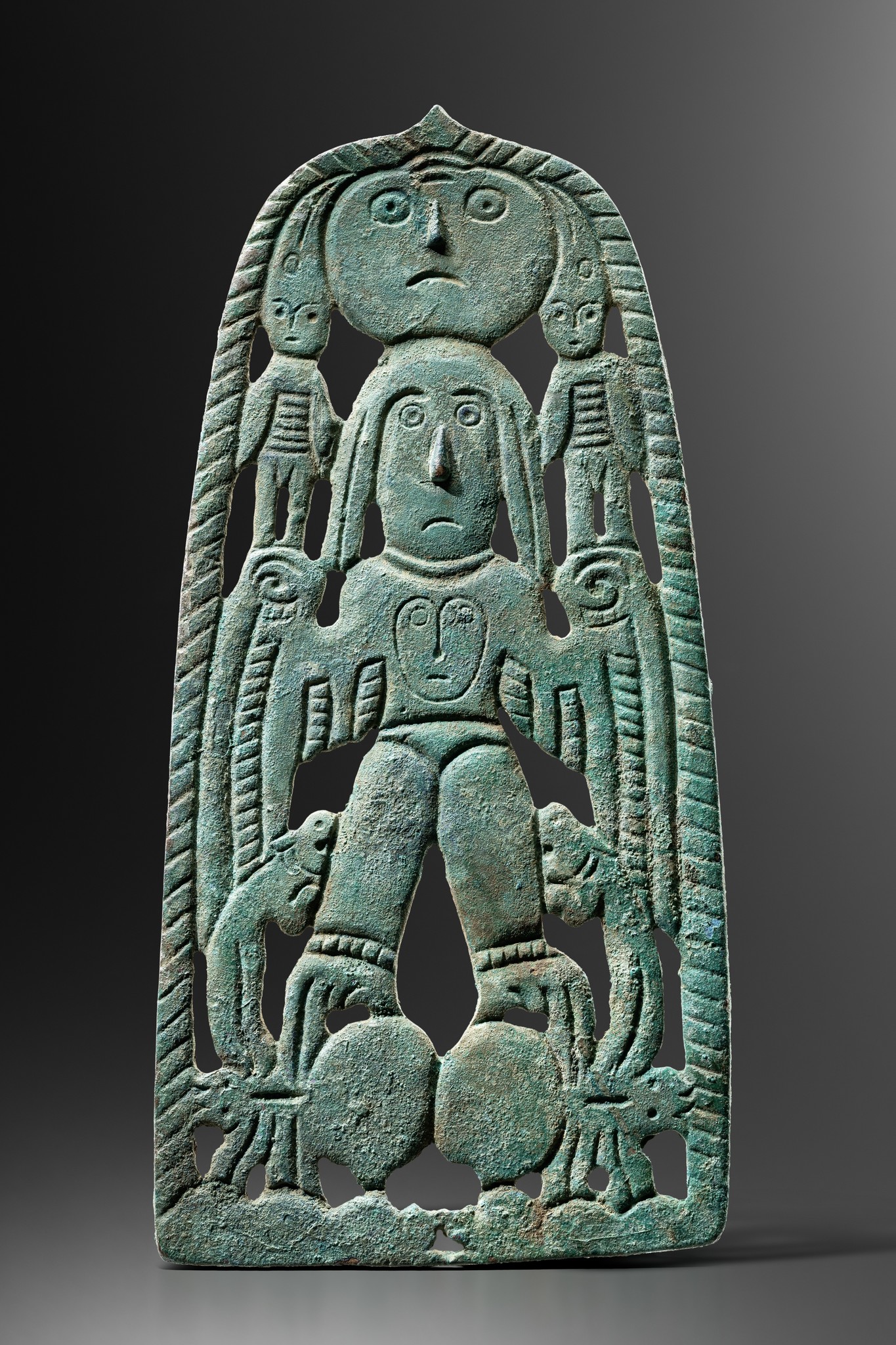
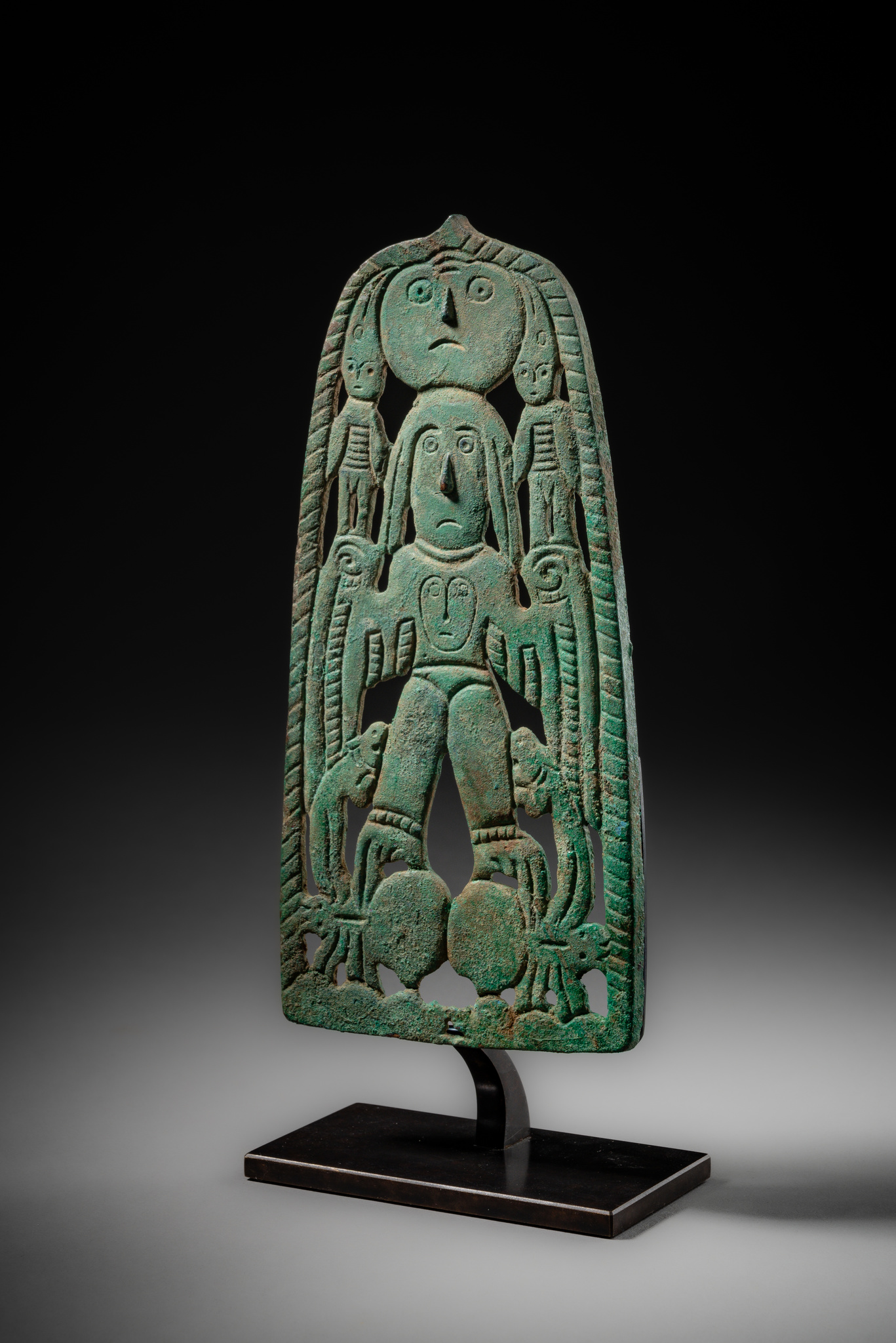
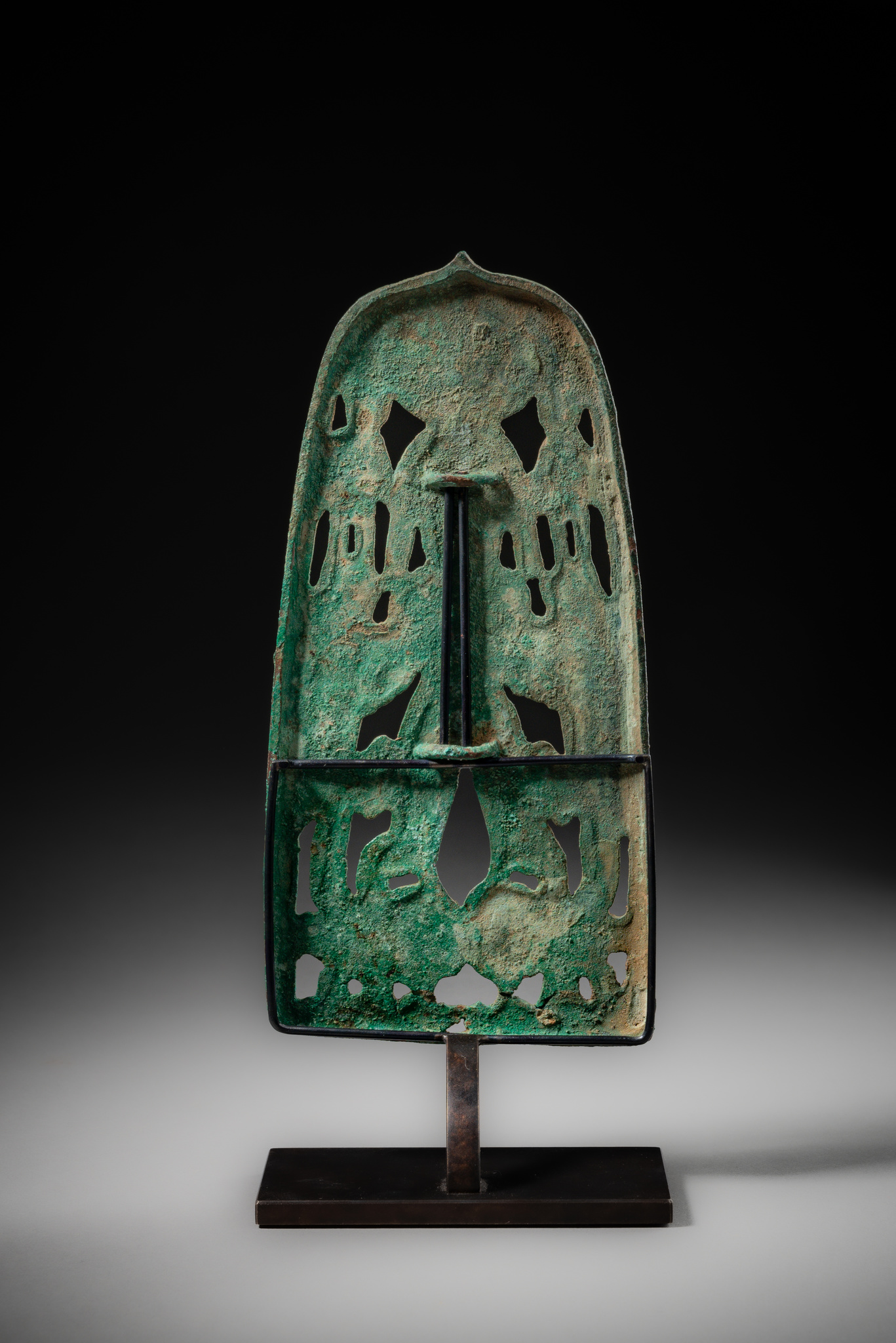
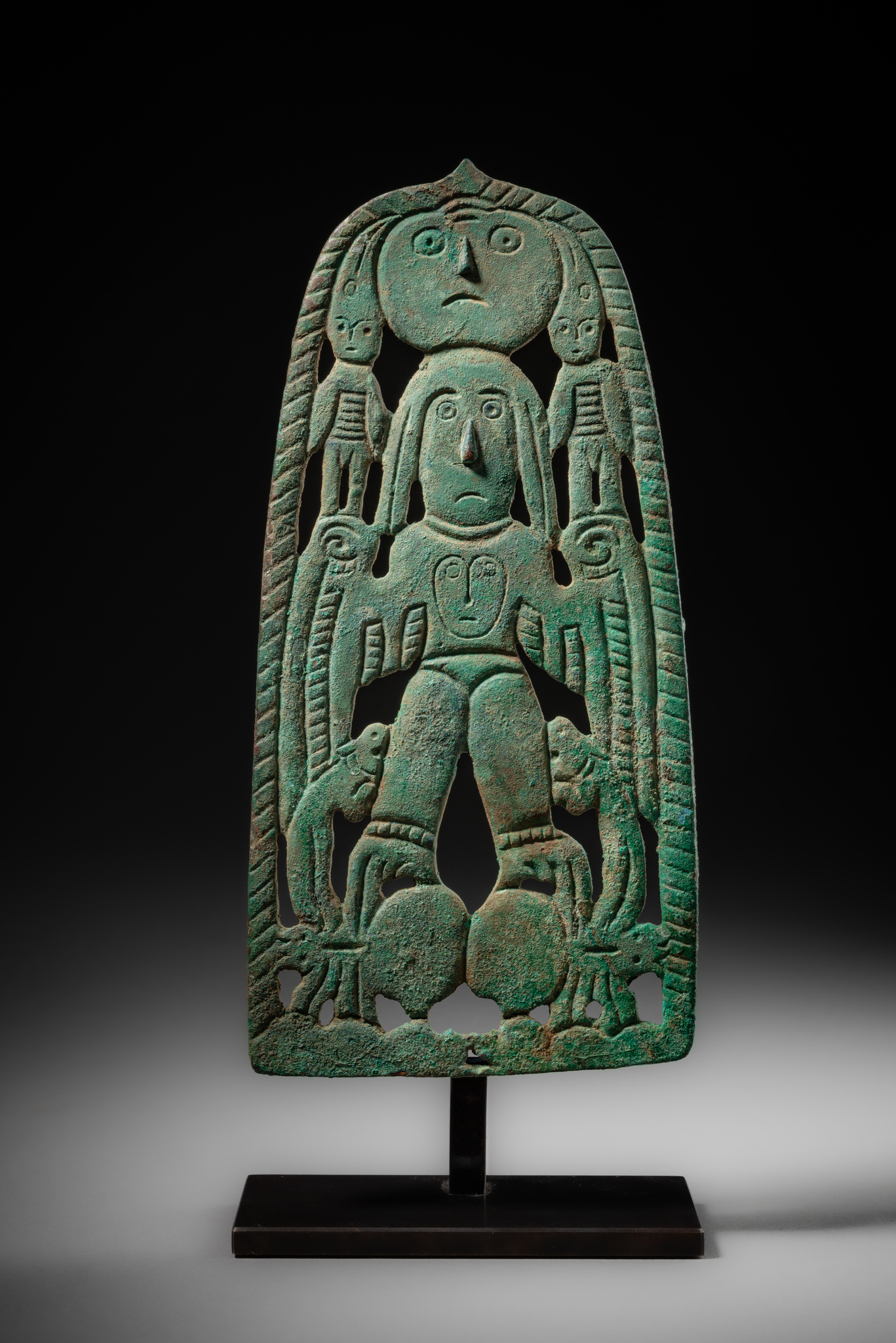
Amulet with mythical figure, ca. 7th - 8th century · Russian Federation, Perm Krai, Cherdynsky (Cherdyn) District · ID: 3053199
Portuguese Private Collection
Description
bronze, base
The present plaque shows a close relationship to a group of eight significant plaques discovered in Cherdyn and now housed in the Museum of Local Lore in Cherdynsky (see Grusenmeyer-Bilquin & Woliner, 2024, p. 73, fig. 1). These so-called “Cherdyn Plaques” are considered highlights of the Perm bronze corpus. While they were originally dated to the 7th to 8th centuries AD, subsequent research has revised their chronology to the 1st to 4th centuries AD, corresponding to the late Iron Age.
The present plaque exhibits particularly strong stylistic affinities with two Cherdyn plaques (ibid., p. 73, fig. 1, ChKM-1927/1 & ChKM-1927/2). Its pierced composition is dominated by a central large figure, whose striking wing-like arms and clawed feet immediately draw the eye. The figure is surmounted by a disc-shaped face and flanked at head height by two small attendant figures. A further distinctive feature is the prominent, hooked nose, which projects from the flat cast surface and evokes the form of a bird’s beak.
Scholarly consensus suggests that all the plaques depict female deities, reflecting archaic mythological patterns deeply rooted in a matriarchal tradition.
Throughout history, the female figure has held a central role within Uralic mythology, particularly during the Paleolithic, when Uralic communities lived as hunters and gatherers. Their beliefs focused on female nature spirits inhabiting landscapes such as forests and bodies of water, including rivers, lakes, and springs. With the transition to a sedentary lifestyle in the Neolithic, these animistic beliefs transformed into a central agrarian goddess, often referred to as the Great Mother or Earth Mother. Traits of this goddess’s iconography, including depictions of female deities with animal limbs, persisted from the Bronze Age into the Iron Age.
Comparing literature
Grusenmeyer-Bilquin, Karim & Isabelle D. Woliner, Frozen Magic, The Ancient Art of Siberia, 2024, p. 73, fig. 1.
Notices
This object is subject to the UNESCO Cultural Heritage Protection Act. Export documents are required for export (subjected to a fee).