
Pre-Columbian masterpieces: A world-class art collection
25 April 2026 - Treasures from private collections
Auction in Würzburg:
Saturday, 25 April 2026 – 2 pm (CEST)
Preview:
From April 22 to 24 – from 10 am to 5 pm
And by appointment
We are delighted to present an exceptional collection of Mesoamerican and South American advanced civilizations from a Munich art collection.
Assembled over decades with great expertise and completed in the 1990s, it unites outstanding works from various regions and periods. Its scope, comprising approximately 90 works, its exceptional quality, and its meticulously curated nature are already considered “culturally and historically significant” by experts. The entire group has been off the market for over thirty years, which means these pieces have not been “shopped around,” restored to death or over‑published; they are genuinely fresh opportunities.
For collectors, that freshness matters. It preserves the integrity of the objects, but it also allows a buyer to define how a piece will be framed and cited going forward – whether in an important private collection, a loan show, or future publications. The catalogue notes bring current research into play (on Mezcala architecture models, Maya epigraphy, Veracruz ballgame regalia, Nazca polychrome, etc.), so buyers are not just purchasing beautiful artifacts; they are acquiring well‑contextualized works that can hold their own in a museum or serious scholarly collection.
The material also covers several of the most actively collected areas of Pre‑Columbian art – West Mexican shaft‑tomb sculpture, Classic Maya vessels and sculpture, Teotihuacan and Veracruz stone, early Andean ceramics, and vibrant Nazca polychrome – allowing both focused specialists and broader collectors to strengthen key areas with single, standalone masterpieces. A Colima dog with character and presence, a Mezcala temple model coveted by modernists, a literate Maya cylinder that effectively functions as a “ceramic codex,” or a monumental Zapotec‑related urn that once fronted a shrine: each is the sort of work that can become the centerpiece of a collection or the starting point for a new one.
Finally, the depth of the group allows for comparative collecting – assembling, in one sale, a small but coherent survey of Mexico and Peru: religious sculpture, architectural fragments, effigy vessels and ritual implements that once animated temples, palaces and tombs. In a market where top‑tier Pre‑Columbian pieces appear increasingly one by one, this concentrated, single‑owner nucleus gives collectors a chance to make decisive moves, to acquire not just isolated trophies but a framework for understanding and presenting the ancient Americas in their own collections. Across Mesoamerica and the Andes, sculpture, ceramics and architectural sculpture were not created as “art for art’s sake” but as active participants in ritual, politics and ancestor veneration. In Mexico, works from Olmec through Teotihuacan, Classic Maya and Veracruz to Aztec cultures functioned in temples, palaces and tombs, articulating rank, lineage and ties to gods and powerful forces such as rain, maize and the jaguar. In Peru, from Chavín through Nazca, Moche and Huari, stirrup vessels, effigy jars and metal masks accompanied the dead, served in libations and offerings, and visualized myths and shamanic transformations.
Both regions also left monumental architecture – pyramids and platforms in Mexico, adobe temple‑mounds and urban centers like Cahuachi and Moche pyramids in Peru – within which these objects were embedded as part of a total ritual environment in thriving civilizations.
This collection is closely associated with experts on pre-Columbian America, Ferdinand Anton and Donald M. Hales: Anton, former consultant for the art and cultures of pre-Columbian America at the Ketterer auction house in Munich, and author of numerous publications. Hales, american expert, appraiser, and co-author of „The Maya Book of the Dead,“ University of Virginia Art Museum, 1981. He maintains an Academia.edu presence under Donald M. Hales, where he shares research papers and connects with other scholars in Maya studies.
Read more about the highlights and private collections here and in our printed catalogue.
A world-class precolumbian art collection
Mexico, Guerrero, Mezcala: Large temple model, 400 - 100 BC
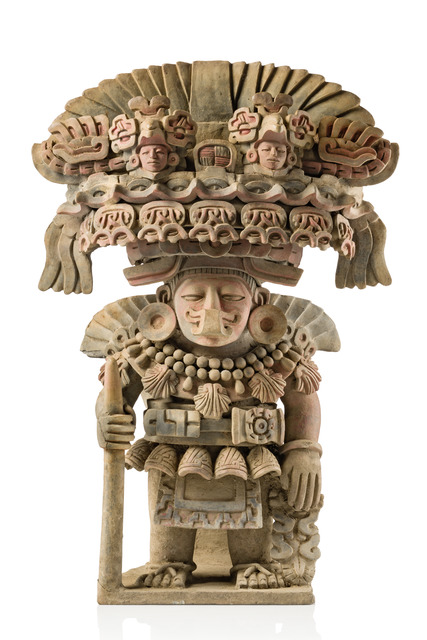
ProvenanceGerman Private Collection, MunichMexico, Maya, Oaxaca / Veracruz: Figurative urn, Classic Period, ca. 300 - 900 AD
ProvenanceLinden-Museum, Stuttgart, Germany · German Private Collection, Munich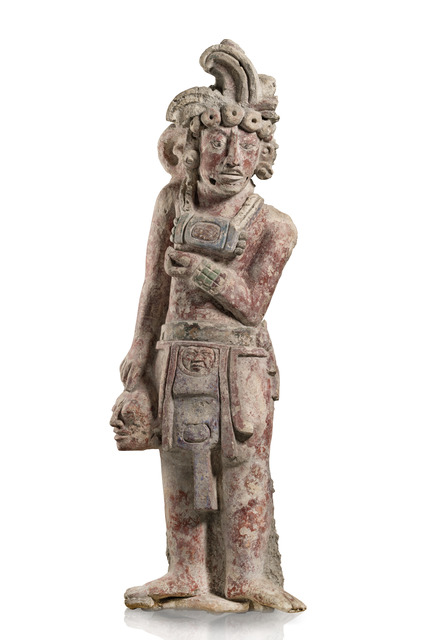
Mexico, Maya: Male figure with trophy head, Classic period, ca. 250 - 900 AD
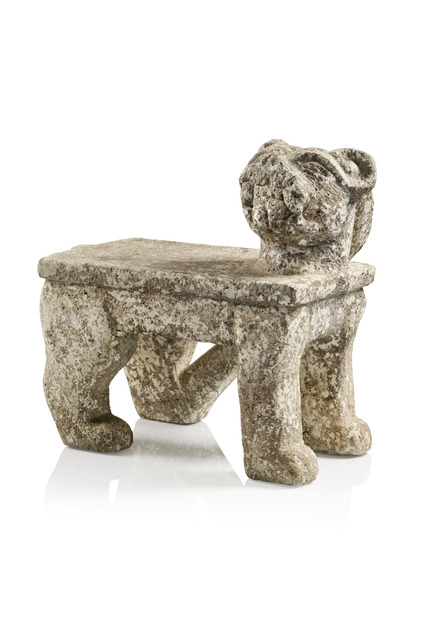
ProvenanceGerman Private Collection, MunichMexico, Maya: Jaguar throne, Late Classic, ca. 550 - 900 AD
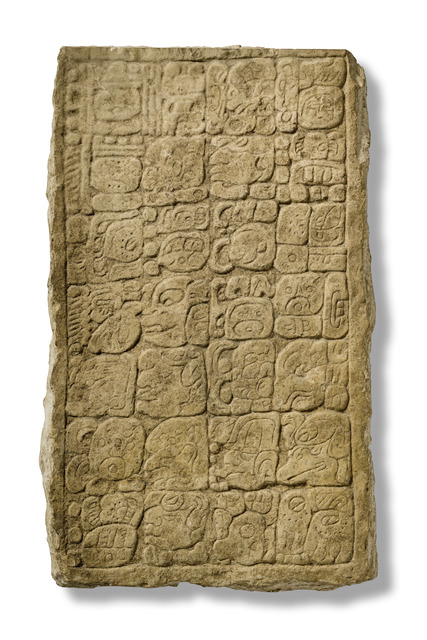
ProvenanceGerman Private Collection, MunichMexico, Maya, Bonampak, Chiapas: Relief, Late Classical Period, ca. 750 - 850 AD
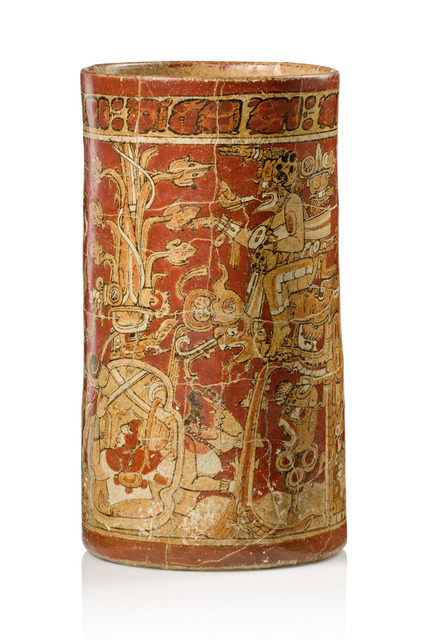
ProvenanceBonampak / Lacanha region, Mexico · Jules Berman, Beverly Hills, USA · Aliberto Guidani, Florence & Milano, Italy · German Private Collection, MunichGuatemala, Northern Petén area / Southern Campeche, Maya: Large polychrome cylinder vase, Classic Period, ca. 550 - 800 AD
ProvenanceWalter Randel, New York, USA · German Private Collection, MunichMexico, Veracruz: Closed yoke (“yugo”), Classic Period, ca. 450 - 900 AD
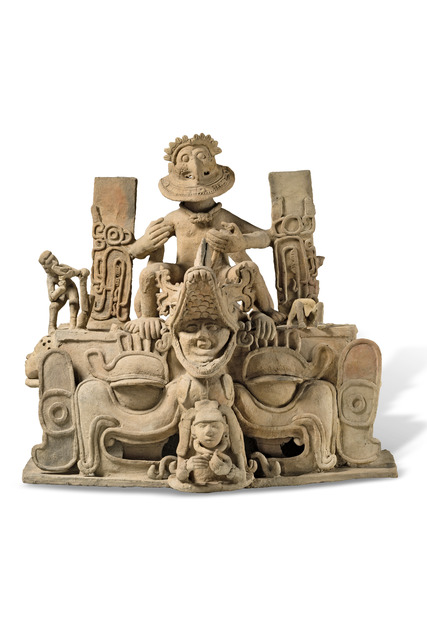
ProvenanceGerman Private Collection, MunichMexico, Veracruz: Altar urn, Late Classic, ca. 800 - 900 AD
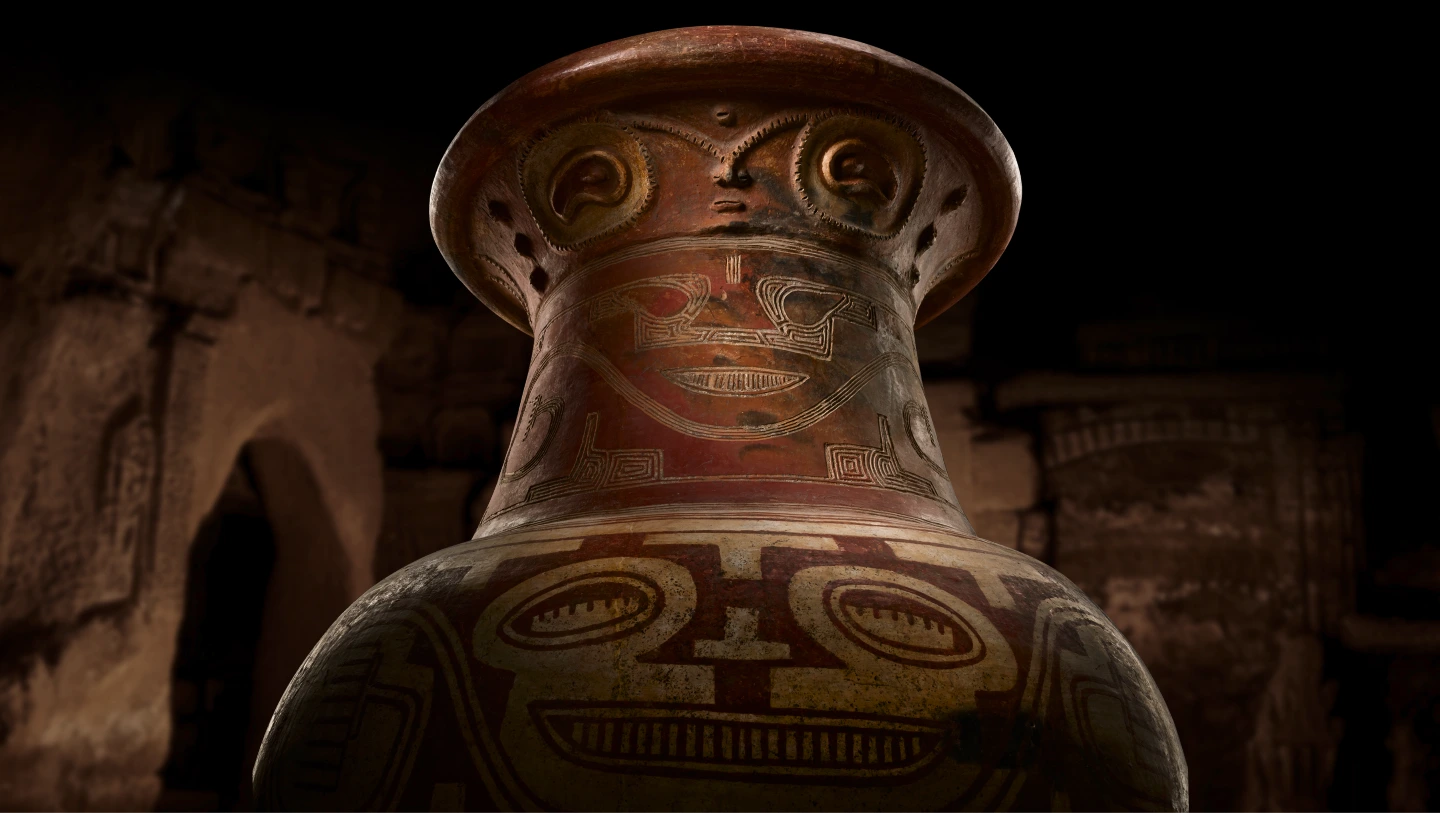
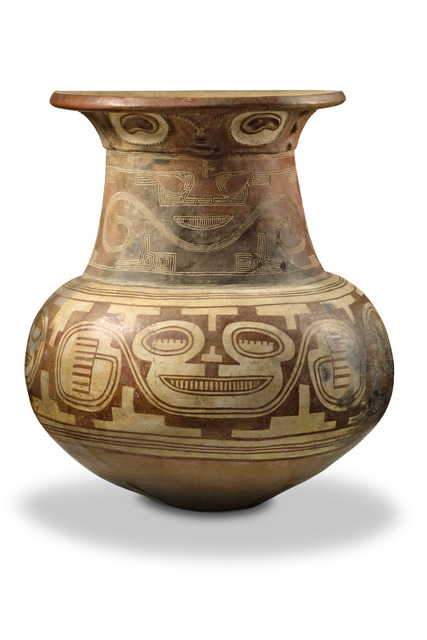
ProvenanceGerman Private Collection, MunichBrazil, Marajó Island, Marajoara: Large funerary urn, ca. 400 - 1400 AD
ProvenanceGerman Private Collection, MunichPeru, Chavin: Stirrup vessel, Early Horizon, ca. 1200 - 1400 BC
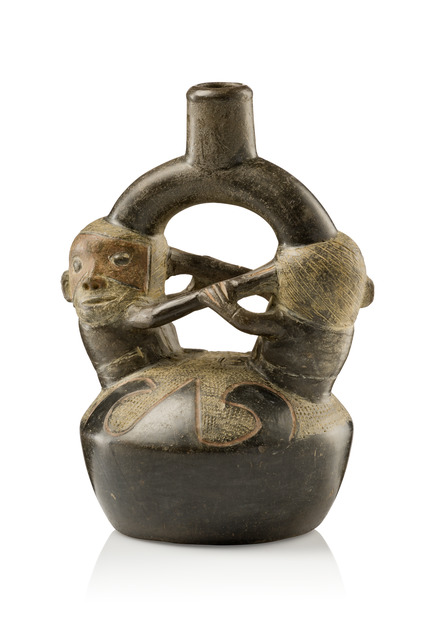
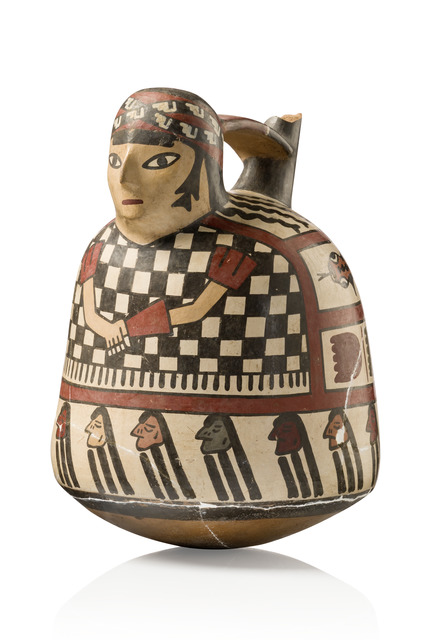
ProvenanceWolfgang Ketterer, Munich, 10 July 1993, lot 126 · German Private Collection, MunichPeru, Nazca: Figural stirrup vessel, Early interim period, ca. 200 - 600 AD
ProvenanceGerman Private Collection, Munich
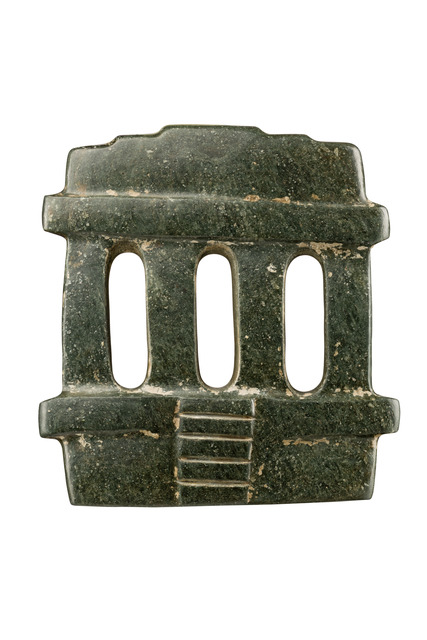
Mezcala temple model, Guerrero (lot 8): This large metadiorite architectural model is interpreted as a temple, its columned façade referencing otherwise poorly preserved stone architecture in the region; such models are thought to have served as symbolic entrances to the spirit world or dwellings for the dead in tombs, making this both an abstract sculpture admired by 20th‑century modernists and a powerful ancestral object.
Figurative urn, Maya / Oaxaca /Veracruz (lot 13): This monumental urn with fan‑shaped headdress and rich relief, depicting a deity or high priest with staff and incense bag, linking it directly to temple ritual; its publication by von Winning and former presence in a major museum (Linden‑Museum, Stuttgart) give it exceptional art‑historical and market weight.
Male Maya figure with trophy head (lot 14): An extremely rare life‑size, polychromed stucco façade figure holding a severed head; modeled stucco was among the most prestigious Maya media, covering temples and palaces, and this sculpture embodies royal and martial ideology while preserving rare traces of sacred red, green and blue pigments.
Maya jaguar throne, limestone (lot 17): A sculptural seat in the form of a jaguar, the balam, symbol of solar power in the underworld and of royal authority; jaguar thrones are closely associated with kingship, shamanic transformation and the ability to traverse between human and spirit realms, and comparable examples have achieved strong prices at auction.
Bonampak glyphic stone relief panel (lot 21): An important epigraphic monument, long studied in the literature, whose 28‑glyph text records the titles and exploits of a high‑ranking lord, linking him to captives, place‑names and cosmological offices; its long publication history and early provenance make it a cornerstone piece for any Maya epigraphy or sculpture collection and has been a component of archaeological research and Mayan epigraphy since 1973.
Large Maya polychrome beaker with World Tree tableau (lot 44): An exquisite cylinder vase with complex mythological program framed by Cauac monster thrones, featuring gods of writing, the World Tree, a Moan bird and a likely moon goddess, all executed with extraordinary finesse; it condenses Maya cosmology, poetics and courtly ritual into a single, highly desirable object. It too has a long publication history making it a cornerstone piece for any Maya epigraphy or vase collection.
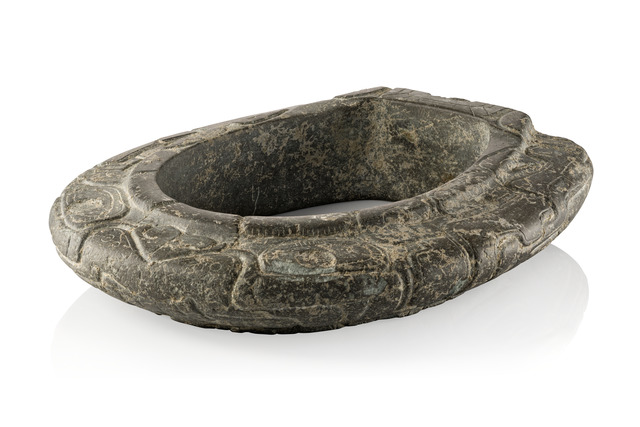
Veracruz closed yoke yugo, basalt (lot 27): Massive ritual yoke with facing deity heads evoking the protective belts worn in the ball; stone yugos were ceremonial and funerary prestige objects, strongly tied to elite status and the sacred ballgame that mediated between human and divine spheres.
Veracruz altar urn, (lot 30): Monumental altar urn likely used in incense‑burning and mortuary rites, its scale and thermoluminescence report reinforcing both ritual importance and collectability.
Equally deserving of cover status, however, is the extraordinary funerary urn, a pre‑Columbian work from Brazil (lot 80): Material of this quality from the southern Andes remains markedly rarer on the international market than works from Mexico, Peru or even Colombia, which makes this piece doubly important. It represents a sophisticated, regionally specific tradition that is still under‑represented in both private and institutional collections outside South America. Collectors accustomed to the better‑known canons of Mesoamerica and coastal Peru will recognize in this artwork the same fusion of strong form, refined surface and charged symbolism – but expressed through an unidentified Marajoara artist that seldom appears at this level. Selected as the cover lot, it represents an outstanding work from a region otherwise rarely represented.
Chavín stirrup vessel, Early Horizon (lots 66 and 67): Blackware stirrup bottles with characteristic applied nodules and band decoration, representing the early Andean religious centre of Chavín; such vessels are key documents for the spread of Chavín iconography and long‑distance influence in highland and coastal Peru.
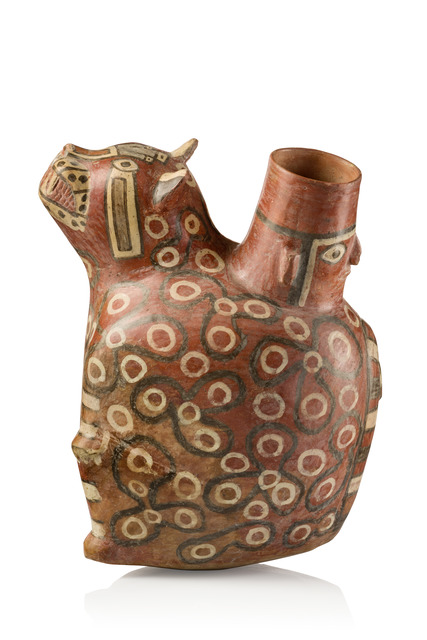
Huari jaguar vessel (lot 69): A powerful seated jaguar effigy with anthropomorphic face on the spout, combining Huari polychrome aesthetics with pan‑Andean jaguar symbolism of power, shamanism and night; its scale and modeling make it a centerpiece Andean sculpture.
A Corpus of Nazca polychrome vessels (lots 75‑79): This group of Nazca cups, double‑spout and figural stirrup vessels illustrates the culture’s celebrated use of multiple mineral pigments and bold linear designs; together they demonstrate the extraordinary chromatic range and graphic sophistication that distinguish Nazca ceramics within Andean art.
Highlights from Africa and Oceania
Papua New Guinea - Bismarck Archipelago - New Ireland: "Malagan" sculpture
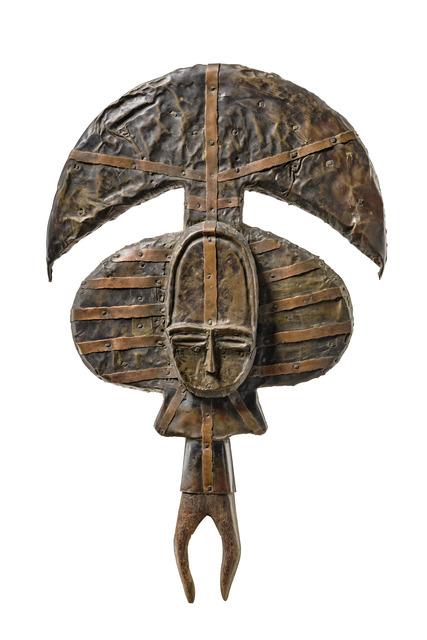
ProvenanceJoop Schafthuizen, Machelen-aan-de-Leie, Belgium · Christie’, Amsterdam, 12 May 1998, lot 101 · Seymore & Alice Lazar, Palm Springs, USA · Lempertz, Brussels, 1 February 2023, lot 107 · Jo de Buck, Brussels, Belgium (2023) · Kellim Brown, Brussels, BelgiumGabon, Kota, Haut-Ogoooué, Southern Obamba (Mbangwe): Reliquary guardian figure "boho-na-bwete"
ProvenanceRobert Lehuard, France · Raoul Lehuard, Arnouville, France · Claude Jaget, Darmstadt, GermanyD. R. Congo, Luba-Hemba: Male ancestor figure "singiti"
ProvenanceMerton Simpson, New York, USA · Claude Jaget, Darmstadt, GermanyD. R. Congo, Suku / Yaka: Magical figure
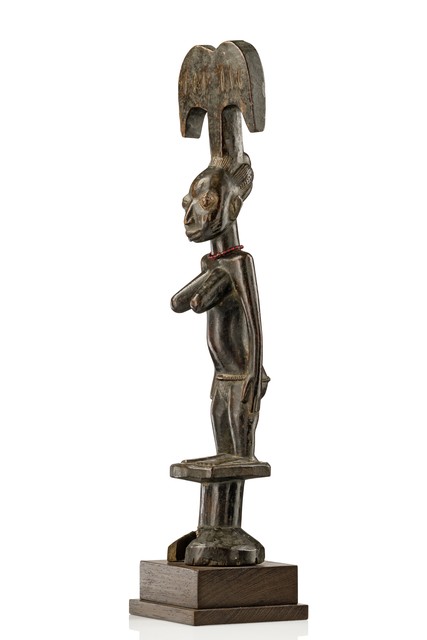
ProvenanceWilly Sand, Brussels, Belgium · Loed van Bussel, Amsterdam, The Netherlands (1960s) · Holger Hofmann, Hamburg, Germany · Ernst Hauswedell, Hamburg, 22 November 1969, lot 108 · Ernst Hauswedell, Hamburg, 29 November 1971, lot 608 · Andreas & Katrin Lindner, Munich, Germany · Adrian Schlag, Brussels, Belgium · Helga Redlich, Gelsenkirchen, Germany · Lempertz, Brussels, 30 March 2006, lot 145 · American Private CollectionNigeria, Yoruba, Igbomina, Oro District, Village Ijomi: Dance wand "oshe shango"
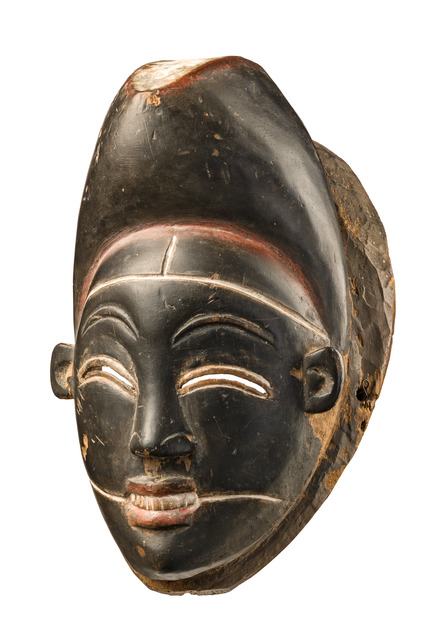
ProvenanceRolf & Christina Miehler, Munich, Germany (1997) · Christie’s, Amsterdam, 12 December 2000, lot 470Gabon, Punu: Rare black face mask "ikwara-mokulu" ("mask of the night")
ProvenanceJosef Wiedemann, Munich, Germany
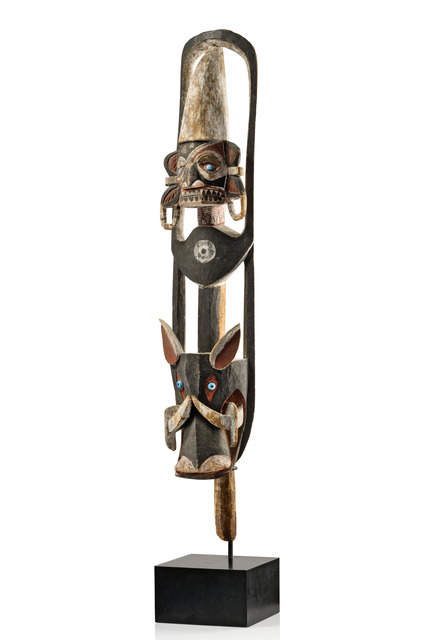
One of the most impressive works in the Oceania section is a classic Malagan sculpture from New Ireland (lot 159) whose snail eyes are particularly striking. While entirely in keeping with tradition, their bright blue colour testifies to the exceptional aesthetic sophistication of their creator. The provenance details refer to Christie’s and Kellim Brown (Brussels), among others.
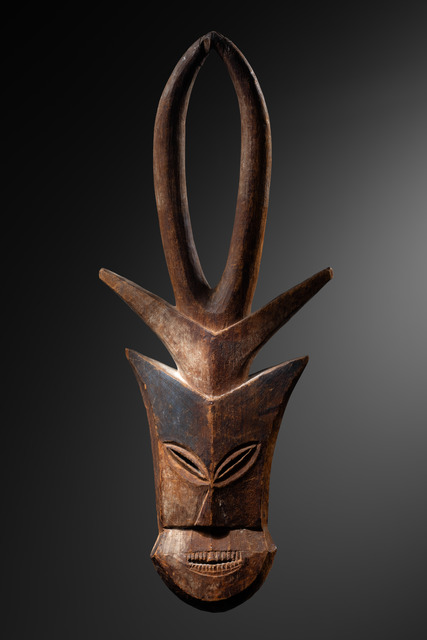
The highlight from Gabon is an exceptionally artfully carved variant of the already rare Kwele antelope masks, with provenance Adrian Schlag (lot 343). Its composition is unique: it combines the depiction of an antelope – here in a significantly more stylised form that deviates from the classic shape – with a human face. No comparable example of this composite form is known, giving its unique status.
The attribution of artworks to a specific workshop remains a rare moment, making this a particularly fortunate example, as exemplified by the reliquary guardian figure “boho-na-bwete”, which was published in 1972 from the french artist Claude Jaget’s collection. Its highly distinctive southern Kota style points to the family of sculptors from Otala, whose most important artists were Chief Okwéré and his grandfather Aligni (lot 198).
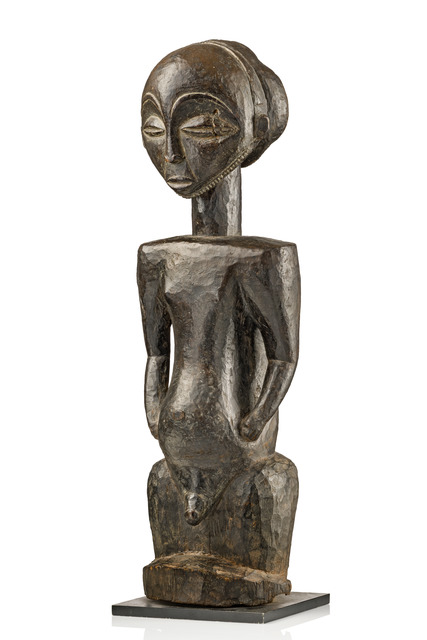
Also originating from the collection of the artist Jaget is the ‘singiti’ figure of the Hemba-Luba, D.R. Congo, formerly part of Merton Simpson’s collection, New York (lot197)
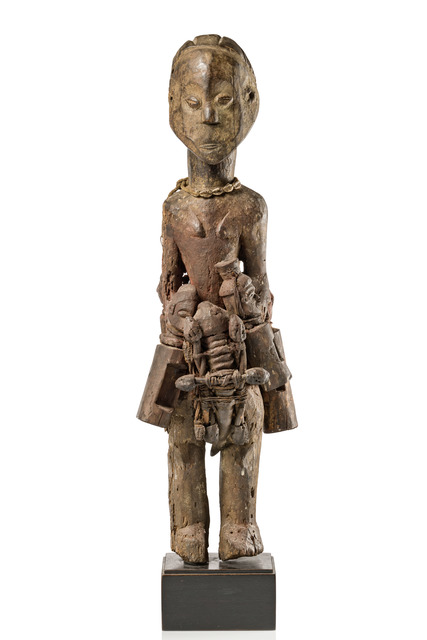
A magical figure of the Suku / Yaka (D.R. Congo) is distinguished by its remarkable presence and artistic quality. Its retention of the original paraphernalia is likely to be especially valued among collectors, all the more so as its provenance can be traced back to the 1960s: from Willy Sand (Brussels) to Loed van Bussel (Amsterdam), Holger Hofmann (Hamburg), Andreas and Katrin Lindner (Munich), then Adrian Schlag (Brussels), and finally the collector Helga Redlich (Gelsenkirchen) (lot 386).
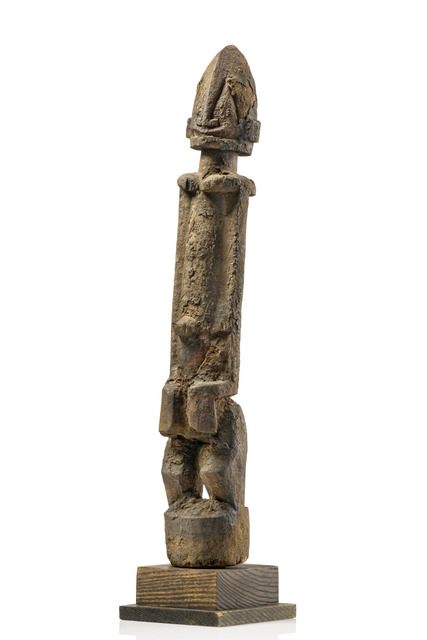
A heavily encrusted ancestral figure, deeply rooted in Dogon tradition, was published in 1969 by Ladislas Segy, New York. In terms of style and craftsmanship, it bears strong similarities to a work recorded at the African Heritage Documentation and Research Center (AHDRC), permitting attribution to the same workshop (lot 241).
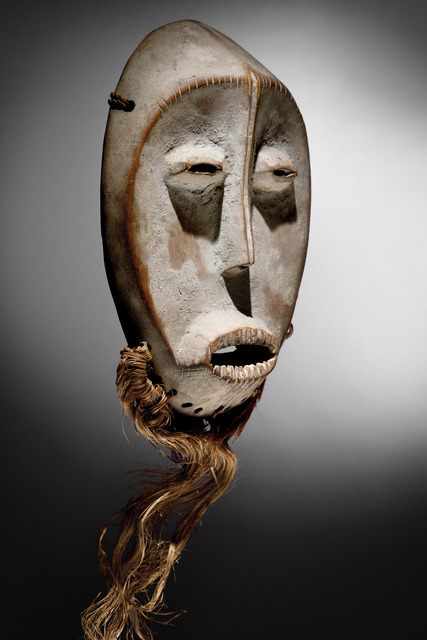
An anthropomorphic ‘idimu’, Lega, D.R. Congo captivates with its expressive, high-set eyes, grooved nasal bridge and powerfully open mouth. Its formal resemblance to historically documented examples points to a sculptural tradition and underscores its significance within Bwami society (lot 362).
An impressive Yoruba Oshe Shango staff, presumably from the workshop of the Ogbedi family, combines masterful carving with religious symbolism. As an emblem of the thunder god Shango, it stands for power, justice and royal authority. Its presentation in the 1997 exhibition ‘Cults, Artists, Kings in Africa’ in Linz impressively underscores the cultural significance and aesthetic quality of this work within the South Nigerian artistic landscape (lot 326).
Finally, the rare black face mask of the Punu from Gabon offers a fascinating insight into shifting ritual meanings. In contrast to the well-known white masks of the Ogooué region, its dark version indicates a special function – possibly related to judicial practices and the uncovering of hidden powers (lot 344).
A small German colonial collection with nearly 20 lots was acquired as a complete ensemble in the 1970s by Manfred Ritter, a collector of African from Reutlingen, Germany. It includes a traditional headdress of the Herero (Namibia), an Azande sword labelled by Leo Frobenius, and shields and weapons from East Africa (lots 199-215).